It was a Monday morning many years ago in the offices of a prominent firm, and the place hummed with the familiar rush of the workday. Staff hurried to their desks from the first bell, chatting away as they went along. Greetings and brief exchanges about the weekend drifted through the corridors. Some spoke of a night at the pictures, others of time spent with friends, while a few kept to polite remarks as they made their way to their spots.
Emily sat in a roomy office she shared with three others. She was a slight woman with short fair hair that framed her face neatly. Her brown eyes, sharp and steady as ever, stayed fixed on the papers she sorted methodically across her desk.
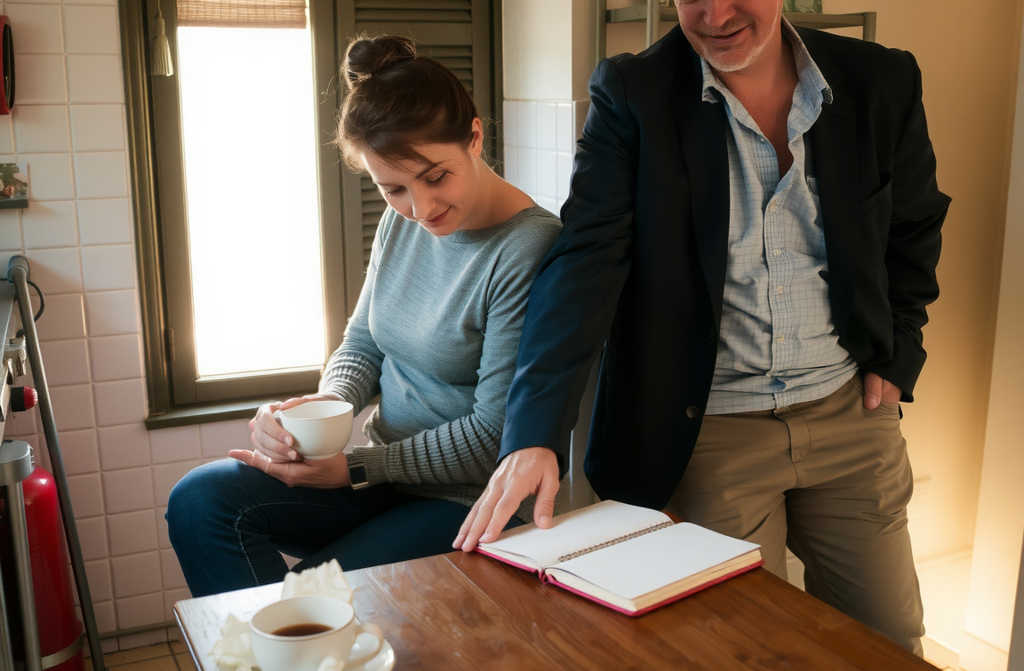
As she worked through the stack, Michael from the next department came over. He rested a hand on the edge of the table, gave a broad smile, and said in a bright tone:
“Hello, Emily! How did the weekend go?”
Emily glanced up, a polite smile crossing her face. She was the sort who avoided conflict and aimed to get along with everyone at work.
“Fine, thank you. Just dealt with things at home,” she answered evenly, tilting her head a little. “And yours?”
“Oh, it was brilliant!” Michael brightened, his voice full of energy and his eyes alight. He edged closer, as though sharing something private. “Went to the countryside with some mates, had a barbecue, sang songs to the guitar. You ought to come along sometime. You’re on your own these days, aren’t you? Only just divorced?”
Emily paused for a moment but pulled herself together quickly. She gave a reserved nod, trying not to let the irritation that had crept in show. She disliked when colleagues brought up her private life, yet she had grown used to answering politely to avoid extra gossip.
“Yes, I’m divorced. And thanks for the invitation, but I’m not planning any trips right now, especially not with people I don’t know well,” she said in a level voice, dropping her eyes back to the papers.
“Why say ‘not planning’ straight away?” Michael pressed on, his smile turning a touch firmer. He had no intention of dropping the matter and kept at it. “After a divorce, it’s the ideal time for fresh starts. I’m wondering if we might head out somewhere together? This Friday, perhaps?”
Emily stacked the papers into a tidy pile, squaring the edges with careful precision. She met Michael’s eyes directly, keeping her tone steady and calm without any trace of the annoyance building inside.
“Michael, I value your notice, but I’m not seeking new ties at present. Let’s just focus on the job without extra suggestions,” she said plainly, hoping the clear hint would sink in.
Michael waved a hand as if brushing her words aside. A light, faintly mocking smile played across his face; he seemed sure of his own charm.
“Oh, come now,” he said lightly. “Why the fuss? You’re lovely, I’m not bad-looking what’s the harm?”
Emily felt irritation swell within but held it in check. She had no wish to argue or turn the day into a string of rows. Instead she fixed him with a firm look, her expression serious.
“I’m in earnest, Michael. This doesn’t interest me. Let’s keep to work topics,” she repeated, her voice firmer now to show she meant to end the subject.
“All right, if you say so,” Michael yielded at last, spreading his hands slightly as if to show he was stepping back. “But give it some thought, eh? I’m only suggesting it kindly.”
He turned toward the door, yet Emily caught the brief way his gaze lingered on her before he looked away.
The weeks that followed brought no change. Michael acted as though her refusals went unheard, or perhaps he chose not to hear them. He kept finding reasons to stop by her desk, each time with a fresh excuse. One day it was a “key work matter” that somehow couldn’t go by email. Another time he offered help with a report, though Emily had never sought it. Now and then he simply dropped by to ask after her health, wearing a look of real concern.
Whenever he drew near, the talk always veered toward what Emily wished to avoid. Michael returned to the idea of a date with quiet but steady pressure, treating her earlier refusals not as a firm no but as part of some game. He spoke with a smile, as if it were all in jest, yet his eyes held determination he would not let it drop.
Emily did her best to stay calm. She replied politely yet firmly, repeating each time that nothing had shifted. She never grew openly cross or raised her voice, but the persistence wore on her inside. She longed for him to grasp that her no was truly final, not a cue to carry on.
Still he glanced her way at times, holding the look longer than work called for. Emily saw it but pretended otherwise, keeping her mind on her tasks. She hoped he would eventually accept her stance and drop the personal talk.
That evening the office stood nearly empty, most having left hours before. Light burned only in the far corner by the window, where Emily had stayed to finish a pressing project. She worked with focus, now and then adjusting her glasses and jotting notes. A cooled cup of coffee sat beside her, and the wall clock read close to nine.
The quiet broke with the sound of a door opening. Emily looked up to see Michael striding toward her desk. He seemed at ease, car keys in hand and the usual half-smile in place.
“Still here, are you?” he said, settling casually on the desk edge. His posture spoke of ease, as if he missed how Emily stiffened for a moment, lifting her eyes from the screen. “Work can wait. Fancy going somewhere to unwind? I know a nice cafe just down the road. They’ve got live music tonight.”
Emily closed her laptop slowly, shifting it aside with care. She faced Michael, meeting his eyes steadily calm yet firm. No anger showed there, only weary resolve to make the obvious clear once more.
“Michael, I’ve told you many times I want no part of that. Please respect my limits,” she said evenly, keeping any edge or hurt from her voice.
Michael’s face altered in an instant. The smile faded, his brow creased, and his voice rose louder than before.
“What’s the matter with you?” he demanded sharply, leaning in. “You’re single! Any woman in your shoes after a divorce would be pleased! I’m not asking for anything wrong, just a date. Do you reckon I’m beneath you?”
Emily drew a slow breath, counting seconds in her mind to steady the growing annoyance. She took her time replying first settling her breathing, then lifting her chin a touch as she regarded him without challenge but with steady certainty.
“It’s not about you or how worthy you are,” she said, picking her words with care. “It’s about me. I don’t wish to see anyone at the moment. This is my choice, and it stands. I believe I’ve made that plain.”
The man pushed back from the desk and stood tall. His face flushed, fingers curling into fists before he loosened them at once, as if catching himself.
“Fine by me!” he snapped, stepping away. “Just don’t be surprised later when you stay alone. Your sort always acts this way turning noses up at first, then regretting it.”
He spun around without waiting and headed for the nearby conference room door. It shut with a loud bang, the sound carrying through the empty space and making Emily start.
She stayed in her seat, eyes on the closed door. His parting words rang on, but she tried not to dwell on them. Relief that the talk was done mixed with a touch of vexation not from the words, but from having to guard her boundaries yet again.
Emily checked the clock, then the unfinished report. She knew this was likely not the last of it. Michael rarely let matters rest a trait useful in his role, but not here. Why could he not leave her be? She had laid it out plainly…
The next day the office appeared unchanged. Staff arrived, powered up their machines, traded greetings. Michael carried on as if the sharp exchange the day before had never happened. He turned up near Emily’s desk again and again passing by “by chance” or coming with some small query. Each time he smiled and tried a joke, acting as though no strain existed.
Emily kept her replies short, holding the chat to work alone. She stayed civil and showed no irritation, simply drawing a clear line around job matters. She made a point not to join in light banter or let things drift elsewhere.
Yet Michael persisted. He seemed blind to her reserve or chose to ignore it. He might ask if she wanted to review a new report together, offer help with figures, or recall some shared task and launch into its details with vigor, as though it were the most ordinary reason to talk.
On Thursday morning Emily stepped into the kitchen area for coffee. The hour was early still, with most only just arriving. The space carried the scent of fresh brew and toast from the machine nearby. Michael stood by the coffee maker, stirring sugar into his mug while gazing out the window. At the sound of footsteps he turned at once and smiled.
“Hello again,” he said, the smile holding but a faint strain in his tone. “Listen, I’ve been thinking… Perhaps we misunderstood each other? I truly just want a chat, nothing more… you understand.”
Emily poured her coffee in silence. She kept her eyes from Michael, intent on not spilling the hot liquid. Her movements stayed measured, like any ordinary morning habit.
“Michael, I’ve said my piece. Let’s not revisit it,” she answered calmly, taking up the mug.
“But why?!” His voice sharpened suddenly, and his hand jerked, spilling coffee across the counter. He paid it no mind, staring at her. “What’s wrong with it? I’m not proposing marriage! Just a date, just to talk! Are you frightened?”
Emily set the mug down with care, no haste in the motion. She turned fully to face him and spoke low but clear, each word precise.
“I’m not frightened. I simply don’t want to. And I dislike that you won’t accept my refusal. It’s simply wrong.”
Emily left the kitchen, leaving Michael by the counter with a puzzled look. He watched her go as if unable to grasp how the talk had ended. His hand still gripped the mug, and the spilled coffee spread slowly, yet he took no notice. Conflicting thoughts turned in his head: on one side, he could not see why Emily was so set against it; on the other, irritation grew from his own powerlessness.
That evening at home, Emily could not settle. Her mind circled back to the morning exchange. She reviewed each word, wondering if a different phrasing might have eased the strain. Yet she reached the same point each time: she had been direct, and Michael had simply refused to listen.
She drew out her phone and opened the recorder. The last talk with Michael was saved there the one where he pushed for a meeting despite her refusals. Emily studied the file for some time. Her fingers shook a little as she hovered over the play button, but she did not press it. Instead she opened the page for Michael’s wife and, after a pause, tapped into messages.
“Hello,” she typed, choosing the words with thought. “Sorry to trouble you, but I believe you ought to know how your husband acts at work. I’ve attached a recording of our conversation.”
She read the message over several times to check its tone. It stayed measured, free of extra feeling only the facts. She added the file and sent it.
The next morning Emily arrived at the office with a weight in her chest. She was unsure if her action had been right, yet she saw no other way to halt Michael. She had turned it over all night but found no alternative. She had fretted over how the woman might take the note and whether things might worsen, but she set those worries aside, telling herself she had acted to safeguard her own ground.
No sooner had she taken her seat, switched on the computer, and begun sorting mail than Michael rushed up, furious. He made no effort to mask it: his face was flushed, his eyes blazed, and his voice shook with held anger.
“What have you done?!” he hissed, looming over her desk so that Emily drew back. “You sent that to my wife?!”
Emily met his gaze evenly. As she had expected, the colleague had faced a difficult talk at home. And it served him right.
“Yes. I warned you I wanted no contact beyond work. You didn’t listen. So I took steps.”
“You’ve landed me in it!” Michael clenched his fists, just holding back from striking the desk. “We were getting on fine, and you…”
“Fine?” Emily let her voice rise; there was no longer reason to hold back. “Is this fine to you? Telling me I should welcome your attention simply because I’m divorced? Ignoring my refusals time and again and only growing pushier? No, Mike, this is anything but fine!”
Heads turned among the staff. Some glanced sideways, others openly paused their work to watch. A strained quiet fell over the office, broken only by the odd key tap or paper rustle. Michael noted the eyes on them and dropped his voice, though it still carried restrained fury.
“You’ve made a mess of it,” he hissed, leaning close. “Now I’ve trouble at home, and you… you… I simply took a liking to you! But I’m married, so you’ve gone and wrecked things this way!”
“Truly? You imagine I like you?” Emily allowed a small laugh. “What conceit! I’ve said again and again you’re not to my taste! I’ve asked you over and over to leave me be!” She rose, hands on the desk, wanting to meet his eyes and see if it had reached him. “Yet you overlooked my words and only pressed harder! Now take the outcome.”
Michael stood still for a moment, face tight and lips drawn thin. He turned sharply and strode off, heels striking loudly on the floor.
Emily dropped back into her chair. Only then did she notice her hands trembling. She balled them into fists, then opened them slowly to still the shake. She breathed deep, let it out, and looked about. The startled colleagues at once made a show of being deeply occupied.
The days after passed under strain. Michael stayed clear of her desk and made no contact at all. He avoided even looking her way, yet Emily sensed his anger almost as a physical thing. It lingered in the air around him like a heavy cloud. When they crossed in the corridor or at meetings, an unseen barrier seemed to rise between them thick, sharp, felt by others too.
Colleagues murmured and cast glances, but none approached Emily on the matter. Some acted as if all was normal, some gave awkward smiles, yet all appeared to have agreed on silence. The office followed fresh unwritten rules: steer clear of rough patches, ask no needless questions, mind one’s own affairs.
Two days after the message, Michael was summoned to the director’s office. Emily sat at her desk when the door closed and muffled voices followed. She could not catch the words, but the tone told all: Mr. Harrington spoke sternly, while Michael answered in fits, his voice rising and falling.
When Michael emerged, his face was pale and his look distant, as though his mind was elsewhere. He passed Emily’s desk without a glance. In that moment he seemed not the confident manager but a man who had just faced a harsh rebuke.
By midday rumors spread. One story had Michael’s wife arriving for a loud row at the reception. Another said management had issued a stern warning and hinted at further steps. Some whispered of possible discipline. Emily confirmed or denied nothing she carried on with her work, avoiding notice. She answered letters, reviewed reports, joined meetings, acting as though matters ran as ever.
The following day Helen from marketing came to her desk. She seemed ill at ease, tugging at her blouse hem and glancing about to check for listeners. Her motions were restless, her voice low.
“Emily, a moment?” she asked quietly, halting at the desk edge.
“Of course,” Emily sat back, waving Helen to the spare chair. “What is it?”
Helen checked around, saw they were alone, and spoke quickly as if fearing interruption.
“I just… wanted to thank you. I’ve seen for ages that Michael is too forward, but I feared speaking up. Yet you… you did it.”
Emily lifted her brows, surprised. She had not looked for such words and paused.
“You faced this too?” she asked evenly.
“Yes,” Helen sighed, eyes down. “A month back he suggested we ‘dine and go over work matters.’ I said no, but he kept on. Sent notes, waited by the lift… I didn’t know what to do. I worried a complaint might backfire on me.”
She stopped, nervously smoothing a lock of hair. Her eyes held relief mixed with worry as though she had voiced something long held, yet still doubted her choice.
“He appears to grasp now that it won’t do,” Emily observed quietly, head tilted. No triumph or spite colored her tone only a calm sense that her steps had brought the needed result.
“I hope so,” Helen nodded, a shy smile touching her face. She eased a little, seeing Emily took the words without strain. “Thanks again. You… you did well.”
A week later, at a regular gathering in the large conference room, the director Mr. Harrington brought up corporate standards. The room was nearly full, staff at the long table with notebooks out and laptops ready.
Mr. Harrington rose, adjusted his glasses, and spoke in a calm yet steady voice:
“Colleagues, we have met a situation lately that needs care. At work we are professionals first! Personal feelings must not shape the job. We have to honor one another’s private lines and build work ties on trust and proper conduct.”
He swept his gaze over the room. Most listened closely, some nodding. Michael sat far down the table, eyes lowered. His fingers tapped a pen on his pad once, twice, thrice as though the motion might quiet his unease. He kept his head down, avoiding looks from others.
“If anyone faces such issues,” Mr. Harrington went on, raising his voice to draw back those who had drifted, “do come to me in person. We will sort it. No one should feel ill at ease here. This is no mere rule it is the core of how we work.”
He paused briefly for the words to settle, then offered a warmer smile.
“Now back to our plans. Much lies ahead, and I trust we will manage it together.”
After the meeting the office felt lighter. Work talk came more freely, laughter in the halls more real. People settled once more into a setting where lines were known and ways were set.
Michael kept his distance from Emily and made no effort to talk. He stayed apart, did his duties, answered queries, yet started no idle chats. At times Emily caught his look cold and resentful as he passed her desk or met her in a corridor. But he kept away now, wary of penalties or lost rewards.
A month on, Emily and Michael met by chance in the lift. The morning ran as usual, with staff hurrying in and heels sounding on the tiles. Emily stepped into the lift at the ground floor, Michael right after neither glanced at the other, taking opposite corners.
The lift stayed quiet, numbers ticking steadily on the panel. Both watched them, caught by the rhythm. Emily tried not to dwell on what had passed, turning her mind to the day: a new project talk with the team and a report for the head. Michael, by his stiff stance, felt awkward he fiddled with his jacket sleeve and avoided her eyes.
When the lift halted at Emily’s floor, she moved to the door. The panels had started to meet when his voice came, soft and unlike his usual self:
“Emily…” He waited, seeming to choose what to say. “I… wanted to say sorry. I think I overstepped.”
She halted and turned. His eyes held no anger now, only unease and a true wish to mend things. Emily kept steady not from pride, but because she wished to put the matter to rest.
“Thank you for saying so,” she answered evenly, without reproach.
“It’s just…” He faltered, looking aside as if the words came hard. “I believed I was doing something kind. I thought you were merely shy to own that you felt the same.”
“That’s not so,” she replied gently yet firmly. “But it matters that you saw your error.”
Michael nodded, eyes still down. His shoulders eased, as though a load had lifted. The doors closed smoothly, separating him from Emily, and she walked on to her desk at an unhurried pace. Peace had come at last.
In the weeks that followed, Michael acted differently. He remained apart but no longer watched her with anger or hurt. When they met in corridors or meetings they traded brief civil words “Good morning” or “How goes the project?” and no more. No hints, no personal turns. Things grew simpler, as though an unspoken pact held: colleagues, and that suffices.
One evening, with the office near empty, Emily gathered her things to leave. She filed papers in her case, shut down the computer, checked her bag and spotted a small card at the desk edge. It lay so neatly it stood out at once, though it had not been there earlier.
Emily took it up. The front bore a plain design of calm abstract lines, no words or clues. She opened it and read the neat script:
“Thank you for showing me how not to act. I hope you find someone who respects your limits from the start.”
No name appeared, yet Emily knew at once. She held the card a moment, then closed it and slipped it into her jacket pocket. Warmth filled her at last matters sat right. She doused the light, shut the office, and stepped into the empty corridor, sensing a quiet evening ahead.
Office life settled back into its old pattern. Work took the main place once more: morning briefings, paper approvals, team talks. Emily threw herself into it with the quiet pleasure that comes when nothing pulls the mind away or forces constant watchfulness.
After hours she met friends now and then at a nearby cafe or on walks through town, speaking of this and that: fresh films, holiday ideas, odd tales from the job. These times brought ease, a reminder that life held more than one awkward spell.
Bit by bit Emily grew used to seeing her divorce not as an end but as the start of something else. Not a loss, but a fresh chapter. She ceased turning over old slips, words that might have been better said, choices that could not be undone. In their place she learned to mark small pleasures: the smell of morning coffee, autumn sun on the office ledge, friends’ true laughter.
Passing a hall mirror, she sometimes caught herself smiling not forced or polite, but easy, as though a steady inner light had lit. Guilt, fear, and the need to explain herself to others or to her own mind had gone. Only a quiet sureness remained that she had chosen rightly, and that rightness needed no proof.
One day at a company gathering an informal evening with staff from various sections Emily met James. He worked in a nearby unit handling analysis, and they had crossed paths only rarely before.
James did not strike one as a storybook suitor: no grand compliments, no show of cleverness, no push for outings. He simply asked how her weekend had been and listened to the reply with real interest no phone glances, no wandering eyes, no steering the talk his way.
He never cut in, pressed his views, or shifted things personal if Emily seemed unwilling. His notice was light yet clear like a warm wrap on a chilly night: it neither binds nor weighs, but offers comfort.
One day, after a shared lunch, he saw her to the underground entrance and said plainly:
“I’m at ease with you. I’d like to keep talking if that’s all right.”
Emily paused, feeling something new spread within not strain or worry, but a gentle, sure calm. She met his eyes and smiled.
“I’m all right with that.”
They met weekly after sometimes at a cafe near work, sometimes at an exhibit, or just walking the streets. James took no hurry, asked no awkward questions of the past, and made no bid to fill her days. He was simply present steady, dependable, considerate.
With him no shields were needed, no guard to ready, no careful weighing of words to avoid false hope. With James all felt natural. Talk came freely, silences caused no unease, and quiet brought no worry.
Some months on, Emily realized she felt, for the first time in ages, not like a woman still in the shadow of divorce, but simply herself alive, engaging, worthy of regard. This sense sprang not from effort but from having someone nearby who saw her as she was, without pretense or need to prove a thing.
One autumn day, with shorter hours and cooler air, Emily and James strolled in a park. Trees had shed some leaves, and the ground rustled with yellow, red, and brown. Sun filtered through scattered clouds, laying patterned shadows.
They walked slowly, speaking of small matters: a new show at the museum, weekend plans, books read of late. James halted by an old bench piled with maple leaves the wind had gathered. He looked ahead, seeming to collect himself, then spoke low.
“You know, I wondered long whether to say this now. But it feels worth it: I admire how you hold to your boundaries. That’s uncommon. And it makes you truly strong.”
Emily turned, brows raised. No flourish or show marked his voice only honest belief in what he said. She had not expected such open praise and faltered briefly.
“You can’t know how long it took me to reach this,” she answered with a small smile. No bitterness sounded, only a calm note of the road behind.
“But now you have it. And that’s fine,” James said simply, eyes on hers.
Emily found no reply. Instead she took his hand in silence. Their fingers linked without effort. The touch held no worry, no bid to show a thing only warmth and trust that needed no words.
With time Emily saw shifts beyond her private life, reaching her work too. Once she might hesitate before sharing a view at a meeting, fearing it would seem dull or out of place. Now she spoke with assurance, unafraid of interruption or dismissal. She joined talks more readily, put forward fresh ideas, and when she disagreed she explained her stand calmly yet firmly.
Colleagues noted the change. They sought her counsel more on job points or a tricky case. People sensed they could speak openly with Emily: she would hear them out without scorn, yet she would not yield if she saw a flaw.
The head too viewed her afresh. Mr. Harrington, who had once seen her as a steady hand, now saw an employee ready to take charge.
After one briefing he held her at the door.
“Emily, I’d like you to head a new project. The load will grow, but I’m sure you can manage. It’s a weighty task, yet you’re the one for it.”
Emily considered briefly, weighing the offer. No fear or doubt stirred within only a quiet sureness that she was prepared.
“Thank you for the trust,” she smiled. “I accept.”
That evening she told James. They sat in a cozy cafe, darkness falling outside while lamps glowed inside. James listened closely, then beamed with honest pleasure, free of envy or mere form.
“That’s splendid! You earned it. I’m pleased for you.”
Emily looked at him and felt a calm warmth rise not wild joy, but a quiet, sure gladness. She saw how the hard turns had brought her to the place she sought. And above all, she no longer feared what lay ahead.
A year and a half went by. Much of note happened for Emily and James, yet their wedding stood as the chief mark. They sought no grand show both prized warmth and truth over display. So the day came quiet and close: a small restaurant with soft light, a table set with simple autumn blooms, and nearest kin and friends around.
Emily wore a plain yet graceful dress in a pale tone. No heavy pieces adorned her only slim earrings and the ring James had picked with care. Her hair sat in an easy style, loose strands softening her face.
Among the guests Emily spotted Michael with surprise. He had come with his wife. She learned later that after all that passed, he had worked to mend his home life. He had spent time on it: sought advice, grown more attentive, learned to hear. Though the road was hard, they had found common ground and kept their marriage.
Before the event began, Michael came to Emily. He looked at peace, with no sign of his old push or grudge in his eyes.
“Congratulations. You seem happy,” he said truly, without false note.
“Thank you,” Emily nodded, holding his gaze without strain. “And thank you for the card. It meant much.”
Michael gave a slight smile, as if recalling the moment he wrote it.
“I’m glad it all came right. Truly glad.”
He did not stay long nodded farewell and went to his wife, who waited close by. Emily watched them laugh together at something and felt a light, warm thanks. Not for herself or the past, but for how people can alter, own their faults, and move forward.
As the evening wound down, guests began to leave. Emily stood by a large window, watching folk step out, say their goodbyes, and climb into cars. The night was cool and clear, first stars showing in the sky. A few lingered in the room, music playing low, waiters clearing tables with care.
James came up behind, placing a quiet arm around her shoulders. His touch felt so known that Emily eased at once, leaning into him.
“What are you thinking?” he asked softly, near her ear.
“That sometimes the hardest choices bring the rightest ends,” she replied, turning to him. Her voice stayed calm, free of regret. “And that I regret nothing.”
She pressed to his chest, feeling the even beat of his heart, the warmth of his arms, the familiar scent of his cologne. In that moment all rested where it should not flawless, but real.
James kissed the crown of her head and held her closer.
“So do I,” he whispered.
They stood so a few minutes more, until the dark outside grew full and the room nearly empty. Then they took hands and walked to the door together, steady, sure, toward whatever waited ahead.It was a Monday morning many years ago in the offices of a prominent firm, and the place hummed with the familiar rush of the workday. Staff hurried to their desks from the first bell, chatting away as they went along. Greetings and brief exchanges about the weekend drifted through the corridors. Some spoke of a night at the pictures, others of time spent with friends, while a few kept to polite remarks as they made their way to their spots.
Emily sat in a roomy office she shared with three others. She was a slight woman with short fair hair that framed her face neatly. Her brown eyes, sharp and steady as ever, stayed fixed on the papers she sorted methodically across her desk.
As she worked through the stack, Michael from the next department came over. He rested a hand on the edge of the table, gave a broad smile, and said in a bright tone:
“Hello, Emily! How did the weekend go?”
Emily glanced up, a polite smile crossing her face. She was the sort who avoided conflict and aimed to get along with everyone at work.
“Fine, thank you. Just dealt with things at home,” she answered evenly, tilting her head a little. “And yours?”
“Oh, it was brilliant!” Michael brightened, his voice full of energy and his eyes alight. He edged closer, as though sharing something private. “Went to the countryside with some mates, had a barbecue, sang songs to the guitar. You ought to come along sometime. You’re on your own these days, aren’t you? Only just divorced?”
Emily paused for a moment but pulled herself together quickly. She gave a reserved nod, trying not to let the irritation that had crept in show. She disliked when colleagues brought up her private life, yet she had grown used to answering politely to avoid extra gossip.
“Yes, I’m divorced. And thanks for the invitation, but I’m not planning any trips right now, especially not with people I don’t know well,” she said in a level voice, dropping her eyes back to the papers.
“Why say ‘not planning’ straight away?” Michael pressed on, his smile turning a touch firmer. He had no intention of dropping the matter and kept at it. “After a divorce, it’s the ideal time for fresh starts. I’m wondering if we might head out somewhere together? This Friday, perhaps?”
Emily stacked the papers into a tidy pile, squaring the edges with careful precision. She met Michael’s eyes directly, keeping her tone steady and calm without any trace of the annoyance building inside.
“Michael, I value your notice, but I’m not seeking new ties at present. Let’s just focus on the job without extra suggestions,” she said plainly, hoping the clear hint would sink in.
Michael waved a hand as if brushing her words aside. A light, faintly mocking smile played across his face; he seemed sure of his own charm.
“Oh, come now,” he said lightly. “Why the fuss? You’re lovely, I’m not bad-looking what’s the harm?”
Emily felt irritation swell within but held it in check. She had no wish to argue or turn the day into a string of rows. Instead she fixed him with a firm look, her expression serious.
“I’m in earnest, Michael. This doesn’t interest me. Let’s keep to work topics,” she repeated, her voice firmer now to show she meant to end the subject.
“All right, if you say so,” Michael yielded at last, spreading his hands slightly as if to show he was stepping back. “But give it some thought, eh? I’m only suggesting it kindly.”
He turned toward the door, yet Emily caught the brief way his gaze lingered on her before he looked away.
The weeks that followed brought no change. Michael acted as though her refusals went unheard, or perhaps he chose not to hear them. He kept finding reasons to stop by her desk, each time with a fresh excuse. One day it was a “key work matter” that somehow couldn’t go by email. Another time he offered help with a report, though Emily had never sought it. Now and then he simply dropped by to ask after her health, wearing a look of real concern.
Whenever he drew near, the talk always veered toward what Emily wished to avoid. Michael returned to the idea of a date with quiet but steady pressure, treating her earlier refusals not as a firm no but as part of some game. He spoke with a smile, as if it were all in jest, yet his eyes held determination he would not let it drop.
Emily did her best to stay calm. She replied politely yet firmly, repeating each time that nothing had shifted. She never grew openly cross or raised her voice, but the persistence wore on her inside. She longed for him to grasp that her no was truly final, not a cue to carry on.
Still he glanced her way at times, holding the look longer than work called for. Emily saw it but pretended otherwise, keeping her mind on her tasks. She hoped he would eventually accept her stance and drop the personal talk.
That evening the office stood nearly empty, most having left hours before. Light burned only in the far corner by the window, where Emily had stayed to finish a pressing project. She worked with focus, now and then adjusting her glasses and jotting notes. A cooled cup of coffee sat beside her, and the wall clock read close to nine.
The quiet broke with the sound of a door opening. Emily looked up to see Michael striding toward her desk. He seemed at ease, car keys in hand and the usual half-smile in place.
“Still here, are you?” he said, settling casually on the desk edge. His posture spoke of ease, as if he missed how Emily stiffened for a moment, lifting her eyes from the screen. “Work can wait. Fancy going somewhere to unwind? I know a nice cafe just down the road. They’ve got live music tonight.”
Emily closed her laptop slowly, shifting it aside with care. She faced Michael, meeting his eyes steadily calm yet firm. No anger showed there, only weary resolve to make the obvious clear once more.
“Michael, I’ve told you many times I want no part of that. Please respect my limits,” she said evenly, keeping any edge or hurt from her voice.
Michael’s face altered in an instant. The smile faded, his brow creased, and his voice rose louder than before.
“What’s the matter with you?” he demanded sharply, leaning in. “You’re single! Any woman in your shoes after a divorce would be pleased! I’m not asking for anything wrong, just a date. Do you reckon I’m beneath you?”
Emily drew a slow breath, counting seconds in her mind to steady the growing annoyance. She took her time replying first settling her breathing, then lifting her chin a touch as she regarded him without challenge but with steady certainty.
“It’s not about you or how worthy you are,” she said, picking her words with care. “It’s about me. I don’t wish to see anyone at the moment. This is my choice, and it stands. I believe I’ve made that plain.”
The man pushed back from the desk and stood tall. His face flushed, fingers curling into fists before he loosened them at once, as if catching himself.
“Fine by me!” he snapped, stepping away. “Just don’t be surprised later when you stay alone. Your sort always acts this way turning noses up at first, then regretting it.”
He spun around without waiting and headed for the nearby conference room door. It shut with a loud bang, the sound carrying through the empty space and making Emily start.
She stayed in her seat, eyes on the closed door. His parting words rang on, but she tried not to dwell on them. Relief that the talk was done mixed with a touch of vexation not from the words, but from having to guard her boundaries yet again.
Emily checked the clock, then the unfinished report. She knew this was likely not the last of it. Michael rarely let matters rest a trait useful in his role, but not here. Why could he not leave her be? She had laid it out plainly…
The next day the office appeared unchanged. Staff arrived, powered up their machines, traded greetings. Michael carried on as if the sharp exchange the day before had never happened. He turned up near Emily’s desk again and again passing by “by chance” or coming with some small query. Each time he smiled and tried a joke, acting as though no strain existed.
Emily kept her replies short, holding the chat to work alone. She stayed civil and showed no irritation, simply drawing a clear line around job matters. She made a point not to join in light banter or let things drift elsewhere.
Yet Michael persisted. He seemed blind to her reserve or chose to ignore it. He might ask if she wanted to review a new report together, offer help with figures, or recall some shared task and launch into its details with vigor, as though it were the most ordinary reason to talk.
On Thursday morning Emily stepped into the kitchen area for coffee. The hour was early still, with most only just arriving. The space carried the scent of fresh brew and toast from the machine nearby. Michael stood by the coffee maker, stirring sugar into his mug while gazing out the window. At the sound of footsteps he turned at once and smiled.
“Hello again,” he said, the smile holding but a faint strain in his tone. “Listen, I’ve been thinking… Perhaps we misunderstood each other? I truly just want a chat, nothing more… you understand.”
Emily poured her coffee in silence. She kept her eyes from Michael, intent on not spilling the hot liquid. Her movements stayed measured, like any ordinary morning habit.
“Michael, I’ve said my piece. Let’s not revisit it,” she answered calmly, taking up the mug.
“But why?!” His voice sharpened suddenly, and his hand jerked, spilling coffee across the counter. He paid it no mind, staring at her. “What’s wrong with it? I’m not proposing marriage! Just a date, just to talk! Are you frightened?”
Emily set the mug down with care, no haste in the motion. She turned fully to face him and spoke low but clear, each word precise.
“I’m not frightened. I simply don’t want to. And I dislike that you won’t accept my refusal. It’s simply wrong.”
Emily left the kitchen, leaving Michael by the counter with a puzzled look. He watched her go as if unable to grasp how the talk had ended. His hand still gripped the mug, and the spilled coffee spread slowly, yet he took no notice. Conflicting thoughts turned in his head: on one side, he could not see why Emily was so set against it; on the other, irritation grew from his own powerlessness.
That evening at home, Emily could not settle. Her mind circled back to the morning exchange. She reviewed each word, wondering if a different phrasing might have eased the strain. Yet she reached the same point each time: she had been direct, and Michael had simply refused to listen.
She drew out her phone and opened the recorder. The last talk with Michael was saved there the one where he pushed for a meeting despite her refusals. Emily studied the file for some time. Her fingers shook a little as she hovered over the play button, but she did not press it. Instead she opened the page for Michael’s wife and, after a pause, tapped into messages.
“Hello,” she typed, choosing the words with thought. “Sorry to trouble you, but I believe you ought to know how your husband acts at work. I’ve attached a recording of our conversation.”
She read the message over several times to check its tone. It stayed measured, free of extra feeling only the facts. She added the file and sent it.
The next morning Emily arrived at the office with a weight in her chest. She was unsure if her action had been right, yet she saw no other way to halt Michael. She had turned it over all night but found no alternative. She had fretted over how the woman might take the note and whether things might worsen, but she set those worries aside, telling herself she had acted to safeguard her own ground.
No sooner had she taken her seat, switched on the computer, and begun sorting mail than Michael rushed up, furious. He made no effort to mask it: his face was flushed, his eyes blazed, and his voice shook with held anger.
“What have you done?!” he hissed, looming over her desk so that Emily drew back. “You sent that to my wife?!”
Emily met his gaze evenly. As she had expected, the colleague had faced a difficult talk at home. And it served him right.
“Yes. I warned you I wanted no contact beyond work. You didn’t listen. So I took steps.”
“You’ve landed me in it!” Michael clenched his fists, just holding back from striking the desk. “We were getting on fine, and you…”
“Fine?” Emily let her voice rise; there was no longer reason to hold back. “Is this fine to you? Telling me I should welcome your attention simply because I’m divorced? Ignoring my refusals time and again and only growing pushier? No, Mike, this is anything but fine!”
Heads turned among the staff. Some glanced sideways, others openly paused their work to watch. A strained quiet fell over the office, broken only by the odd key tap or paper rustle. Michael noted the eyes on them and dropped his voice, though it still carried restrained fury.
“You’ve made a mess of it,” he hissed, leaning close. “Now I’ve trouble at home, and you… you… I simply took a liking to you! But I’m married, so you’ve gone and wrecked things this way!”
“Truly? You imagine I like you?” Emily allowed a small laugh. “What conceit! I’ve said again and again you’re not to my taste! I’ve asked you over and over to leave me be!” She rose, hands on the desk, wanting to meet his eyes and see if it had reached him. “Yet you overlooked my words and only pressed harder! Now take the outcome.”
Michael stood still for a moment, face tight and lips drawn thin. He turned sharply and strode off, heels striking loudly on the floor.
Emily dropped back into her chair. Only then did she notice her hands trembling. She balled them into fists, then opened them slowly to still the shake. She breathed deep, let it out, and looked about. The startled colleagues at once made a show of being deeply occupied.
The days after passed under strain. Michael stayed clear of her desk and made no contact at all. He avoided even looking her way, yet Emily sensed his anger almost as a physical thing. It lingered in the air around him like a heavy cloud. When they crossed in the corridor or at meetings, an unseen barrier seemed to rise between them thick, sharp, felt by others too.
Colleagues murmured and cast glances, but none approached Emily on the matter. Some acted as if all was normal, some gave awkward smiles, yet all appeared to have agreed on silence. The office followed fresh unwritten rules: steer clear of rough patches, ask no needless questions, mind one’s own affairs.
Two days after the message, Michael was summoned to the director’s office. Emily sat at her desk when the door closed and muffled voices followed. She could not catch the words, but the tone told all: Mr. Harrington spoke sternly, while Michael answered in fits, his voice rising and falling.
When Michael emerged, his face was pale and his look distant, as though his mind was elsewhere. He passed Emily’s desk without a glance. In that moment he seemed not the confident manager but a man who had just faced a harsh rebuke.
By midday rumors spread. One story had Michael’s wife arriving for a loud row at the reception. Another said management had issued a stern warning and hinted at further steps. Some whispered of possible discipline. Emily confirmed or denied nothing she carried on with her work, avoiding notice. She answered letters, reviewed reports, joined meetings, acting as though matters ran as ever.
The following day Helen from marketing came to her desk. She seemed ill at ease, tugging at her blouse hem and glancing about to check for listeners. Her motions were restless, her voice low.
“Emily, a moment?” she asked quietly, halting at the desk edge.
“Of course,” Emily sat back, waving Helen to the spare chair. “What is it?”
Helen checked around, saw they were alone, and spoke quickly as if fearing interruption.
“I just… wanted to thank you. I’ve seen for ages that Michael is too forward, but I feared speaking up. Yet you… you did it.”
Emily lifted her brows, surprised. She had not looked for such words and paused.
“You faced this too?” she asked evenly.
“Yes,” Helen sighed, eyes down. “A month back he suggested we ‘dine and go over work matters.’ I said no, but he kept on. Sent notes, waited by the lift… I didn’t know what to do. I worried a complaint might backfire on me.”
She stopped, nervously smoothing a lock of hair. Her eyes held relief mixed with worry as though she had voiced something long held, yet still doubted her choice.
“He appears to grasp now that it won’t do,” Emily observed quietly, head tilted. No triumph or spite colored her tone only a calm sense that her steps had brought the needed result.
“I hope so,” Helen nodded, a shy smile touching her face. She eased a little, seeing Emily took the words without strain. “Thanks again. You… you did well.”
A week later, at a regular gathering in the large conference room, the director Mr. Harrington brought up corporate standards. The room was nearly full, staff at the long table with notebooks out and laptops ready.
Mr. Harrington rose, adjusted his glasses, and spoke in a calm yet steady voice:
“Colleagues, we have met a situation lately that needs care. At work we are professionals first! Personal feelings must not shape the job. We have to honor one another’s private lines and build work ties on trust and proper conduct.”
He swept his gaze over the room. Most listened closely, some nodding. Michael sat far down the table, eyes lowered. His fingers tapped a pen on his pad once, twice, thrice as though the motion might quiet his unease. He kept his head down, avoiding looks from others.
“If anyone faces such issues,” Mr. Harrington went on, raising his voice to draw back those who had drifted, “do come to me in person. We will sort it. No one should feel ill at ease here. This is no mere rule it is the core of how we work.”
He paused briefly for the words to settle, then offered a warmer smile.
“Now back to our plans. Much lies ahead, and I trust we will manage it together.”
After the meeting the office felt lighter. Work talk came more freely, laughter in the halls more real. People settled once more into a setting where lines were known and ways were set.
Michael kept his distance from Emily and made no effort to talk. He stayed apart, did his duties, answered queries, yet started no idle chats. At times Emily caught his look cold and resentful as he passed her desk or met her in a corridor. But he kept away now, wary of penalties or lost rewards.
A month on, Emily and Michael met by chance in the lift. The morning ran as usual, with staff hurrying in and heels sounding on the tiles. Emily stepped into the lift at the ground floor, Michael right after neither glanced at the other, taking opposite corners.
The lift stayed quiet, numbers ticking steadily on the panel. Both watched them, caught by the rhythm. Emily tried not to dwell on what had passed, turning her mind to the day: a new project talk with the team and a report for the head. Michael, by his stiff stance, felt awkward he fiddled with his jacket sleeve and avoided her eyes.
When the lift halted at Emily’s floor, she moved to the door. The panels had started to meet when his voice came, soft and unlike his usual self:
“Emily…” He waited, seeming to choose what to say. “I… wanted to say sorry. I think I overstepped.”
She halted and turned. His eyes held no anger now, only unease and a true wish to mend things. Emily kept steady not from pride, but because she wished to put the matter to rest.
“Thank you for saying so,” she answered evenly, without reproach.
“It’s just…” He faltered, looking aside as if the words came hard. “I believed I was doing something kind. I thought you were merely shy to own that you felt the same.”
“That’s not so,” she replied gently yet firmly. “But it matters that you saw your error.”
Michael nodded, eyes still down. His shoulders eased, as though a load had lifted. The doors closed smoothly, separating him from Emily, and she walked on to her desk at an unhurried pace. Peace had come at last.
In the weeks that followed, Michael acted differently. He remained apart but no longer watched her with anger or hurt. When they met in corridors or meetings they traded brief civil words “Good morning” or “How goes the project?” and no more. No hints, no personal turns. Things grew simpler, as though an unspoken pact held: colleagues, and that suffices.
One evening, with the office near empty, Emily gathered her things to leave. She filed papers in her case, shut down the computer, checked her bag and spotted a small card at the desk edge. It lay so neatly it stood out at once, though it had not been there earlier.
Emily took it up. The front bore a plain design of calm abstract lines, no words or clues. She opened it and read the neat script:
“Thank you for showing me how not to act. I hope you find someone who respects your limits from the start.”
No name appeared, yet Emily knew at once. She held the card a moment, then closed it and slipped it into her jacket pocket. Warmth filled her at last matters sat right. She doused the light, shut the office, and stepped into the empty corridor, sensing a quiet evening ahead.
Office life settled back into its old pattern. Work took the main place once more: morning briefings, paper approvals, team talks. Emily threw herself into it with the quiet pleasure that comes when nothing pulls the mind away or forces constant watchfulness.
After hours she met friends now and then at a nearby cafe or on walks through town, speaking of this and that: fresh films, holiday ideas, odd tales from the job. These times brought ease, a reminder that life held more than one awkward spell.
Bit by bit Emily grew used to seeing her divorce not as an end but as the start of something else. Not a loss, but a fresh chapter. She ceased turning over old slips, words that might have been better said, choices that could not be undone. In their place she learned to mark small pleasures: the smell of morning coffee, autumn sun on the office ledge, friends’ true laughter.
Passing a hall mirror, she sometimes caught herself smiling not forced or polite, but easy, as though a steady inner light had lit. Guilt, fear, and the need to explain herself to others or to her own mind had gone. Only a quiet sureness remained that she had chosen rightly, and that rightness needed no proof.
One day at a company gathering an informal evening with staff from various sections Emily met James. He worked in a nearby unit handling analysis, and they had crossed paths only rarely before.
James did not strike one as a storybook suitor: no grand compliments, no show of cleverness, no push for outings. He simply asked how her weekend had been and listened to the reply with real interest no phone glances, no wandering eyes, no steering the talk his way.
He never cut in, pressed his views, or shifted things personal if Emily seemed unwilling. His notice was light yet clear like a warm wrap on a chilly night: it neither binds nor weighs, but offers comfort.
One day, after a shared lunch, he saw her to the underground entrance and said plainly:
“I’m at ease with you. I’d like to keep talking if that’s all right.”
Emily paused, feeling something new spread within not strain or worry, but a gentle, sure calm. She met his eyes and smiled.
“I’m all right with that.”
They met weekly after sometimes at a cafe near work, sometimes at an exhibit, or just walking the streets. James took no hurry, asked no awkward questions of the past, and made no bid to fill her days. He was simply present steady, dependable, considerate.
With him no shields were needed, no guard to ready, no careful weighing of words to avoid false hope. With James all felt natural. Talk came freely, silences caused no unease, and quiet brought no worry.
Some months on, Emily realized she felt, for the first time in ages, not like a woman still in the shadow of divorce, but simply herself alive, engaging, worthy of regard. This sense sprang not from effort but from having someone nearby who saw her as she was, without pretense or need to prove a thing.
One autumn day, with shorter hours and cooler air, Emily and James strolled in a park. Trees had shed some leaves, and the ground rustled with yellow, red, and brown. Sun filtered through scattered clouds, laying patterned shadows.
They walked slowly, speaking of small matters: a new show at the museum, weekend plans, books read of late. James halted by an old bench piled with maple leaves the wind had gathered. He looked ahead, seeming to collect himself, then spoke low.
“You know, I wondered long whether to say this now. But it feels worth it: I admire how you hold to your boundaries. That’s uncommon. And it makes you truly strong.”
Emily turned, brows raised. No flourish or show marked his voice only honest belief in what he said. She had not expected such open praise and faltered briefly.
“You can’t know how long it took me to reach this,” she answered with a small smile. No bitterness sounded, only a calm note of the road behind.
“But now you have it. And that’s fine,” James said simply, eyes on hers.
Emily found no reply. Instead she took his hand in silence. Their fingers linked without effort. The touch held no worry, no bid to show a thing only warmth and trust that needed no words.
With time Emily saw shifts beyond her private life, reaching her work too. Once she might hesitate before sharing a view at a meeting, fearing it would seem dull or out of place. Now she spoke with assurance, unafraid of interruption or dismissal. She joined talks more readily, put forward fresh ideas, and when she disagreed she explained her stand calmly yet firmly.
Colleagues noted the change. They sought her counsel more on job points or a tricky case. People sensed they could speak openly with Emily: she would hear them out without scorn, yet she would not yield if she saw a flaw.
The head too viewed her afresh. Mr. Harrington, who had once seen her as a steady hand, now saw an employee ready to take charge.
After one briefing he held her at the door.
“Emily, I’d like you to head a new project. The load will grow, but I’m sure you can manage. It’s a weighty task, yet you’re the one for it.”
Emily considered briefly, weighing the offer. No fear or doubt stirred within only a quiet sureness that she was prepared.
“Thank you for the trust,” she smiled. “I accept.”
That evening she told James. They sat in a cozy cafe, darkness falling outside while lamps glowed inside. James listened closely, then beamed with honest pleasure, free of envy or mere form.
“That’s splendid! You earned it. I’m pleased for you.”
Emily looked at him and felt a calm warmth rise not wild joy, but a quiet, sure gladness. She saw how the hard turns had brought her to the place she sought. And above all, she no longer feared what lay ahead.
A year and a half went by. Much of note happened for Emily and James, yet their wedding stood as the chief mark. They sought no grand show both prized warmth and truth over display. So the day came quiet and close: a small restaurant with soft light, a table set with simple autumn blooms, and nearest kin and friends around.
Emily wore a plain yet graceful dress in a pale tone. No heavy pieces adorned her only slim earrings and the ring James had picked with care. Her hair sat in an easy style, loose strands softening her face.
Among the guests Emily spotted Michael with surprise. He had come with his wife. She learned later that after all that passed, he had worked to mend his home life. He had spent time on it: sought advice, grown more attentive, learned to hear. Though the road was hard, they had found common ground and kept their marriage.
Before the event began, Michael came to Emily. He looked at peace, with no sign of his old push or grudge in his eyes.
“Congratulations. You seem happy,” he said truly, without false note.
“Thank you,” Emily nodded, holding his gaze without strain. “And thank you for the card. It meant much.”
Michael gave a slight smile, as if recalling the moment he wrote it.
“I’m glad it all came right. Truly glad.”
He did not stay long nodded farewell and went to his wife, who waited close by. Emily watched them laugh together at something and felt a light, warm thanks. Not for herself or the past, but for how people can alter, own their faults, and move forward.
As the evening wound down, guests began to leave. Emily stood by a large window, watching folk step out, say their goodbyes, and climb into cars. The night was cool and clear, first stars showing in the sky. A few lingered in the room, music playing low, waiters clearing tables with care.
James came up behind, placing a quiet arm around her shoulders. His touch felt so known that Emily eased at once, leaning into him.
“What are you thinking?” he asked softly, near her ear.
“That sometimes the hardest choices bring the rightest ends,” she replied, turning to him. Her voice stayed calm, free of regret. “And that I regret nothing.”
She pressed to his chest, feeling the even beat of his heart, the warmth of his arms, the familiar scent of his cologne. In that moment all rested where it should not flawless, but real.
James kissed the crown of her head and held her closer.
“So do I,” he whispered.
They stood so a few minutes more, until the dark outside grew full and the room nearly empty. Then they took hands and walked to the door together, steady, sure, toward whatever waited ahead.