Blog

  • I slept with my boyfriend, unaware he’d died two days earlier—Now I’m pregnant with his ghost’s sonAs the baby’s first cry echoed through the empty house, I finally felt the cold hand of his lingering love—both a blessing and a terrifying reminder that some bonds never truly die.

    I slept with my boyfriend, unaware he’d died two days earlier—Now I’m pregnant with his ghost’s sonAs the baby’s first cry echoed through the empty house, I finally felt the cold hand of his lingering love—both a blessing and a terrifying reminder that some bonds never truly die.

    Episode1
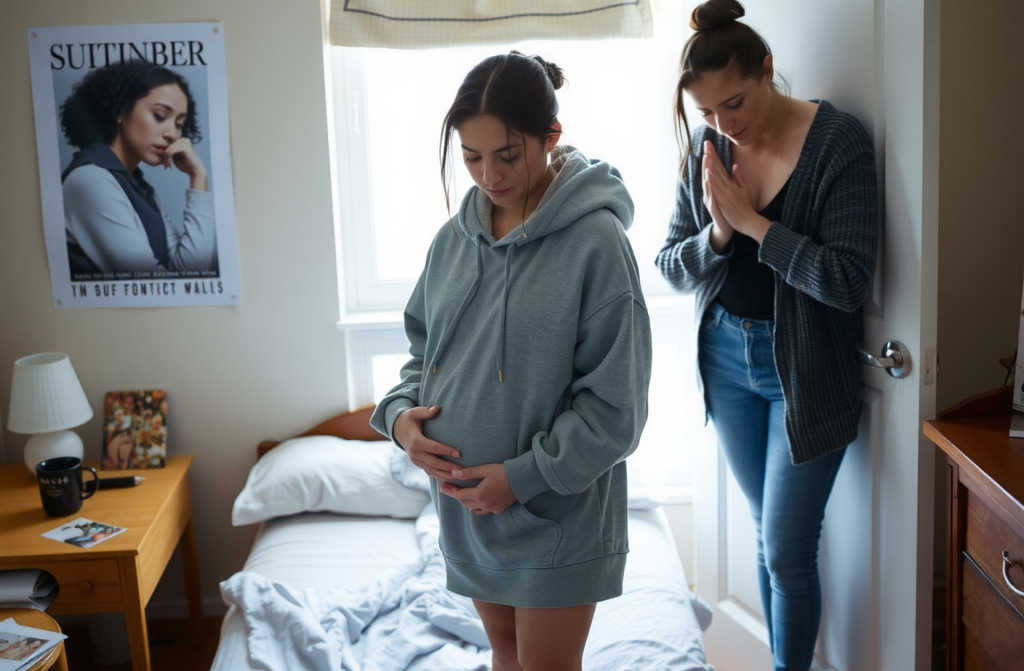
    I swear I saw him. I felt his hand, I tasted his mintsweet breath, as I always had. He wore that oversized grey hoodie that made him look like a gentle bully the one I used to tease him about. He was real, wrapping his arms around me all night, whispering I love you into my ear. He promised we would wed next year. I remember every second: the way his fingers slid down my arm, how he wept when I wept, how he made love with such fierce devotion that I thought my soul might split in two. And then he vanished.

    I woke alone, yet I felt no terror. I told myself I had simply gone for a run, as I sometimes did. His cologne still lingered on the sheets, and the heat on my skin where his hand had been lingered like a phantom. Something didnt fit, though.

    I called.
    Again.
    And again.

    Then my dearest friend, Eleanor, slipped into my bedroom, her face drained of colour. She seemed bewildered by my tears.

    Emily she whispered. Dont you know?

    I laughed. Know what?

    Arthur is dead.

    I blinked. Dead how?

    Her sobs rose. He died two days ago. A car crash, the night of the storm.

    No. No. No.

    I shouted, pushed her away, called her cruel for saying it, told her it was a joke. I showed her the text Arthur had sent the night before, the voice note that said, Im on my way. I miss your body next to mine. Eleanor stared at the phone, trembling.

    Emily he couldnt have sent that. He was already in the mortuary.

    The world tipped. My knees gave way. I bolted to the bathroom, grabbed the towel hed used, still damp. His hoodie lay crumpled on the floor. The faint bitemark on my neck. He had been there. He must have been.

    But the truth was Arthur had been buried yesterday. And, somehow, I had lain with him the night before.

    The days slipped by. Nights grew unbearable. Sleep eluded me; whenever I closed my eyes I saw himsometimes standing at the foot of my bed, sometimes murmuring in my ear. One night his voice floated to me: Dont weep, love. Im still with you. I tried to record it, but all I got was static and my own terrified breathing.

    Then my period stopped. Twice.
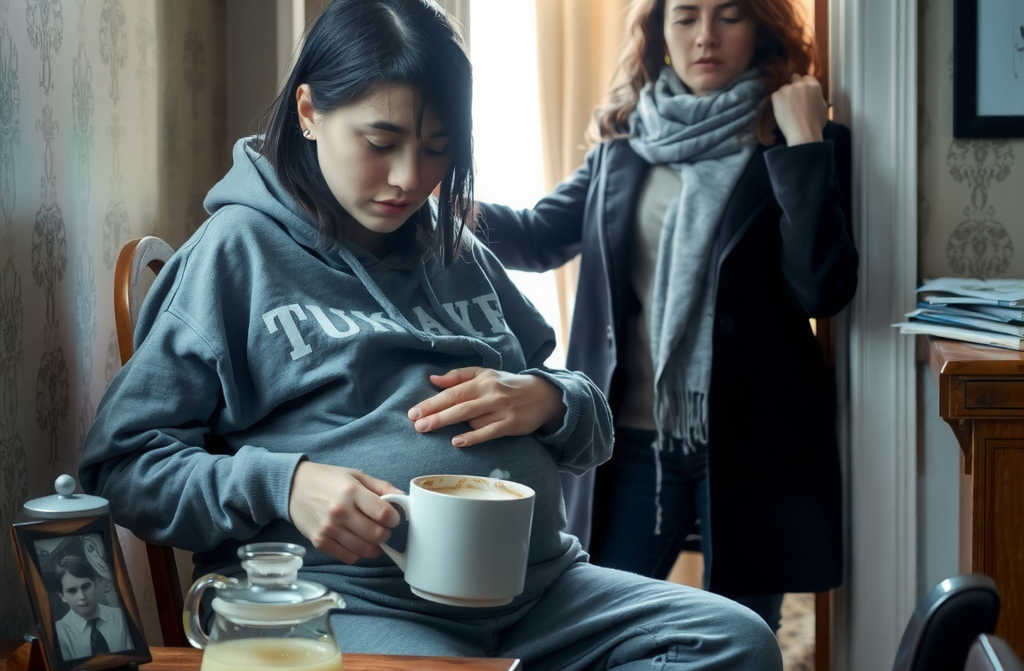
    I blamed stress, grief, trauma. Until I vomited for the fifth time in a single day. I took a test. Two lines. Positive. I collapsed. The only man I had been with was Arthur. Yet he lay in a grave, rotting away. Still, something grew inside me, kicking in the night, a faint glow beneath my skin when the lights went out. And each time I sobbed, saying I could not bear this, I heard a whisper from the shadows:

    You are not alone. Our child is coming.

    Episode2

    I cannot recall falling asleep. I only remember waking in the bathtub, the pregnancy test clenched in my hand, those two pink lines mocking my sanity. I had not spoken to anyone for days not even Eleanor. My phone rang a dozen times, its screen flashing her name; I ignored every call.

    How could I explain that I was carrying a child conceived by a man who had been six feet under for weeks? Who would believe me? Even I doubted it, until that night.

    Just as I was drifting off, a pressure pressed against my belly from within. It was no ordinary kick; it felt clever, deliberate, as if trying to catch my attention. I sat bolt upright, gasping, hands clasped over my stomach, and heard his voice again, inside my head.

    Fear not, love. I chose you.

    I screamed and fled the bed, staring at my belly in the mirror, pulling my shirt aside. I could have sworn I saw a faint blue pulse just beneath my skin. It flickered then vanished. My legs gave out; I fell to the floor, weeping.

    The following day I forced myself into the hospital. I told the doctor that I had become pregnant after my boyfriend visited me. I fibbed about the dates, about everythingexcept the symptoms.

    Strange dreams. Skin that glows. Hearing voices of someone who isnt there.

    Her expression shifted from concern to a calm suspicion.

    Well run some tests, she said cautiously. Stress can do a great deal to the mind, especially when hormones are in flux.

    She pressed her stethoscope to my womb. Her face went still.

    I cant hear a heartbeat, but something is moving.

    She ordered an ultrasound. Lying on the cold metal table, I watched the technicians face turn pallid as she adjusted the scanner. She said nothing until I asked what was happening.

    Theres a fetus, she whispered, but its shining.

    I left the hospital without waiting for the results. That night I dreamed again. Arthur stood by the old lake where we used to meet, the wind ruffling his hoodies hood.

    Our child is not like the others, he said, his voice softer than a breeze. He is me and something more.

    What do you mean? I asked.

    He only gave a sad smile. Youll understand soon. You must protect him.

    I awoke to find the curtains flung wide, though I had locked everything. The hoodie from the dream lay neatly folded on the edge of my bed, still warm to the touch. I knew thenwhat grew inside me was real. It was his, and it was changing me.

    The next day I finally called Eleanor. I needed help. She came running, clasped me tightly, and listened to every detail: the glowing spot on my belly, the nightly voices, the dreams. She did not laugh. She did not scream. She whispered, We need to take you somewhere.

    She led me to an old cottage hidden behind her grandmothers churchyard. Inside sat an ancient woman with long grey braids and pallid eyes. She looked at me once, then said,

    You are not the first, but you must be the last.

    I asked what she meant, and her answer chilled me to the bone.

    You carry the child of a bound spirit. That baby is both a blessing and a warning. Its father should never have returned. The door is now open, and others are crossing.

    Take it away? I asked.

    To take you away.

    Suddenly the lights flickered. A cold draft slipped through the windows. From the shadows I heard Arthurs voice again:

    Run.

    Episode3

    The room turned icy. The old womans eyes widened in dread as shadows stretched across the walls like claws.

    He is here, she whispered, clutching a rosary of twisted oak and bone.

    Eleanor shoved me behind her. But I was no longer afraid of Arthur. I feared what the old woman spoke ofthe others that had been summoned because he had broken the rules.

    She scattered ash in a circle and told me to stand inside.

    Dont leave that circle, whatever happens. Do you hear me? You are now a bridge, a crossing between the living and the dead. Bridges are crossed both ways.

    I stepped into the ring. My belly glowed with that same unsettling light. The baby kicked harder than ever. Then voices swarmed indozens, perhaps hundredsshouts, moans, pleas, laughter, all emanating from the darkness.

    Tari, please, I whispered, what is happening?

    And I saw him.

    His eyes were empty, filled with sorrow and fear.

    Im sorry, he said. I never meant to drag you into this. I just missed you so terribly. I wanted one more night, one more moment. I didnt know I was opening a doorway.

    Tears streamed down my cheeks.

    Why me? Why the child?

    He glanced at my belly, then at me.

    Because our love was stronger than death. But love like that shatters the laws.

    From the gloom a twisted, monstrous figure emerged, halfface, eyes blazing. It whistled at my sight. Arthur stepped between us.

    You cannot have her! it roared. You cannot take our child!

    The monster laughed.

    You broke the rule, spirit. You touched the living. Now we feast.

    The room shook. The old woman began to chant in a strange tongue. Eleanor clutched my hand, sobbing.

    Emily! Stay inside the circle!

    I shouted as the beast lunged. Arthur knocked it aside in midair. The old woman screamed,

    NOW! Choose, child! Life or love?

    Arthur, bloodied and fading, turned to me.

    You must let me go, love. For our child. For you.

    I shook my head, refusing.

    You never truly left. I live in him now, in you. But if you cling, they will take everything.

    The lights exploded. The floor cracked. Shadows howled. With every ounce of pain in my heart I cried his name and said goodbye.

    In that instant he smiled. And he was gone.

    The darkness receded. The monster shrieked and dissolved into smoke. Silence fell.

    I collapsed. The circle dimmed. My baby kicked once, then again, and settled.

    Nine months later I gave birth to a boy. He did not cry like other infants; he simply looked me in the eye, quiet and serene, as if he already understood everything. His skin faintly glowed in the dark. And sometimes, when I sing to him at night, I swear I hear a second voice harmonising with mineArthurs voice.

    I named him Arthur Jr., for he belongs to the spirit of the man who never truly left.

    Before he crossed over, he left me one final gift: a fragment of himself that no shadow can ever take away.

    The end.

  • The Gentleman Who Whispered One Question Too Softly

    12th June

    Sometimes, the quietest questions are the ones that catch everyone off guard.

    I saw it tonight. I felt it too.

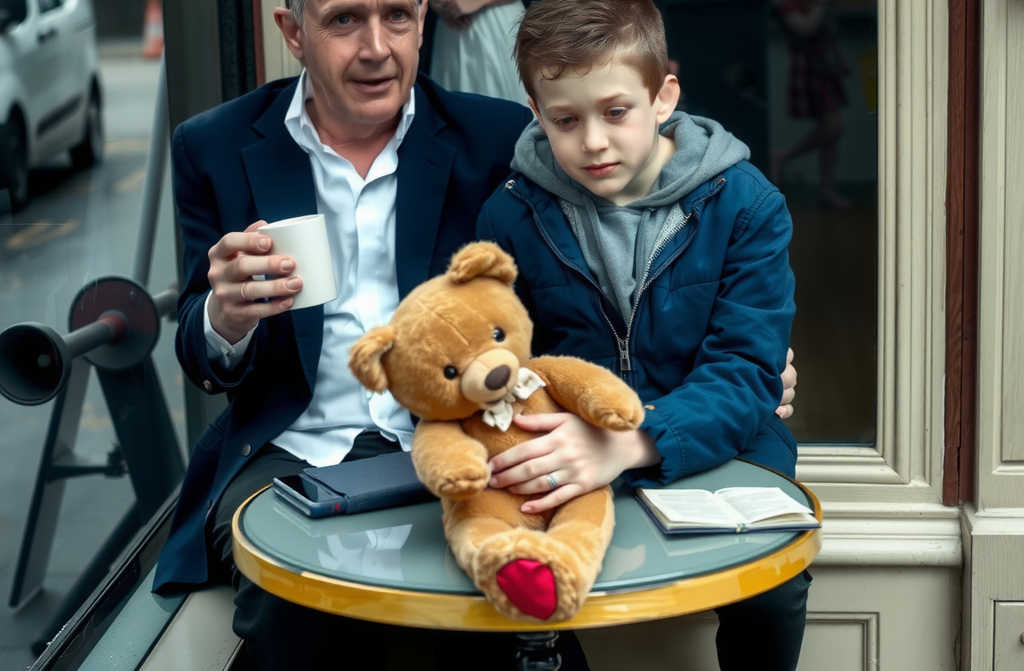
    Ill never forget standing there, the sharp ache twisting through me, my arms wrapped tightly around my stomach. The world seemed so loud and so far away at once. All I could do was look up at himthe old man. Calm, measured, steady, while everyone else flinched or fidgeted beneath the fluorescent lights of the A&E at St Marys Hospital in London.

    The receptionist didnt answer straightawaynot because she hadnt heard, but because something in his gentle tone seemed to rattle her resolve.

    She stood rooted behind her desk as he spoke. I Im not sure what you mean, she stammered, trying to muster some sense of authority. Shes only a

    Only a what? His interruption wasnt loud or rude. It was softer, sharper, and somehow more commandingnot with volume, but with an air that said hed seen far too much to ever bluster.

    He knelt while everyone watched, so his eyes were level with mine.

    Darling, he said quietly, can you tell me your full name?

    Chloe Bennett, I whispered, my words catching on fear and relief in equal measure.

    His eyes closednot with annoyance, but with the weight of something old and heavy.

    A nurse near the corridor went white as a sheet.

    The receptionist shifted awkwardly, an uncertain apology flickering across her face.

    A security guard by the entrance, called in hastily, suddenly seemed lost about why he was needed at all.

    He reached into his wool coatnot hurriedly, but deliberatelyand drew out a folded photo, worn at the edges. He passed it to the receptionist with a steady hand.

    When she looked at it, her whole attitude changed.

    It was meyears youngerperched on his shoulders in Hyde Park, clutching a balloon nearly half my size, grinning as if the world could do me no harm.

    Silence pressed down. Not noisy, but heavylike everyone had forgotten how to breathe.

    That little girl, he said calmly, is my granddaughter.

    I blinked, uncertain. Grandpa?

    The question felt so fragilelike I dared not believe it.

    His face softened around the eyes. Yes, darling.

    When he reached for me, I didnt hesitate. I walked straight into his arms, and for the first time in hours, the pain shrank just a little.

    The receptionist retreated, stammering, I I had no idea

    He replied without looking at her, his words perfectly even, No. You didnt.

    A doctor bustling from the hallway took one look and acted at once. Severe abdominal pain. Priority. We need her now.

    Still, Grandpa didnt let go. Not until they gently transferred me to a stretcher.

    His hand never left mine as they wheeled me down the corridor.

    Grandpa are you coming? My whisper filled the white space.

    His squeeze was all the answer I needed. Always.

    Later, when things had calmed, everything in the waiting area grew hushed, as if everyone wanted to pretend nothing had happened. The receptionist sat behind her counter, staring blankly at files. No one scolded her. She didnt need it. Embarrassment lingers, even without an audience.

    Because this time, help arrived quickly. Properly. Gently.

    As the ache faded, so did another ache, deeper than any illness.

    Now, hours on, Im tucked in a quiet ward under soft hospital sheets. Grandpa sits by my side, his presence a steady warmth in the cold, antiseptic room. My hand is still around his sleeve, even as I drift in and out of sleep.

    Grandpa? I mumble.

    Yes, sweetheart?

    I thought I thought nobody really wanted me here

    He squeezed my hand. Then they were wrong, Chloe. And Ill make sure you never have to think that way again.

    Through the window, Londons lights blink against the night. It isnt perfect, not by any meansbut for the first time, I feel safe.

    And sometimes, thats how healing finally begins.

    I wonder if someone else in that room wouldve spoken up, or let the silence press on. If I ever find myself in those shoes I hope Ill have the courage to speak, just as Grandpa did for me.

  • A homeless boy saw a wedding picture and whispered, “That’s my mum” – Uncovering a decade‑long secret that shattered a millionaire’s worldHe soon learned that the bride in the photo was the forgotten daughter of the mogul himself, hidden for years to protect a fragile empire.

    A homeless boy saw a wedding picture and whispered, “That’s my mum” – Uncovering a decade‑long secret that shattered a millionaire’s worldHe soon learned that the bride in the photo was the forgotten daughter of the mogul himself, hidden for years to protect a fragile empire.

    James Caldwell had it all: wealth, status and a sprawling estate tucked into the hills on the edge of Oxford. Hed founded one of the most successful cybersecurity firms in the Cambridge tech corridor and spent almost twenty years building his empire. Yet, despite his triumphs, an emptiness lingered in his grand housean absence that no vintage Bordeaux nor the priciest painting could ever fill.

    Every morning James took the same route to his office, winding through the historic quarter of the city. Lately a group of homeless youngsters had begun to gather outside a small bakery on High Street, its window display festooned with framed photographs of local weddings. One picture in particularhis own wedding shot taken a decade earlierhung proudly in the topright corner of the glass. The bakerys owners sister, a parttime photographer, had taken it, and James had allowed it to be shown because it captured the happiest day of his life.

    That happiness, however, proved fleeting. His wife, Eleanor, vanished six months after their wedding. No ransom note, no trace. The police labelled the disappearance suspicious, but without evidence the case went cold. James never remarried. He buried himself in work and erected a digitally impenetrable life, yet his heart remained haunted by the unanswered question: what had become of Eleanor?

    One rainy Thursday morning, James was driving to a board meeting when traffic slowed near the bakery. He glanced through the tinted windshield and saw a barefoot boy, no older than ten, soaked by the drizzle, staring intently at the wedding photograph in the shop window. James watched without much thought until the boy pointed straight at the picture and told the baker, Thats my mum.

    Jamess breath caught.

    He rolled his window down halfway. The lad was thin, his dark hair tangled, his shirt three sizes too big. James studied his face, feeling an uneasy knot tighten in his stomach. The boys eyes were the same soft hazel that Eleanors had always been, flecked with green.

    Hey, lad, James called out. What did you just say?

    The child turned, blinked, and repeated, Thats my mum, pointing again at the photo. She used to sing to me at night. I remember her voice. One day she just vanished.

    James stepped out of the car, ignoring the drivers nervous glance. Whats your name, son?

    Liam, the boy answered, trembling.

    Liam James knelt to his level. Where do you live?

    The boy lowered his gaze. Nowhere proper. Sometimes under a bridge. Sometimes by the railway line.

    Do you recall anything else about your mum? James asked, trying to steady his voice.

    She liked roses, Liam said. And she wore a little necklace with a white stone, like a pearl.

    Jamess heart sank. Eleanor had always worn a single pearl pendant, a gift from her mothera distinctive piece that was hard to forget.

    I need to ask you something, Liam, James said slowly. Do you remember your father?

    The boy shook his head. Never met him.

    At that moment the baker emerged, curious about the commotion. James turned to her. Had you seen this boy before?

    She nodded. He comes by now and then. Never asks for money, just stands looking at that photo.

    James called his assistant and cancelled the meeting. He took Liam to a nearby café and bought him a hot sandwich. Over lunch he peppered the boy with more questions. Liam could only offer fragments: a woman singing, an apartment with green walls, a teddy bear named Max. James sat there, stunned, as if fate had finally handed him a missing piece of a puzzle he thought irretrievably broken.

    An DNA test would soon confirm what James had suspected deep down.

    But before that, a question kept him awake that night:

    If this boy is his, where had Eleanor been for ten years? And why never returned?

    The DNA results arrived three days later. The verdict struck James like a bolt of lightning.

    99.9% match: James Caldwell is the biological father of Liam Evans.

    James sat in stunned silence as his assistant placed the report on the table. The ragged, silent boy who had pointed at a wedding photograph in a bakery window was his sona child he never knew existed.

    How could Eleanor have been pregnant? Shed never mentioned it. Yet she disappeared only six months after the wedding. If shed known, perhaps shed have found a way to tell him. Or perhaps someone silenced her before she could.

    James hired a private investigator. With his resources, he quickly engaged a retired detective, Arthur Briggs, who had once worked on Eleanors missingperson case. Briggs was wary of returning to Jamess world, but the new development intrigued him.

    The trail went cold back then, Briggs said. But a childs mention changes everything. If someone was protecting a baby it could explain the disappearance.

    Within a week Briggs uncovered something James never expected.

    Eleanor hadnt vanished completely. Under the alias Marie Evans she had been spotted in a womens shelter two villages away eight years earlier. The records were vague, likely for privacy, but one stood out: a photo of a woman with hazelgreen eyes cradling a newborn. The babys name? Liam.

    Briggs traced her next whereabouts to a small medical clinic in Kent. She had registered for prenatal care under a false name, left midway through treatment and never returned. From there she disappeared again.

    Jamess pulse quickened as the clues piled up. Shed been running. From what?

    The breakthrough came from a sealed police report naming Derrick Blake, Eleanors former boyfriend. James recalled him faintly; hed never met the man, but Eleanor had once described Derrick as controlling and manipulative, someone shed broken off with before meeting James. What James didnt know was that Derrick had been released on parole three months before Eleanors disappearance.

    Briggs found court documents showing Eleanor had obtained a restraining order against Derrick just two weeks before she vanished, but the paperwork was never processed and no protection followed.

    The theory fell into place: Derrick tracked Eleanor down, threatened herperhaps even assaulted herand, fearing for his own safety and for the unborn child, fled, assuming a new identity.

    Why then was Liam out on the streets?

    A second twist emerged: two years earlier officials had declared Eleanor legally dead. A body had been found in a nearby inlet; its clothing matched what Eleanor had worn on the day she disappeared, so the police closed the case. Dental records, however, were never compared. It wasnt her.

    Briggs tracked down the woman who ran the shelter where Eleanor stayed eight years ago. Her name was Caroline, now elderly, and she confirmed Jamess worst fear.

    Eleanor arrived terrified, Caroline recalled. She said a man was after her. I helped her give birth to Liam. Then, one night, she vanished. I think someone caught up with her.

    James could not speak.

    Then the phone rang.

    A woman matching Eleanors description had been arrested in Portsmouth for shoplifting. When her fingerprints were run through the national database, an alert linked her to a missingperson case from a decade earlier.

    James boarded a flight that night.

    At the detention centre he stared through the barred window at a pale woman with haunted eyes. She looked older, thinner, yet unmistakably Eleanor.

    Emily. (He had been calling her by her maiden name.)

    He turned, his hand shaking as he reached for the glass. Tears streamed down his cheeks.

    I thought you were dead, James whispered.

    I had to protect him, Eleanor replied, voice breaking. Derek found me. I ran. I didnt know what else to do.

    James escorted her home, cleared the minor charge, arranged counseling, and most importantly reunited her with Liam.

    When Liam saw his mother again, he didnt speak. He simply walked forward and threw his arms around her.

    Eleanor, after ten years of hiding, fearing, fleeing, collapsed into her sons embrace and wept.

    James formally adopted Liam. He and Eleanor took their time, rebuilding trust and healing from the trauma. Eleanor testified against Derek, who was later arrested on a separate domesticviolence charge, prompting the reopening of the original case and finally delivering justice.

    James often found himself glancing at that wedding photograph in the bakery window. It had once symbolised loss. Now it stood as a testament to love, survival and the strange, miraculous way fate had stitched his family back together.

  • Spotting the dog curled up by the park bench, he raced over—only to notice the leash Natalie had carelessly abandoned.

    Spotting the dog curled up by the park bench, he raced over—only to notice the leash Natalie had carelessly abandoned.

    Hey love, just thought Id give you the rundown of whats been happening over in my little corner of the Cotswolds think of it like a cosy chat over a cuppa.

    Andrew spotted a stray mutt sprawled on the garden bench and rushed over. Right there in his line of sight lay the leash Natalie had tossed aside in a hurry. Their pooch, Mars, gave his owner a plaintive, droopyeyed stare

    Its been almost two years since Andrew and his brother Victor barely spoke. Emily still cant work out how a tiny misunderstanding blew up into such a fierce row.

    Victor and Andrew Harper were born a year apart, and from the moment they could walk they were inseparable, always looking out for each other. No matter what mischief they got up to, they shared the blame equally and never let the other take the heat.

    Their hometown, Ashwick, has been thriving year after year. They were lucky to have the local squire Peter Mitchell a bornandbred lad from the village who turned out to be a brilliant agricultural adviser.

    After finishing his farming degree, Peter went back home, threw himself into community projects and quickly earned a reputation as a hard worker. Ten years on, hed become the head of Ashwicks council.

    Their private lives were going just as smoothly. After Emily finished nursing college, she started working as a healthcare assistant at the village clinic. Peter couldnt ignore such a striking young woman, and Emily returned his interest. They got hitched, and the whole village turned up for the wedding. Victor was genuinely happy for his sisters joy, even though his own marriage to Natalie was far from pictureperfect.

    While Emily was still a bit shy, Natalie would mutter snide remarks, calling her useless or pretentious. Once Emily was married, though, the sniping turned into envy. Natalie began demanding more from her husband a bigger house, a flashier car, a nicer coat for the dog

    Victor kept hearing her whine, Everyone else has everything, and we have nothing! He did his best, but Natalies wishes were beyond what money or effort could satisfy.

    Natalie wasnt exactly thrilled herself Mother Nature hadnt blessed her with children. Meanwhile, Emilys life was flourishing: she married, had a boy and then a girl, built a spacious home, and her husband landed a respectable post

    Family gatherings kept turning into arguments. Every time Victor dropped by the Harpers, Natalie would swoop in and start nagging him.

    The final showdown happened on Victors birthday. Emily brought him a Labrador puppy from the city shed been dreaming of one for ages and Peter gifted him a brandnew motorbike.

    Everything was going fine until drunken Natalie lost it and let loose on Emily:

    Oi, Len, whats this? The dog you think thats a gift? If we cant have a kid, we might as well get a dog, right?

    Emily tried to calm her down:

    Nat, settle down. Youll be sorry later

    But it fell on deaf ears. A massive tiff erupted, guests split into two camps, and Peter whispered to his wife that they should leave. They said their goodbyes and walked out of the party.

    Two years passed. That night Victor started keeping his distance from his sister, their contact reduced to a few brief, rare meetups. Tension also rose between him and Natalie.

    Every evening Victor found himself strolling down to the river with Mars. The two looked content: Victor would toss a stick, Mars would dash after it, then plop down at his feet, listening to Victors soft stories.

    Neighbours mentioned it, but Victor stayed stubborn.

    After that nasty argument, Natalie grew to loathe Emily and even the dog shed once received. When Victor wasnt home, shed chase Mars out of the house, kick him, sometimes even hit him.

    The nosy neighbours kept fanning the flames:

    Did you hear, Nat? Your husbands out by the river again with the dog
    Yesterday he ran into Len and the kids they were laughing and having a great time!

    Jealousy consumed Natalie. One day Victor asked:

    Nat, you hurting Mars?

    Do I need your dog? she snapped, storming out of the room.

    Mars started hiding from Natalie more and more, trembling whenever she appeared.

    It all came to a head one morning when Victor, fed up, shouted:

    Ive had enough of this endless jealousy!

    Furious and alone, Natalie dragged Mars out to the garden, tied him to the bench and started lashing him. The poor pup cried out in pain. When she finally let go of the belt, she packed her things and walked out for good.

    That evening Victor got home, but the dog wasnt at the gate. The place was in a mess. He found Mars crumpled by the bench, his hand clenched around the leash. He quickly freed him, scooped the trembling animal up and rushed to the clinic.

    Emily was just about to head out when she saw her brother, bloodstained and gasping:

    Len, help me please, Victor pleaded.

    They whisked Mars into the treatment room. Emily examined him thoroughly:

    Who did this?

    Natalie Victor lowered his eyes.

    Emily gave a quiet nod, stitched up the wounds, cleaned his eyes, gave him water.

    Later, in the hallway, Victor whispered apologetically:

    Sorry, Len

    Dont be daft, she smiled wearily. And Natalie?

    No thats it. No more.

    Emily rang Peter:

    Pete, could you come over, please?

    As soon as he heard his wifes exhausted voice, Peter was out the door.

    Half an hour later he was standing in the corridor. Seeing the siblings huddled together with Mars whimpering softly, he stepped in, grinned and said:

    Right, you lot, lets get you sorted.

    They took Victor home and handed him a list of care tips for the dog.

    When Emily told their mother what had happened, she sighed:

    They shouldve split ages ago.

    She gave Victor a hug and went off to help her son tidy up the house.

    Later, at the gym, Victor sat on a bench, petting Mars. Their mother swung by, stroked both of them:

    Are you both alright?

    Alive, Victor replied.

    The smell of a homecooked roast and fresh veg drifted from the kitchen. Mars nudged his nose, wagged his tail, and Victor chuckled, standing up.

    Life just went on, as it always does.

  • Heeding his mother’s counsel, a husband hauls his disease‑ravaged wife to a forsaken countryside… a year later he returns – this time for her fortune.

    Heeding his mother’s counsel, a husband hauls his disease‑ravaged wife to a forsaken countryside… a year later he returns – this time for her fortune.

    When Emma married me, she was barely twentytwo. She was freshfaced, brighteyed, already dreaming of a home where the scent of warm apple pie drifted through the rooms, childrens laughter echoed, and everything felt cosy. She believed that was her destiny. I was older, more reserved, a man of few words yet in my silence she felt a steady support. At the time, that was all she saw.

    From the first day, my mother looked at her with distrust. Her eyes said it all: Youre not worthy of my son. Emma threw herself into the marriage with all her strength cleaning, cooking, trying to fit in. Still, it never seemed enough. The borscht was sometimes too thin, the laundry not pressed properly, or she would stare at me a little too long. All of this irritated my mother.

    I kept quiet. Id been raised in a family where a mothers word was law, untouchable. I was too frightened to confront her, and Emma endured. Even when she felt weak, lost her appetite, and a simple rise from bed became a struggle, she blamed it on fatigue. She never imagined a malignancy hidden inside her.

    The diagnosis arrived unexpectedly. Late stage, inoperable. The doctors could only shake their heads. That night Emma wept into her pillow, hiding her pain from me. By morning she forced a smile again, ironed shirts, made soup, endured my mothers nagging. I drifted further away, my gaze no longer meeting hers, my voice turning cold.

    One afternoon my mother slipped into the kitchen and whispered:

    Youre still young, love. Life lies ahead of you. Hes just a burden. Whats the point of staying? Take her to the village, to Aunt Marys cottage. Its quiet there; no one will judge you. Rest, and then you can start anew.

    I said nothing. The next day, in silence, I packed Emmas belongings, helped her into the car, and drove her toward the countryside to where the lanes end and time seems to slow.

    The whole journey, Emma kept quiet. No questions, no tears. She knew the truth: it wasnt the illness that killed her, but betrayal. Their marriage, their hopes all collapsed the moment I turned the engine.

    Here youll have peace, I said as I lifted her suitcase. Itll be easier this way.

    Will you come back? she whispered.

    I gave a brief nod and drove off.

    Local women sometimes brought meals; Aunt Mary would drop by now and then, just to see if Emma was still breathing. Emma lay in bed for weeks, then months, staring at the ceiling, listening to the rain on the roof, watching the trees sway through the window.

    Death, however, was not in a hurry.

    Three months passed, then six. One day a young nurse named Sam arrived in the village. He had a warm smile and a gentle manner. He tended to her infusions, administered medication. Emma didnt ask for help she simply didnt want to die any more.

    And a miracle happened. First, she managed to sit up in bed. Then she stepped onto the porch. Later she walked to the shop. Neighbours stared:

    Are you alive, Emma? they asked.

    I dont know, she replied. I just want to keep on living.

    A year later a car pulled into the village. I stepped out, greyhaired, clutching a stack of papers. I chatted briefly with the neighbours before making my way to the house.

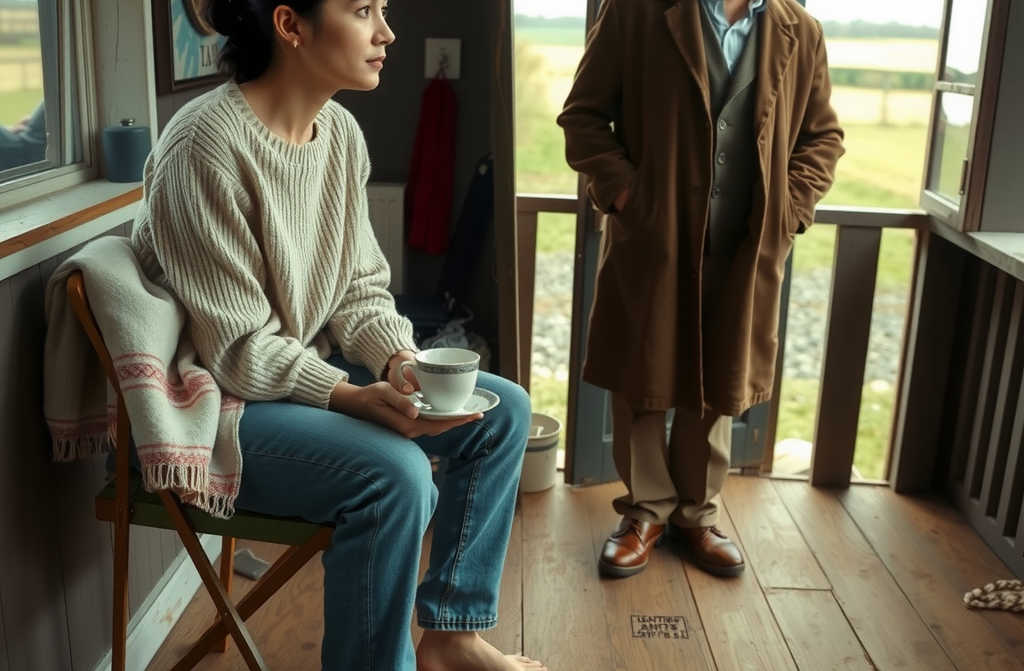
    On the porch, wrapped in a blanket, a cup of tea in her hand, Emma sat, her face flushed, eyes clear. I froze.

    You youre alive? I managed.

    She looked at me calmly.

    Expecting something else? I asked.

    I thought you were she began.

    Dead? I finished. Almost. But you wanted this, didnt you?

    I said nothing. The silence said more than any words.

    I really wanted to die, I confessed. In that house with the leaky roof, my hands frozen by the cold, no one by my side. I wanted it all to end. Yet someone visited every night someone who didnt fear the snow, who asked for nothing in return. He simply did his part. You left. Not because you couldnt have stayed, but because you chose not to.

    Im confused, I whispered. Mother

    Your mother wont save you, James, Emma replied, her voice gentle yet firm. Not before God, not before yourself. Take your papers. You inherit nothing. I left the house to the man who saved my life. You you buried me alive, while I was still breathing.

    My head hung low for a long moment before I returned to my car in silence.

    Aunt Mary watched from the doorway.

    Go on, lad, and never come back.

    That night Emma sat by the window. Outside, quiet; inside, peace. She thought how oddly life works: sometimes it isnt the disease that kills, but loneliness. And were healed not by doctors, but by a simple human caring, warm words, and attention we never even asked for.

    A week after I left, I said nothing I just walked away. Emma didnt weep. It was as if a piece of her heart that still pulsed for me had been torn away, leaving a deafening hush, like a forest after a storm: the world quieted, yet the echo of the wind lingered. She carried on, leaving behind love, marriage, betrayal.

    Fate, however, had another plan.

    One day a stranger in a black jacket, a battered briefcase in hand, knocked on the porch. He wasnt a nurse; he was a junior solicitor from the district office. He asked for Emma Meadows.

    Thats me, she replied cautiously.

    He handed her a folder.

    Your father has passed. According to the documents, you are the sole heir to a city flat and a bank account. A substantial sum awaits you.

    Emmas breath caught. A thought flashed: I have no father. The man who left when she was three had never been part of her life. Now everything was being handed over?

    The records list him as your father, the solicitor added.

    The day faded into mist. A year after the tragedy, Emma finally dialled an old friend, Nina, who still lived in the city.

    Emma? Youre alive? We thought youd died! There was even a funeral! Nina gasped.

    A funeral? Emma repeated.

    Yes. He organised it, saying youd suffered dreadful torment. A month later he sold the house, saying he could no longer live there.

    Emma sank into a chair. Not only had he abandoned her, he had erased her existence, sold the home as if she never existed.

    Two days later Emma travelled to the city with Sam, the nurse who had braved the snow each night to reach her. She clung to him, asking him to stay.

    Maybe youll need help later, she said simply.

    It turned out to be true. The flat, the money, the papers the law recognised her as the owner. Emma was no longer a discarded, condemned woman; she was a person who could steer her own fate.

    The story, however, was not yet finished.

    One market day Emma spotted me across the square, arm around another woman, visibly pregnant. My mother, now frail, walked beside us, a grim smile on her face the same mother who had once deemed Emma unworthy.

    Our eyes met. I froze; my face went pale.

    Emma I stammered.

    You didnt expect this, did you? she replied calmly. You thought Id remain dead to the world forever?

    My new partner looked puzzled.

    Whos she?

    A former acquaintance, I answered cautiously.

    Emma gave a faint smile.

    Yes, a very old one. The one you thought youd buried long ago.

    She turned and walked away. Sam waited by the car, a bag of apples in his hand.

    Everything alright? he asked.

    Now it is, she said. Ive got my name back.

    That night, on the balcony of her flat, wrapped in a blanket with a steaming mug, Emma felt no pain only a quiet that was bright, not mournful. It was as if every nightmare had finally slipped behind her.

    Months passed. Emma settled into her new reality. Her flat glowed with soft lamplight, flowers on the windowsill, the scent of coffee and scented candles. She began knitting again, as she had in her youth. The ache faded, leaving only a faint nostalgia for the years that could never return.

    Sam visited often, never rushing, bringing food, helping with chores, even making borscht, and sitting silently when Emma simply needed company.

    One quiet winter evening, as snow fell outside, Emma spoke:

    Do you know, for the first time I truly feel alive? Strange, isnt it?

    Sam smiled.

    Sometimes you have to be drowned before you can breathe again. You did it. Youre stronger than you think.

    Emma watched him for a long while, then, for the first time in ages, rested her head on his shoulder not as a rescuer, but as someone who had been there when she needed him most.

    Later, Emma felt a wave of weakness. At first she thought it was a cold, then fatigue. The doctor, with a friendly grin, delivered unexpected news:

    Congratulations, Emma. Youre pregnant.

    Her heart raced. Pregnant? After everything illness, betrayal, death, rebirth?

    The ultrasound showed a tiny, healthy heartbeat.

    Emma left the clinic sobbing, tears of sheer, bewildered joy. It felt as if a voice whispered, Your story isnt over yet.

    Sam pulled her into a tight embrace, saying simply:

    Well manage. Together.

    A week later Emma flipped through the local newspaper and read a headline:

    Man arrested for fraud: charges include forgery, staging exwifes death, and selling her property.

    The name printed: James Meadows.

    Emmas stomach clenched.

    She set the paper down, sipped her tea, and placed her hand over her belly.

    Youll never know betrayal, she murmured. Youll have a mother and a real father.

    Labour took its toll. Emmas delivery was hard, her heart pounding as if trying to break free of her chest. Doctors shouted, ceiling lights flickered, and the room buzzed with frantic voices. Sam stood at the doorway, silent as a stone, praying like a child.

    Then came a cry.

    A little girl, the doctor announced. Tiny but strong. Shes here.

    Emma gazed at the newborns wet cheeks and whispered:

    Welcome, my life. Ive waited for you forever

    A year slipped by.

    In the kitchen, the kettle whistled. Sam fed Lily oatmeal, while Emma flipped cottagecheese pancakes. Sunlight streamed through the window, carrying the scent of garden roses. No shouting, no harsh words, no coldness.

    Look, Emma pointed at Lily, shes smiling. She has your eyes.

    Sam wrapped his arms around her from behind.

    My strength is yours now, he said.

    Its not, Emma whispered. Its ours, together.

    She finally understood that to reach her own heaven shed had to pass through hell. To be reborn, she first had to die to the old world and she had done exactly that.

    Two more years passed. Life felt as solid as freshbaked bread on the table warm, nourishing, safe. Lily grew into a cheerful child, her cheeks dimpled, eyes bright. Sam opened a small pharmacy; Emma helped with paperwork, ordering supplies, simply being by his side.

    Everything seemed in place.

    Then a yellow envelope arrived, handwriting messy, a single unsigned page inside:

    Are you sure you love Lily? That shes your daughter? Check. Dont be surprised if the truth surfaces. Is Sam too good to be true? Everyone has secrets.

    Emmas hands trembled. She read it three times. Was it a provocation? Revenge? Or genuine truth?

    Memories flashed: their first night together, latenight talks, the moment new life blossomed inside her. Only one person could know for sure. Only one person had stood by her then.

    The phone rang. A blocked number.

    Emma? Is that you? a hoarse voice said, almost foreign. Dont trust him. Sam isnt who he says he is. Look into his past. If you want Lily to stay alive, do as we say.

    The line clicked.

    From that day on, terror became their routine. Letters arrived weekly. One night a photo of their house appeared. Another showed Lily on the playground. A third was a newspaper clipping: Young mother found dead after family dispute.

    It wasnt simple blackmail it was a scheme. Someone was watching them, knowing too much.

    Emma kept silent, not telling Sam. Fear paralysed her. She started to sift through Sams documents in secret. She discovered that three years earlier hed changed his name after a conviction for assault and threats, claimed as selfdefence in a tabloid.

    One night she broke into Sams study. There were medical certificates, bank statements, even a copy of her fathers will, and his application for a junior assistant rolefilled before he ever set foot in the village.

    Emmas heart stopped. She knew everything.

    Footsteps sounded on the corridor. Sam entered.

    Looking for something, Emma? he asked calmly.

    She turned slowly.

    Who are you? she demanded.

    Im the man who rescued you when everyone turned away, he replied. But youve realised it wasnt an accident.

    You knew about me? she asked.

    Yes, from the start. I was given a task, but I stayed because of you. I changed my life for you.

    Who gave you the task?

    The people who wanted the house, the money and you. They didnt expect Id sacrifice everything for you.

    That night Emma packed a bag, took Lily, and vanished. She rented a modest cottage in another county, never revealing the address to Sam or anyone else.

    The threats didnt cease. Letters, calls, demands to hand over the flat. Warnings that something could happen to Lily.

    Finally, a final message arrived:

    May 23, 7p.m., Riverside Park. If you dont come your daughter wont finish school.

    She went, carrying a dictaphone, a camera, and a knife tucked in her bag. Her heart hammered like a drum. She sat on a bench opposite a bespectacled man.

    Congratulations, Emma. Youve proved stronger than we imagined, he said.

    Who are you? she asked.

    Your fathers old associate. We worked together. He left you more than you think documents, contacts, evidence. As long as you hold them, youre in danger.

    What if I hand them over? she whispered.

    Then well erase you. If not your story ends badly for everyone.

    I know nothing! she shouted.

    You will soon, he replied, turning away. Ten minutes later her phone buzzed with a photo of Lily asleep peacefully.

    After that night Emma slept barely a wink for three days, watching Lilys steady breathing, her mind a storm of questions: Who was this man? What documents? Why was she being hunted? How could she protect Lily?

    She dug through her late fathers old papers and found a USB stick. Plugging it into her laptop revealed folders titled Archive, Witnesses, Finances. Inside were records of a massive postwar fraud: lands, factories, government contracts, signatures, names of officials still in power. They werent after the flat or the money they feared the truth coming to light.

    Her father had tried to atone before death, leaving everything behind, thinking it would protect her. Instead, hed left a curse.

    Four sleepless nights later Emma decided. She gathered the files, the USB, copies of everything, and drove to an independent newsroom. There she met a veteran journalist, Mr. Hart, a quiet man with sharp eyes.

    This is a bomb, he said after scanning the material. You know they wont leave you alone now?

    I do, she replied. But I wont stay silent. They tried to kill me once.

    Three days later the exposé ran, complete with original documents and names. The story sold out the papers within hours, TV channels ran the segment, investigations opened, resignations followed, arrests were made.

    Emma stood by the window watching Lily doodle a sun on a piece of paper.

    Thats yours, Mum, Lily whispered. Youre my sunshine.

    Emma leaned down, hugging her.

    No, love. Youre my sunshine. Youre the light that pulled me out of the darkness.

    A week later Sam returned, a white chrysanthemum in hand. He hesitated at the door, unsure if shed open. She did.

    I wont make excuses, he said softly. I was part of the game. You werent. You became its meaning. If youll let me, Ill stay. Forever.

    Emma stared into his eyes, then nodded.

    On one condition.

    Whats that?

    No lies. Not even if the truth scares you more than anything.

    Sam embraced her quietly.

    Six months passed. The case officially closed. No compensation, no official apology, but Emma gained freedom, truth, and a man she could trust.

    She began writing, penning articles about women whod been broken and rebuilt, about life after betrayal, about finding light in the deepest shadows.

    She once wrote:

    They tried to kill me with coldness, lies, and selfishness, not bullets. I survived because in the darkest moment someone reached out a hand. If youre hurting now remember: darkness never lasts. The sun always returns. You just have to wait for it.The garden beyond the kitchen window buzzed with the hum of bees, and Lily chased a bright red kite that fluttered like a promise against the clear sky. Emma stood at the threshold, her hands steady, watching the childs laughter rise above the chorus of spring. Sam leaned against the doorway, his eyes soft but alert, the chrysanthemum now wilted on the table beside a fresh stack of newspapers that carried her byline on their front pages.

    Across town, a courtroom door slammed shut as the last of the conspirators were led away, their faces pale under the fluorescent lights. James Meadows, his sentence read in cold, measured tones, would spend the rest of his days behind iron bars, his name reduced to a footnote in the files that Emma had once handed to Mr. Hart. The weight that had pressed on her chest for years dissolved into a quiet, lingering relief.

    In the evenings, when the house settled into the gentle sigh of night, Emma would sit at the old wooden desk, the same one she had once used to draft letters to a future that seemed impossible. She opened a new notebook, its pages blank and eager, and began to sketch the outline of a memoirnot just her story, but the chorus of voices of every woman who had ever been dismissed, silenced, or left to drown. The ink flowed, each line a bridge from the shadows she had endured to the light she now cultivated.

    Sam placed a fresh pot of tea on the table and brushed a stray lock of hair from Emmas cheek. Weve built something that cant be taken away, he said, his voice low but firm. She smiled, feeling the truth settle like warm water in her veins. Weve turned betrayal into testimony, she replied, and their hands found each others, fingers interlaced like the roots of the oak trees that shaded the garden.

    Months turned into seasons, and Lily grew tall enough to clutch the kites string with confidence, her eyes reflecting both her mothers determination and her fathers steadiness. When Lilys first day of school arrived, Emma knelt to tie a ribbon around her daughters neck, whispering, Carry this courage wherever you go, and never let anyone decide your worth.

    The sunrise that morning painted the sky in strokes of gold and rose, and Emma felt, for the first time since the night she was abandoned on a lonely road, that the world was wholly hers to shape. She turned to Sam, who stood beside her, and together they watched Lily run toward the school gates, her silhouette merging with the light.

    In that moment, the past lay beneath them like a distant, cracked photographstill there, but no longer dictating the present. Emma breathed in the crisp air, the scent of fresh earth and blooming roses, and knew that every scar had become a map, guiding her toward a horizon she had once thought unreachable. The story that began with a whispered betrayal now resonated in every article she wrote, every courtroom she testified in, and every lullaby she sang to her child. And as the day unfolded, the promise of tomorrow arrived not as a distant hope, but as a living, breathing reality, warm enough to hold the entire world in its palm.

  • I slept with my boyfriend, not knowing he’d been dead for two days—now I’m carrying the child of his ghost.

    I slept with my boyfriend, not knowing he’d been dead for two days—now I’m carrying the child of his ghost.

    **Episode1**

    I swear I saw him. I felt his skin, I tasted his kiss, I breathed his warm breathminty as always. He wore that oversized grey hoodie he loved to mock me about, the one that made him look like a gentle bully. He was real. He held me through the night, whispered I love you into my ear, promised wed marry next year. I can replay every second: the way his fingers slid down my arm, the way his tears fell whenever I wept, the way he made love with such ferocity I thought my soul would split in two. And then he vanished.

    I woke alone, but fear didnt seize me. I told myself he must have gone for a jog, as he sometimes did. His cologne still lingered on the sheets; my skin still smouldered where his hands had been. Something didnt fit.

    I called.
    Again.
    And again.

    Then my best friend, Clare, slipped into my room, her face pale, eyes rimmed with tears.

    Ethel you dont know, do you? she whispered.

    I laughed. Know what?

    James is dead.

    My heart stopped. Dead how?

    She sobbed harder. He died two days agoin a car crash on the night the storm hit.

    No. No. No. I shouted, shoved her away, accused her of cruelty. I showed her the text James had sent the night before: a voice note that said, Im on my way. I miss feeling you next to me. She stared at the phone, trembling.

    Ethel he couldnt have sent that. Hes already in the mortuary.

    The world tilted. My knees gave way. I bolted to the bathroom, grabbed the damp towel hed used, the hoodie hed left on the floor, the bite mark still etched on my neck.

    He had been there. He had to be.

    But the truth was James had been buried yesterday.

    And somehow, I had made love to him last night.

    Days passed. Nights grew unbearable. I couldnt sleep; every time I shut my eyes his silhouette appeared at the foot of my bed, his voice murmuring, Dont cry, love. Im still with you. I tried to record it, but all I caught was static and my own terrified breathing.

    Then my period missed. Twice.

    I blamed stress, grief, traumauntil I vomited for the fifth time in a single day. I took a pregnancy test. Two pink lines. Positive. I collapsed.

    The only man Id ever been with was dead. Buried, rotting, gone. Yet something was growing inside mea kick in the night, a faint glow beneath my skin when the lights were out. And every time I sobbed, I heard a whisper from the shadows:

    Youre not alone. Our child is coming.

    **Episode2**

    I dont remember falling asleep. The first thing I recall is waking in the bathtub, the pregnancy test clenched in my hand, those two pink lines mocking my sanity. I hadnt spoken to anyone for daysnot even Clare. My phone rang dozens of times, her name lighting the screen, and I ignored every call.

    How could I explain I was carrying a baby fathered by a man whod been six feet underground for weeks? Who would believe me? Not even I believed ituntil that night.

    Just as I was drifting into sleep, a pressure pressed against my belly from within. Not a normal kick, but a deliberate, intelligent tap, as if trying to get my attention. I sat up, gasping, hands cradling my stomach, and heard his voice againinside my head.

    Dont be afraid, love. I chose you.

    I screamed, leapt out of bed, and stared at my reflection in the mirror, lifting my shirt. I could swear I saw a faint blue pulse beneath my skin, flicker, then vanish. My legs gave out; I collapsed, sobbing.

    The next day I forced myself into the A&E at Leeds General Hospital. I told the doctor Id become pregnant after a visit from my boyfriend. I lied about dates, about everythingexcept the symptoms.

    Strange dreams, skin that glows, hearing voices of someone who isnt there, I recounted.

    The doctors expression shifted from concern to cautious suspicion.

    Well run some tests, she said softly. Stress can do a lot to the mind, especially when mixed with pregnancy hormones.

    She pressed her stethoscope to my belly. Her face went ashen.

    I cant hear a heartbeat. Something is moving.

    She ordered an ultrasound. While I lay on the cold metal table, the sonographers eyes grew wide. She adjusted the scanner, silent until I asked what was wrong.

    Theres a fetus, she whispered, but its glowing.

    I left the hospital without waiting for the results. That night, I dreamed again. James stood by the old pond behind our cottage, the wind ruffling his hoodies hood.

    Our child isnt like the others, he said, his voice softer than the breeze. He is me and something more.

    What do you mean? I asked.

    He only smiled sadly. Youll understand soon. You must protect him.

    I awoke to find the curtains flung wide, though Id locked every latch. The hoodie from my dream lay neatly folded at the edge of my bed, still warm to the touch.

    Thats when it hit mewhat grew inside me was real. It was his. It was changing me.

    The following day I finally called Clare. She arrived breathless, threw her arms around me, and listened as I showed her the luminous spot on my belly, recounted the dreams, the voice, the baby.

    She didnt laugh. She didnt scream. She whispered, We need to get you somewhere.

    She led me to a crumbling cottage hidden behind her grandmothers church in a Yorkshire village. Inside, an elderly woman with long silver braids and pale eyes stared at me once, then said,

    Youre not the first, but you must be the last.

    I asked what she meant, and her answer chilled me to the bone.

    You carry the child of a bound soul. That baby is both a blessingand a warning. Its father should never have returned. The door is open now, and others are crossing.

    For what? I asked.

    To take you.

    The lights flickered. A cold draft swept through the windows. From the shadows, Jamess voice echoed once more:

    Run.

    **Episode3**

    The room turned icecold. The old womans eyes widened with terror as inhuman shadows stretched along the walls like claws.

    Hes here, she whispered, clutching a rosary made of twisted oak and bone.

    Clare shoved me behind her, but fear of James had fled; now I feared the things the old woman warned aboutthose who came because hed broken the rules.

    She scattered ash in a circle and commanded me to stand inside.

    Dont step out, no matter what. Do you hear me? she warned. You are a bridge now, between the living and the dead. Bridges are crossed both ways.

    I stepped into the circle. My belly glowed with that unsettling light. The baby kicked harder than ever.

    Then the voices camedozens, maybe hundredsshouts, moans, pleas, laughter, all emanating from the darkness.

    James, please, I begged, whats happening?

    He appeared, but not as I remembered. His eyes were empty, full of sorrow and fear.

    Im sorry, he whispered. I never meant to drag you into this. I just missed you so much. I wanted one more night, one more moment. I didnt know I was opening a door.

    Tears streamed down my cheeks. Why me? Why the baby?

    He looked at my belly, then at me. Because our love was stronger than death. And love like that shatters the laws.

    A grotesque, twisted figure emerged from the gloomhalfface, eyes blazing. It hissed at my sight.

    You cannot have her! it roared. You cannot take our child!

    James lunged between us. No! he shouted. You wont have her!

    The monster laughed. You broke the rule, spirit. You touched the living. Now we feast.

    The walls trembled. The old woman began chanting in a language none of us knew. Clare clutched my hand, sobbing, Ethel! Dont leave the circle!

    I screamed as the monster hurled itself at me. James thrust himself forward, throwing the beast into the air. The old womans chant rose to a scream.

    NOW! Choose, girllife or love?

    James, bloodied and fading, turned to me. You have to let me go, love. For our child. For you.

    I shook my head, tears blurring my vision. I cant lose you again!

    You never truly lost me, he whispered. I live in him in you. But if you cling, they will take everything.

    The lights burst. The floor cracked. Shadows shrieked. With every ounce of anguish in my heart, I shouted his name and said goodbye.

    In that instant he smiled, and then he was gone.

    The darkness receded. The monster shrieked and dissolved into smoke. Silence fell like a heavy blanket.

    I collapsed. The circle dimmed. The baby inside me gave one kick, then another, then settled.

    Nine months later I gave birth to a boy. He didnt cry like other infants; he stared into my eyes, quiet and calm, as if he already knew everything. His skin glimmered faintly in the dark. And sometimes, when I sing to him at night, I swear I hear a second voice harmonising with mineJamess voice.

    I named him Jameson, meaning son of James. It was never truly mine.

    Before he crossed over, he left me one final gift.

    A fragment of himselfsomething no shadow can ever take away.

  • — Who Are You Really?!

    — Who Are You Really?!

    Who are you?!
    Emma froze in the hallway of her flat, her eyes wide with disbelief.

    Standing before her was a stranger in her thirties, hair pulled into a neat ponytail, and behind her two childrena boy and a girlwatched the unexpected guest with curious eyes.

    The entrance hall was littered with unfamiliar shoes, strange jackets hung on the coat rack, and the kitchen wafted the scent of a hearty roast.

    And you are? the woman asked, instinctively pulling the younger child close. We live here. Thomas let us stay. He said the landlady wouldnt mind.

    This is MY flat! Emmas voice trembled with outrage. I never gave anyone permission to live here!

    The woman blinked, looking around at the toys scattered on the floor, the laundry drying on the line, as if searching for proof of her right to be there.

    But Thomas Harper said Were relatives He said you werent opposed That youre kind and understanding

    Emma felt a wave of indignation and a shock like a bucket of cold water poured over her. She shut the door slowly and pressed her back against it, trying to gather her thoughts. Her home, her space, her lifenow she felt like an intruder in them.

    A year earlier everything had been different. Emma was on holiday by the sea, enjoying a wellearned break after completing a demanding refurbishment of a historic building in the centre of Birmingham.

    At thirtyfour she was a successful architect, used to relying only on herself. Her career filled most of her days, and she never complainedher work brought satisfaction and a steady, comfortable income.

    She had met Thomas on a balmy August evening by the promenade. He was a charming man, a few years older, with a warm smile and attentive brown eyes.

    Divorced for three years, a father of twoa tenyearold boy, Jack, and a sevenyearold girl, Sophiehe worked as a site manager for a large construction firm.

    Thomas courted her in a decidedly oldfashioned waydaily bouquets, seaside restaurants with a view, long walks along the pier under the stars.

    Youre special, he would say, gently kissing her hand. Smart, independent, beautiful. I havent met a woman so whole for a long time. You know exactly what you want from life.

    Emma melted under his words and attention. After a series of failed relationships with men who either feared her success or tried to compete with her, Thomas seemed like a genuine gift of fate.

    He respected her work, asked about her projects with genuine interest, and supported her when clients made impossible demands.

    I love that youre strong, he told her, yet you remain gentle, tender, and caring.

    The holiday ended, but their relationship continued. Thomas would visit her in Birmingham; she would travel to his home in Southampton. They kept in touch via video calls, texts, and future plans.

    Eight months later he proposed in the very spot where they had first met. Their wedding was modest but warm. Emma moved to Southampton, took a job at a local architectural studio, and left her Birmingham flat empty.

    Were one family now, Thomas said, holding her tightly. My children are your children, my problems are your problems. Well get through everything together.

    At first Emma was happy. She loved the feeling of a real family, the warmth of a shared home, the childrens laughter echoing through the house. She enjoyed helping Thomas with the kids, buying them presents, paying for their extracurricular activities, and driving them to doctors.

    But gradually things began to shift.

    It started with small thingsThomas would take money from her debit card without asking. Forgot to ask, sorry, hed say when Emma spotted the deduction.

    Soon he began to ask for help with alimony to his exwife more often.

    You understand, hed explain, spreading his hands with a guilty smile. The kids arent to blame for the paycheck that fell short this month. Ive got a delay at work.

    Emma wanted to help. She loved Thomas and had grown attached to his children.

    Yet the requests grew more frequent and larger.

    Pay the childrens trip to their grandmother in Norwich, buy new winter coats, cover the summer camp fees, fund a maths tutor.

    The worst part was Thomas started transferring money directly from Emmas card to his exwife, without even a warning.

    These are our children now, he defended himself when Emma fumed over yet another transfer. You love them, dont you?

    And then, Your salary is higher than mine, so what? It doesnt hurt you.

    It isnt about whether it hurts, Emma said calmly but firmly. Its my money, and you should discuss it with me first.

    Of course, of course. Ill ask next time, I promise.

    But the next time was no different.

    Emma began to feel less like a partner and more like a convenient source of cash. Her opinion was never asked; she was simply presented with facts.

    Whenever she tried to negotiate the household budget, Thomas accused her of being stingy, selfish, and unwilling to be a real family.

    I thought you were different, he said bitterly. I thought money didnt matter to you

    That May, when Emma decided to visit her ailing mother in the West Midlands and swing by her old flat in Birmingham to check on it, she still hoped a short separation might give them both space to rethink things.

    What she found in her flat shattered her worst fears.

    The apartment was a mess of livedin chaos. Dirty dishes towered in the kitchen, foreign laundry hung in the bathroom, and a childs cot occupied her bedroom.

    Unpaid utility bills sat on the kitchen table, totaling over £300.

    How long have you been living here? Emma asked, trying to stay calm.

    Three months now, the woman replied, still not grasping the scale of the situation. Thomas Harper said we could stay until we found somewhere of our own. We pay, of course. £150 a month. He said you have a big heart.

    Emmas hands shook as she fished out her phone and dialed Thomas.

    Thomas, did you ever ask me before moving a family into my flat?! she blurted, not waiting for a greeting. And wheres the rent money? Eighteen hundred pounds for three months!

    Emma, calm down Thomass voice sounded apologetic and defensive. Its distant relatives, Sarah with the kids. The children are small, they had nowhere else to go.

    Youre not even living there, are you? Youre not against helping people, are you? Ive been saving the money for our joint holiday in Turkey, wanted to surprise you.

    In that instant something inside Emma finally crackednot from anger, but from a clear, cold understanding. She realised Thomas saw her not as a wife or partner, but as a convenient resource.

    Her flat, her money, her lifeall were at his disposal, and he never thought to ask her opinion.

    Thomas, she said quietly, her voice steelstrong, your relatives have a week to vacate my flat.

    Emma, are you out of your mind? his tone sharpened. The kids are there! Where will they go? Youre heartless!

    Those arent my problems. One week. And I want every penny of rent back.

    How can you! Youre my wife, were a family!

    Dont start! In a healthy family everyones opinion matters, not just facts thrust upon them.

    She hung up and turned to the woman, who watched the conversation in horror.

    Im truly sorry, Emma said, genuine compassion in her voice. but you must leave. No one asked my permission.

    The following days were a flurry of action. Emma called a locksmith and changed the locks. She consulted a solicitor to arrange a proper divorce and sort the finances. She blocked Thomass access to all her accounts and cards.

    He called daily, pleading, accusing, trying to tug at her sympathy.

    I thought we were a real family, he sobbed. I thought we were a team, that you loved me.

    You thought you could treat my property as yours, Emma replied evenly. It turned out you couldnt.

    Youre a coldhearted woman, destroying a family over some money!

    You destroyed the family when you decided my opinion didnt matter.

    The divorce proceeded quicklythere was little joint property, and the children were already under separate arrangements. Thomas returned some of the money he had spent on his relatives, but not all.

    Emma didnt drag the courts out; she simply wanted to close this painful chapter as fast as possible.

    Youll regret this, Thomas warned during their final meeting at the solicitors office. Youll end up alone, unwanted. Who needs a woman like you?

    I need myself, Emma answered calmly. And thats enough.

    When all paperwork was signed, she packed her belongings and leftnot just the flat, but the sea, the arguments, the doubts.

    On the train, watching the countryside flash by, she thought not of lost love but of how vital it is to keep ones own identity within a relationship.

    And she remembered that true love never demands selfsacrifice to the point of erasing who you are.

    **Lesson:** love should lift you up, not turn you into a tool; never let anyone decide your worth without your voice.

  • Fate Repeats ItselfFate Repeats Itself

    The winter evening had settled over the city early that day. By the start of six o’clock, the sky had turned completely dark, and the streetlights had come on with their steady yellow glow. Inside my flat, it was warm and inviting. The soft light from the standing lamp bathed the living room in a gentle, honey-like radiance, accentuating the shapes of the furniture and casting odd shadows in the room’s corners. On the coffee table, beside a small dish of biscuits, two mugs of tea were steaming, their light vapour rising and filling the air with a comforting scent of mint and honey. Outside, big snowflakes were swirling slowly, sometimes sticking to the windowpane before drifting down to the sill, where a thin layer of fluffy snow had already accumulated.

    I had just finished laying the table, choosing my favourite mugs, setting out the biscuits, and even lighting a small scented candle to make the atmosphere especially cosy. Just then, the doorbell rang. I quickly went to the hallway and opened the door. There stood Anthony, looking a bit rumpled and red-faced from the cold.

    “Freezing out there,” he muttered, stepping inside and vigorously brushing the snow off his coat. The collar was covered in white flakes, and tiny snowflakes were still melting on his eyebrows and eyelashes. “In weather like this, you just want to stay indoors, I swear.”

    “That’s exactly what we’re doing,” I replied with a warm smile, taking his coat. “Come on in. Emily and I were just about to have some tea, and I think you could use some too.”

    We went into the living room. Anthony headed straight for the coffee table, not hiding his eagerness to warm up. He sank into the soft armchair, reached for a mug, and held it with both hands, enjoying the warmth emanating from it. The steam gently enveloped his face, and for a moment he closed his eyes, feeling the comfort return.

    “So, what’s so important that you decided to come over on a Friday evening? Weren’t you supposed to be taking your wife and son to visit your mother-in-law?” Anthony asked with a slight smirk. There was a touch of irony in his voice, but his eyes showed genuine curiosity. He took a small sip of tea, carefully testing the temperature, and nodded in satisfaction the drink was just as he liked it.

    “I was, but I didn’t go,” I replied with a crooked smile, taking another sip.

    “Right. How’s Charlotte? How’s Nicholas?”

    Anthony paused for a second, as if thinking where to start. Then he waved his hand, as if dismissing some thoughts.

    “Everything’s fine, really,” he said, trying to sound casual. But there was a note in his tone that told me there was more behind that “fine.”

    He sat in the chair, nervously twisting the empty mug in his hands. He would grip it with his fingers, then turn it slightly, as if examining the pattern on the side, then grip it again as if this simple mechanical gesture helped him gather his thoughts. His gaze avoided mine, wandering around the room: it would linger on the bookshelf, then slide over the picture on the wall, then rest on the edge of the table.

    Finally, taking a deep breath, he said quietly but clearly:

    “I’ve filed for divorce.”

    I froze. The mug in my hand trembled slightly, and a light ripple ran across the surface of the tea. I looked at my friend with genuine surprise, as if trying to read confirmation on his face of what I had just heard.

    “Seriously? With Charlotte?” I asked, my voice rising a half-tone involuntarily.

    Anthony nodded silently, not taking his eyes off the window. His eyes seemed to be trying to see something far away, beyond the veil of falling snow, as if the answer to all questions was hidden there in that white whirl.

    “Yes,” he confirmed after a short pause. “I met someone… Hannah. With her, I feel like I’m living for the first time. She’s… like a light in the window, you know?”

    “Are you sure this isn’t just a fleeting infatuation?” I asked, trying to keep my voice even, but anger still slipped through. “You have a child! Nicholas is only two! How will he manage without his father? Remember your own childhood!”

    Anthony suddenly lifted his head, and a firmness appeared in his gaze that I hadn’t noticed before. It was clear he had thought about this question many times and had already prepared clear answers for himself.

    “I’m sure,” he replied firmly, without hesitation. “I’ve thought about it a lot. I can’t live like before anymore waking up every morning feeling like I’m playing someone else’s role! This isn’t life, Andrew! It’s just existing out of habit, by inertia. But with Hannah… everything is different! I feel like I want to wake up in the mornings again, that I have goals, dreams, that I’m finally doing what I really want! And as for Nicholas… I’m not abandoning him, I’m not like my father.”

    I stayed silent, lost in memories. A picture from the past flashed before my eyes: the schoolyard, a cool autumn morning, Anthony and I sitting on a bench during recess. Back then, as a teenager with bright eyes and unwavering confidence in his voice, Anthony had passionately assured that he would never become like his father. “He just left, didn’t even try to fix anything,” he had said then. “I’ll never do that. If I ever get married, I’ll fight for the family to the end.”

    Those words, spoken so many years ago, now echoed in my mind. I looked at my friend no longer a boy, but a grown man sitting opposite in the soft armchair and quietly, almost in a whisper, asked:

    “Remember how you said in school that you’d never repeat his mistakes?”

    Anthony tensed immediately. His fingers, which had been relaxed on his knee, clenched into fists. He raised his chin slightly, as if preparing for defence.

    “Of course I remember. So what?” There was caution in his voice, as if he expected a rebuke in advance.

    “That now you’re doing exactly the same thing,” I said calmly but firmly, not looking away. “Leaving your wife and child, abandoning them to fate.”

    Anthony jumped up from the chair as if a spring had propelled him. He took two steps across the room, then turned to me, and fire flashed in his eyes not quite anger, not quite despair and a desire to prove his point.

    “It’s completely different!” he exclaimed, raising his voice, but then controlled himself, lowering his tone. “My father just ran away. He took off and disappeared from our lives without even explaining. But I… I’m being honest about my feelings. I’m not hiding anything from Charlotte. We talked, discussed everything. I’m not running I’m trying to do the right thing, even though it’s painful. And I’m not going to abandon Nicholas! I’ll visit often, pick him up on weekends! It’s a completely different situation, don’t you see! I’m not like my father!”

    I didn’t rush to respond. I slowly ran my hand along the edge of the table, as if checking its smoothness, and only then raised my eyes to my friend. My gaze was calm, but it showed genuine concern.

    “Do you mean it?” I asked in an even, almost impassive voice, but that restraint conveyed the depth of my feelings. “Do you think it will be easier for Nicholas because you ‘honestly’ left him? For a child, it’s not so important whether you explained everything or not. What’s important to him is that dad suddenly stopped coming home, stopped reading bedtime stories, stopped playing with cars with him. Are you sure your honesty outweighs that pain?”

    Anthony stood still, as if my words had stopped him mid-stride. He lowered his gaze, as if studying the pattern on the carpet, and for a moment it seemed he was searching it for the answer to his tormenting question.

    As he spoke, I could tell memories were flashing through Anthony’s mind, vivid and painful, like frames from an old film. There he was a seven-year-old boy in a worn jacket, sitting on a cold bench outside the school and staring fixedly at the gate, looking for his mum. She was late from work again, and it felt like he’d been waiting forever. The wind cut to the bone, but he didn’t leave afraid that mum would pass by without noticing him.

    Then the picture changed: he was thirteen. He stood at the classroom window, turned away from his classmates who were mocking him, asking: “Where’s your dad? Why didn’t he come to parents’ evening? Oh, right, he left you…” Anthony had hidden his tears back then, pretending to look at something in the yard, while inside everything clenched with resentment and shame.

    Another scene he was sixteen. In his room, holding that cheap guitar his father had brought for his birthday like a belated, clumsy gesture of reconciliation. Anthony had thrown it into the corner with such force that the body cracked. That sound still echoed in his memory the sound of shattered hopes and unfulfilled expectations.

    In contrast, my childhood had been completely different. My father was calm, reliable, always ready to help. He took me fishing, patiently taught me to fix my bike, attended school meetings, asked teachers questions, took an interest in my successes. Anthony remembered looking at our family with quiet envy.

    “Your dad is a superhero,” he had once said to me, watching as I assembled a model aeroplane with my father.

    I had just smiled, not looking up from the work:

    “My dad just loves me.”

    Those words had stuck in Anthony’s head back then, but he truly understood their meaning only years later.

    Now, sitting opposite me, Anthony felt a wave of conflicting emotions rising inside. The memories flooded in so vividly that for a moment he lost touch with reality. But my voice brought him back to the present.

    “You don’t understand,” Anthony’s voice trembled, revealing the internal struggle. He swallowed, trying to find words that could explain what had built up in his soul over the years. “I’m not like him. I’m not running, not abandoning! I’m trying to build a new life, not escape.”

    I looked at him carefully, without judgment, but with that special insight that always characterized our conversations.

    “Did you really try to save the old one?” I asked quietly, tilting my head slightly. “Did you truly try? Or did you just decide it was easier to start with a clean slate?”

    Anthony paled. His fingers involuntarily clenched into fists, and his gaze fixed on the floor for a moment, as if he could find the right words there.

    “I tried,” he said firmly, raising his eyes. “Year after year. But nothing changed. We talked, tried to fix things, but everything went back to how it was. As if we were both stuck in some endless routine with no room for joy or understanding.”

    I leaned forward slightly, my tone becoming more insistent, but not sharp rather like someone who wants to get to the truth.

    “And what exactly did you do?” I asked, slightly smirking, but without mockery. “When was the last time you gave your wife flowers? Just like that, for no reason? Not for her birthday or anniversary, but just because you wanted to make her happy? Or took her to a restaurant? Paid her compliments?”

    “Enough!” Anthony’s voice came out louder than he probably intended. “Your life has always been perfect with a perfect family, with a perfect father. It’s easy for you to talk!”

    There was no malice in his words, more like bitter resentment built up over years. He involuntarily clenched his fists, but then relaxed his fingers, as if realizing his outburst.

    I didn’t move from my spot. I just took a deep breath, running a hand over my face, as if brushing away an invisible veil. My gaze remained calm, though weariness from this heavy conversation showed in my eyes.

    “It’s not about ideals,” I said softly but firmly. “It’s about choice. About not repeating others’ mistakes.”

    Anthony turned sharply, his face distorted by internal tension.

    “What does that have to do with it?!” he burst out, raising his voice. “You just can’t understand what it’s like to grow up without a father, feeling like you’re not needed!” These words burst out, exposing an old wound that he had tried not to touch for so many years.

    I slowly stood up from my seat. I didn’t approach my friend, but my posture became more open, as if I was trying to show that I wasn’t attacking, but just wanted to be heard.

    “And that’s exactly why you’re making your own son go through the same thing you did?” I replied quietly. “You say you’re not like your father. But you’re acting exactly the same!”

    Anthony froze in the doorway. His hand was still on the door handle, but he didn’t turn it. He slowly turned around, and there was no anger in his eyes anymore only confusion, almost despair, as if he himself couldn’t fully understand what was happening to him.

    “You just don’t want to understand…” his voice sounded quieter, almost tired.

    “Understand what? That you’re leaving your wife with a small child just because another woman came along?” I shook my head. “You’re right, I can’t understand that.”

    “You know what? Keep your lectures to yourself!” Anthony threw over his shoulder and left, slamming the door loudly.

    The slam of the door echoed through the flat, reverberating with a dull thud in the walls and still air in the living room. I remained standing in the middle of the room, looking at the empty armchair where my friend had been sitting just minutes ago. I was almost expecting Anthony to come back, cross the threshold, say something like “sorry, I spoke out of turn” but… no.

    I slowly sat down on the sofa, ran a hand over my face, as if erasing the traces of the conversation I had just had. I leaned back, closed my eyes for a moment, trying to sort out my thoughts, but they scattered like drops of water on a smooth surface.

    A few minutes later, my wife Emily entered the room. She was in her dressing gown, with a towel on her shoulders apparently, she had just come out of the bath. Her face showed genuine concern: she frowned, her gaze swept across the room, lingered on the open door, then on me.

    “What happened? I heard shouting,” she asked quietly, coming closer and sitting down next to me on the sofa. She spoke gently, without imposition, but there was worry in her voice.

    I sighed, choosing my words. I didn’t want to recount everything in detail the emotions were too fresh, and it was hard to come to terms with what had just happened.

    “Anthony left his family,” I finally said, looking straight ahead. “Says he met another woman. Decided to file for divorce.”

    Emily gasped, involuntarily pressing her palm to her chest. Her eyes widened, disbelief mixed with pity flashing in them.

    “But he has a little son! And Charlotte… they loved each other so much,” she shook her head, as if trying to find some common sense in her words to explain what was happening. “We saw them together at birthdays, at holidays. They looked so happy…”

    “Exactly,” I said bitterly, smiling wryly, running my hand along the armrest of the sofa. “And now he’s doing the same thing his father did once. And he doesn’t even realize it! As if history is repeating itself, only now with him.”

    Emily was silent, thinking about what she had heard. She didn’t rush to conclusions she knew that in such situations, hasty judgments only made things worse. Instead, she cautiously suggested:

    “Maybe he’s just confused? People sometimes get lost, don’t understand what they really want. Maybe it seems like a way out to him, although really he’s just looking for a way to change something.”

    I shook my head, my gaze remaining thoughtful, almost detached.

    “People can get confused,” I agreed. “But he’s not even trying to figure it out. He’s just repeating the same mistake he hated all his life. He said so many times that he’d never be like his father. And now…” I fell silent, searching for words, but they didn’t come. “I didn’t expect this from him. Not at all.”

    Emily sighed quietly, placed her hand on my shoulder. She wanted to say something comforting, but she understood words wouldn’t help much right now. Instead, she just sat next to me, giving me the opportunity to talk if I wanted, or be silent if that was needed more.

    Outside, the snow continued to fall, covering the city with a white blanket. The flat was quiet only the clock ticked, counting the minutes that could no longer be taken back…

    A week later, Emily and I stood at the door of Charlotte’s flat. It was quite cold outside, the wind had scattered the snowdrifts. In Emily’s hands was a pie, neatly packed in a nice box with a ribbon not too fancy, but enough to make it look like a sincere reason to visit, rather than an intrusive interference in someone else’s life.

    I slightly adjusted my jacket, threw a quick glance at my wife, as if checking if everything was okay, and pressed the doorbell. Inside, a soft chime sounded, and after a few seconds the door cracked open. Charlotte stood on the threshold. Her face showed genuine surprise it was clear she wasn’t expecting guests.

    “Andrew? Emily? What are you…” she began, slightly stumbling, as if choosing words.

    “We just wanted to see how you are,” Emily said gently, handing over the box with the pie. Her voice sounded warm and sympathetic, without forced cheerfulness or false jollity. “Can we come in?”

    Charlotte hesitated. She looked over both of us not with suspicion, but rather with slight bewilderment, as if trying to figure out how to react to this unexpected visit. Then she nodded, stepping aside and opening the door wider:

    “Yes, of course, come in.”

    We entered. The flat looked unusually quiet. Usually it was noisy and lively here: you could hear Nicholas’s laughter, cartoon sounds, conversations. Now the silence seemed almost tangible it filled the space, making it somehow different, unfamiliar. Emily listened involuntarily, as if expecting to hear children’s footsteps or a cheerful little voice, but everything was calm around.

    “He’s at nursery,” Charlotte explained, noticing how Emily was looking around, as if searching for something. “Today they’re having a theatre come to the nursery, so I won’t pick him up for a couple of hours.”

    We went to the kitchen. Charlotte automatically turned on the kettle, got out cups, started fussing, as if these familiar actions helped her keep herself together. Her movements were precise, measured, but there was a certain detachment in them, as if she was doing everything on autopilot.

    “Have a seat,” she offered, pointing to the chairs at the table.

    Emily and I settled in. Emily placed the box with the pie on the table, carefully untied the ribbon, revealing the aroma of fresh baking. Charlotte poured the tea, but hardly touched her own mug she just twirled it slightly in her hands, as if warming her palms.

    “How are you coping?” I asked carefully, trying to choose words that wouldn’t sound intrusive or tactless. My voice was quiet, but there was genuine care in it.

    Charlotte shrugged. Her gaze lingered on the mug for a moment, then slid somewhere to the side, as if she was looking for an answer in the patterns on the tablecloth.

    “I’m managing somehow,” she said quietly, almost in a whisper, but then added a bit more firmly: “Work helps. When there are things to do, there’s less time left for thoughts.”

    She paused, as if choosing words, then continued:

    “Nicholas… he doesn’t fully understand what happened yet. Sometimes he asks where daddy is. I tell him daddy is busy, that he’s working. I don’t know how much he believes, but at least he doesn’t cry.”

    Her voice trembled on the last word, but she quickly pulled herself together, smiled slightly, as if wanting to show that everything wasn’t as bad as it might seem.

    Emily silently extended her hand and lightly touched Charlotte’s palm. It was a simple but warm touch without words, but with that special sympathy that is sometimes more important than any phrases. Charlotte squeezed her fingers for a moment, nodding gratefully, and lowered her gaze to the mug again.

    There was a barely perceptible note of pain in Charlotte’s voice like a thin string about to break. She immediately tried to smooth it over, coughing lightly and raising her chin a bit, but Emily noticed everything. Without saying a word, she gently covered Charlotte’s hand with hers a warm, calm touch that had neither imposition nor pity, only genuine support.

    “If you need help with Nicholas, with household chores, with anything just say,” Emily said quietly but firmly. Her voice sounded even, without pathos, as if she was stating the most ordinary, self-evident thing. “We’re here. Always.”

    Charlotte slowly raised her eyes. Tears were already shining in them not bitter, not desperate, but rather grateful, as if she had held them inside for a long time and only now allowed herself to relax a little. She blinked, and one drop still rolled down her cheek, but Charlotte didn’t wipe it she just let it be.

    “Thank you,” she whispered, and her voice trembled a little, but not from weakness, but from the overwhelming feelings. “Really. I… I didn’t know who to turn to. Everything just piled up at once, and it felt empty all around.”

    She paused, as if gathering her thoughts, then continued a bit more confidently:

    “Before, it seemed like there were lots of good friends, but when I needed… it turned out there was no one to ask for help.”

    I leaned forward slightly to be on the same level with Charlotte. My gaze was calm, attentive, without a shadow of judgment or preachiness.

    “To us,” I said firmly. “Always to us. You don’t even need to ask. We’ll come if you decide you need it.”

    My words sounded simple, without grand promises or fancy phrases, but there was that same reliability that Charlotte now felt so acutely. She nodded, no longer trying to hold back the tears they were rolling down her face, but these weren’t tears of despair anymore. These were tears of relief, as if the heavy burden she had been carrying alone for so long had finally found support.

    Emily gently squeezed her hand, then carefully let go and reached for the pie box.

    “Let’s have some tea before it gets cold. And try the pie I baked it especially for you. To be honest, I left it in the oven a bit too long, but it still tastes good.”

    Her light tone, the intentional ordinariness of the phrase helped Charlotte pull herself together. She took a deep breath, ran her hand over her face, wiping away the remaining tears, and smiled weakly.

    “Of course, let’s do that. And really, the tea is getting cold, and it would be a shame if the pie went to waste.”

    She reached for a spoon, and this simple action taking an object, placing it next to the mug suddenly seemed like a small step to feeling the ground under her feet again…

    Three years later, a sunny day in the park looked almost idyllic. On the bright green grass, five-year-old Nicholas was running around, enthusiastically kicking a red ball. His ringing laughter echoed through the paths, drawing smiles from passersby. Nearby on the bench sat Emily, gently rocking the pram in which our daughter was sleeping peacefully. A light breeze stirred the lacy bonnet, and sunlight played on the polished sides of the pram.

    I sat next to her, not taking my eyes off the boy. There was a warm, almost fatherly tenderness in my eyes over these years I had truly grown attached to Nicholas.

    “He’s so big already,” Emily noted with a smile, momentarily looking up from the pram. “And energetic. Not a moment still!”

    “Yes,” I nodded, watching as Nicholas skillfully dribbled past an imaginary opponent and with a triumphant shout scored a “goal” into non-existent goals. “Charlotte’s doing well, managing. You can see she’s putting her heart into him.”

    Emily sighed, her gaze becoming more serious. She adjusted the light blanket on the pram and quietly added:

    “She manages, but it’s hard for her. Especially when Anthony misses Nicholas’s birthday again or cancels a meeting at the last minute. Yesterday he was supposed to pick him up for the weekend at six in the morning he sent a message that ‘something came up at work’.”

    I frowned. Over these three years, I had seen a similar picture more than once: Anthony appeared in his son’s life sporadically, as if playing some strange game. Sometimes he would shower Nicholas with expensive gifts, clearly bought in a hurry, sometimes he would solemnly announce a trip to the zoo, but an hour before the meeting he would send a short “Sorry, can’t make it.” There were other days when Anthony suddenly showed up without warning in the middle of the week, sat the boy opposite him and started a “serious man-to-man talk,” but after ten minutes he would impatiently glance at his watch, mutter something about urgent matters and disappear.

    “I tried to talk to him,” I admitted, running my hand along the back of the bench. “Reminded him that Nicholas isn’t a toy you can pick up and put down. That a child needs not gifts, but presence, stability, the feeling that dad is always there. But he just snaps back: ‘You don’t understand, I’m going through a tough time right now’.”

    “A tough time that’s lasted three years,” Emily noted quietly, her voice not accusatory but rather sad. “And Nicholas is growing and understanding everything. Yesterday he asked Charlotte: ‘Did daddy stop loving me?’ Can you imagine? She could barely hold back from crying.”

    I involuntarily clenched my fists, but then relaxed my fingers, trying not to show the irritation that had come over me.

    “Sometimes it seems to me that Anthony just doesn’t want to see reality. He once swore he’d never be like his father. He said he knew what it was like to grow up without a father who shows up once every six months with sweets and then vanishes. And now…”

    “Now he’s exactly the same,” Emily finished softly but firmly. “Only he’s also justifying himself. Says he’s ‘finding himself’, that he’s ‘trying to sort his life out’, but really he’s just running from responsibility.”

    At that moment, Nicholas ran up to us, out of breath, with eyes burning from excitement and tousled hair.

    “Uncle Andrew, look what I can do!” he exclaimed, demonstrating a new trick with the ball, and then, without waiting for an answer, dashed off across the lawn again.

    Emily looked at him with warm, almost motherly tenderness.

    “It’s good that he has you. At least one adult is always there. Nicholas feels it. For him, you’re the one who doesn’t disappear, doesn’t cancel meetings, doesn’t forget.”

    I nodded, continuing to watch the boy. A firmness, a determination appeared in my gaze. I repeated to myself mentally: if Anthony doesn’t want to be a father I, Andrew, won’t let Nicholas feel abandoned. The story of Anthony won’t repeat itself. It won’t repeat.

    The sun continued to shine gently, Nicholas laughed, the pram rocked quietly, and in my soul a confidence grew: I would do everything so that this boy grew up with a sense of reliability and care. Because children don’t need their parents’ perfect past, but a present in which there are those who won’t leave.The winter evening had settled over the city early that day. By the start of six o’clock, the sky had turned completely dark, and the streetlights had come on with their steady yellow glow. Inside my flat, it was warm and inviting. The soft light from the standing lamp bathed the living room in a gentle, honey-like radiance, accentuating the shapes of the furniture and casting odd shadows in the room’s corners. On the coffee table, beside a small dish of biscuits, two mugs of tea were steaming, their light vapour rising and filling the air with a comforting scent of mint and honey. Outside, big snowflakes were swirling slowly, sometimes sticking to the windowpane before drifting down to the sill, where a thin layer of fluffy snow had already accumulated.

    I had just finished laying the table, choosing my favourite mugs, setting out the biscuits, and even lighting a small scented candle to make the atmosphere especially cosy. Just then, the doorbell rang. I quickly went to the hallway and opened the door. There stood Anthony, looking a bit rumpled and red-faced from the cold.

    “Freezing out there,” he muttered, stepping inside and vigorously brushing the snow off his coat. The collar was covered in white flakes, and tiny snowflakes were still melting on his eyebrows and eyelashes. “In weather like this, you just want to stay indoors, I swear.”

    “That’s exactly what we’re doing,” I replied with a warm smile, taking his coat. “Come on in. Emily and I were just about to have some tea, and I think you could use some too.”

    We went into the living room. Anthony headed straight for the coffee table, not hiding his eagerness to warm up. He sank into the soft armchair, reached for a mug, and held it with both hands, enjoying the warmth emanating from it. The steam gently enveloped his face, and for a moment he closed his eyes, feeling the comfort return.

    “So, what’s so important that you decided to come over on a Friday evening? Weren’t you supposed to be taking your wife and son to visit your mother-in-law?” Anthony asked with a slight smirk. There was a touch of irony in his voice, but his eyes showed genuine curiosity. He took a small sip of tea, carefully testing the temperature, and nodded in satisfaction the drink was just as he liked it.

    “I was, but I didn’t go,” I replied with a crooked smile, taking another sip.

    “Right. How’s Charlotte? How’s Nicholas?”

    Anthony paused for a second, as if thinking where to start. Then he waved his hand, as if dismissing some thoughts.

    “Everything’s fine, really,” he said, trying to sound casual. But there was a note in his tone that told me there was more behind that “fine.”

    He sat in the chair, nervously twisting the empty mug in his hands. He would grip it with his fingers, then turn it slightly, as if examining the pattern on the side, then grip it again as if this simple mechanical gesture helped him gather his thoughts. His gaze avoided mine, wandering around the room: it would linger on the bookshelf, then slide over the picture on the wall, then rest on the edge of the table.

    Finally, taking a deep breath, he said quietly but clearly:

    “I’ve filed for divorce.”

    I froze. The mug in my hand trembled slightly, and a light ripple ran across the surface of the tea. I looked at my friend with genuine surprise, as if trying to read confirmation on his face of what I had just heard.

    “Seriously? With Charlotte?” I asked, my voice rising a half-tone involuntarily.

    Anthony nodded silently, not taking his eyes off the window. His eyes seemed to be trying to see something far away, beyond the veil of falling snow, as if the answer to all questions was hidden there in that white whirl.

    “Yes,” he confirmed after a short pause. “I met someone… Hannah. With her, I feel like I’m living for the first time. She’s… like a light in the window, you know?”

    “Are you sure this isn’t just a fleeting infatuation?” I asked, trying to keep my voice even, but anger still slipped through. “You have a child! Nicholas is only two! How will he manage without his father? Remember your own childhood!”

    Anthony suddenly lifted his head, and a firmness appeared in his gaze that I hadn’t noticed before. It was clear he had thought about this question many times and had already prepared clear answers for himself.

    “I’m sure,” he replied firmly, without hesitation. “I’ve thought about it a lot. I can’t live like before anymore waking up every morning feeling like I’m playing someone else’s role! This isn’t life, Andrew! It’s just existing out of habit, by inertia. But with Hannah… everything is different! I feel like I want to wake up in the mornings again, that I have goals, dreams, that I’m finally doing what I really want! And as for Nicholas… I’m not abandoning him, I’m not like my father.”

    I stayed silent, lost in memories. A picture from the past flashed before my eyes: the schoolyard, a cool autumn morning, Anthony and I sitting on a bench during recess. Back then, as a teenager with bright eyes and unwavering confidence in his voice, Anthony had passionately assured that he would never become like his father. “He just left, didn’t even try to fix anything,” he had said then. “I’ll never do that. If I ever get married, I’ll fight for the family to the end.”

    Those words, spoken so many years ago, now echoed in my mind. I looked at my friend no longer a boy, but a grown man sitting opposite in the soft armchair and quietly, almost in a whisper, asked:

    “Remember how you said in school that you’d never repeat his mistakes?”

    Anthony tensed immediately. His fingers, which had been relaxed on his knee, clenched into fists. He raised his chin slightly, as if preparing for defence.

    “Of course I remember. So what?” There was caution in his voice, as if he expected a rebuke in advance.

    “That now you’re doing exactly the same thing,” I said calmly but firmly, not looking away. “Leaving your wife and child, abandoning them to fate.”

    Anthony jumped up from the chair as if a spring had propelled him. He took two steps across the room, then turned to me, and fire flashed in his eyes not quite anger, not quite despair and a desire to prove his point.

    “It’s completely different!” he exclaimed, raising his voice, but then controlled himself, lowering his tone. “My father just ran away. He took off and disappeared from our lives without even explaining. But I… I’m being honest about my feelings. I’m not hiding anything from Charlotte. We talked, discussed everything. I’m not running I’m trying to do the right thing, even though it’s painful. And I’m not going to abandon Nicholas! I’ll visit often, pick him up on weekends! It’s a completely different situation, don’t you see! I’m not like my father!”

    I didn’t rush to respond. I slowly ran my hand along the edge of the table, as if checking its smoothness, and only then raised my eyes to my friend. My gaze was calm, but it showed genuine concern.

    “Do you mean it?” I asked in an even, almost impassive voice, but that restraint conveyed the depth of my feelings. “Do you think it will be easier for Nicholas because you ‘honestly’ left him? For a child, it’s not so important whether you explained everything or not. What’s important to him is that dad suddenly stopped coming home, stopped reading bedtime stories, stopped playing with cars with him. Are you sure your honesty outweighs that pain?”

    Anthony stood still, as if my words had stopped him mid-stride. He lowered his gaze, as if studying the pattern on the carpet, and for a moment it seemed he was searching it for the answer to his tormenting question.

    As he spoke, I could tell memories were flashing through Anthony’s mind, vivid and painful, like frames from an old film. There he was a seven-year-old boy in a worn jacket, sitting on a cold bench outside the school and staring fixedly at the gate, looking for his mum. She was late from work again, and it felt like he’d been waiting forever. The wind cut to the bone, but he didn’t leave afraid that mum would pass by without noticing him.

    Then the picture changed: he was thirteen. He stood at the classroom window, turned away from his classmates who were mocking him, asking: “Where’s your dad? Why didn’t he come to parents’ evening? Oh, right, he left you…” Anthony had hidden his tears back then, pretending to look at something in the yard, while inside everything clenched with resentment and shame.

    Another scene he was sixteen. In his room, holding that cheap guitar his father had brought for his birthday like a belated, clumsy gesture of reconciliation. Anthony had thrown it into the corner with such force that the body cracked. That sound still echoed in his memory the sound of shattered hopes and unfulfilled expectations.

    In contrast, my childhood had been completely different. My father was calm, reliable, always ready to help. He took me fishing, patiently taught me to fix my bike, attended school meetings, asked teachers questions, took an interest in my successes. Anthony remembered looking at our family with quiet envy.

    “Your dad is a superhero,” he had once said to me, watching as I assembled a model aeroplane with my father.

    I had just smiled, not looking up from the work:

    “My dad just loves me.”

    Those words had stuck in Anthony’s head back then, but he truly understood their meaning only years later.

    Now, sitting opposite me, Anthony felt a wave of conflicting emotions rising inside. The memories flooded in so vividly that for a moment he lost touch with reality. But my voice brought him back to the present.

    “You don’t understand,” Anthony’s voice trembled, revealing the internal struggle. He swallowed, trying to find words that could explain what had built up in his soul over the years. “I’m not like him. I’m not running, not abandoning! I’m trying to build a new life, not escape.”

    I looked at him carefully, without judgment, but with that special insight that always characterized our conversations.

    “Did you really try to save the old one?” I asked quietly, tilting my head slightly. “Did you truly try? Or did you just decide it was easier to start with a clean slate?”

    Anthony paled. His fingers involuntarily clenched into fists, and his gaze fixed on the floor for a moment, as if he could find the right words there.

    “I tried,” he said firmly, raising his eyes. “Year after year. But nothing changed. We talked, tried to fix things, but everything went back to how it was. As if we were both stuck in some endless routine with no room for joy or understanding.”

    I leaned forward slightly, my tone becoming more insistent, but not sharp rather like someone who wants to get to the truth.

    “And what exactly did you do?” I asked, slightly smirking, but without mockery. “When was the last time you gave your wife flowers? Just like that, for no reason? Not for her birthday or anniversary, but just because you wanted to make her happy? Or took her to a restaurant? Paid her compliments?”

    “Enough!” Anthony’s voice came out louder than he probably intended. “Your life has always been perfect with a perfect family, with a perfect father. It’s easy for you to talk!”

    There was no malice in his words, more like bitter resentment built up over years. He involuntarily clenched his fists, but then relaxed his fingers, as if realizing his outburst.

    I didn’t move from my spot. I just took a deep breath, running a hand over my face, as if brushing away an invisible veil. My gaze remained calm, though weariness from this heavy conversation showed in my eyes.

    “It’s not about ideals,” I said softly but firmly. “It’s about choice. About not repeating others’ mistakes.”

    Anthony turned sharply, his face distorted by internal tension.

    “What does that have to do with it?!” he burst out, raising his voice. “You just can’t understand what it’s like to grow up without a father, feeling like you’re not needed!” These words burst out, exposing an old wound that he had tried not to touch for so many years.

    I slowly stood up from my seat. I didn’t approach my friend, but my posture became more open, as if I was trying to show that I wasn’t attacking, but just wanted to be heard.

    “And that’s exactly why you’re making your own son go through the same thing you did?” I replied quietly. “You say you’re not like your father. But you’re acting exactly the same!”

    Anthony froze in the doorway. His hand was still on the door handle, but he didn’t turn it. He slowly turned around, and there was no anger in his eyes anymore only confusion, almost despair, as if he himself couldn’t fully understand what was happening to him.

    “You just don’t want to understand…” his voice sounded quieter, almost tired.

    “Understand what? That you’re leaving your wife with a small child just because another woman came along?” I shook my head. “You’re right, I can’t understand that.”

    “You know what? Keep your lectures to yourself!” Anthony threw over his shoulder and left, slamming the door loudly.

    The slam of the door echoed through the flat, reverberating with a dull thud in the walls and still air in the living room. I remained standing in the middle of the room, looking at the empty armchair where my friend had been sitting just minutes ago. I was almost expecting Anthony to come back, cross the threshold, say something like “sorry, I spoke out of turn” but… no.

    I slowly sat down on the sofa, ran a hand over my face, as if erasing the traces of the conversation I had just had. I leaned back, closed my eyes for a moment, trying to sort out my thoughts, but they scattered like drops of water on a smooth surface.

    A few minutes later, my wife Emily entered the room. She was in her dressing gown, with a towel on her shoulders apparently, she had just come out of the bath. Her face showed genuine concern: she frowned, her gaze swept across the room, lingered on the open door, then on me.

    “What happened? I heard shouting,” she asked quietly, coming closer and sitting down next to me on the sofa. She spoke gently, without imposition, but there was worry in her voice.

    I sighed, choosing my words. I didn’t want to recount everything in detail the emotions were too fresh, and it was hard to come to terms with what had just happened.

    “Anthony left his family,” I finally said, looking straight ahead. “Says he met another woman. Decided to file for divorce.”

    Emily gasped, involuntarily pressing her palm to her chest. Her eyes widened, disbelief mixed with pity flashing in them.

    “But he has a little son! And Charlotte… they loved each other so much,” she shook her head, as if trying to find some common sense in her words to explain what was happening. “We saw them together at birthdays, at holidays. They looked so happy…”

    “Exactly,” I said bitterly, smiling wryly, running my hand along the armrest of the sofa. “And now he’s doing the same thing his father did once. And he doesn’t even realize it! As if history is repeating itself, only now with him.”

    Emily was silent, thinking about what she had heard. She didn’t rush to conclusions she knew that in such situations, hasty judgments only made things worse. Instead, she cautiously suggested:

    “Maybe he’s just confused? People sometimes get lost, don’t understand what they really want. Maybe it seems like a way out to him, although really he’s just looking for a way to change something.”

    I shook my head, my gaze remaining thoughtful, almost detached.

    “People can get confused,” I agreed. “But he’s not even trying to figure it out. He’s just repeating the same mistake he hated all his life. He said so many times that he’d never be like his father. And now…” I fell silent, searching for words, but they didn’t come. “I didn’t expect this from him. Not at all.”

    Emily sighed quietly, placed her hand on my shoulder. She wanted to say something comforting, but she understood words wouldn’t help much right now. Instead, she just sat next to me, giving me the opportunity to talk if I wanted, or be silent if that was needed more.

    Outside, the snow continued to fall, covering the city with a white blanket. The flat was quiet only the clock ticked, counting the minutes that could no longer be taken back…

    A week later, Emily and I stood at the door of Charlotte’s flat. It was quite cold outside, the wind had scattered the snowdrifts. In Emily’s hands was a pie, neatly packed in a nice box with a ribbon not too fancy, but enough to make it look like a sincere reason to visit, rather than an intrusive interference in someone else’s life.

    I slightly adjusted my jacket, threw a quick glance at my wife, as if checking if everything was okay, and pressed the doorbell. Inside, a soft chime sounded, and after a few seconds the door cracked open. Charlotte stood on the threshold. Her face showed genuine surprise it was clear she wasn’t expecting guests.

    “Andrew? Emily? What are you…” she began, slightly stumbling, as if choosing words.

    “We just wanted to see how you are,” Emily said gently, handing over the box with the pie. Her voice sounded warm and sympathetic, without forced cheerfulness or false jollity. “Can we come in?”

    Charlotte hesitated. She looked over both of us not with suspicion, but rather with slight bewilderment, as if trying to figure out how to react to this unexpected visit. Then she nodded, stepping aside and opening the door wider:

    “Yes, of course, come in.”

    We entered. The flat looked unusually quiet. Usually it was noisy and lively here: you could hear Nicholas’s laughter, cartoon sounds, conversations. Now the silence seemed almost tangible it filled the space, making it somehow different, unfamiliar. Emily listened involuntarily, as if expecting to hear children’s footsteps or a cheerful little voice, but everything was calm around.

    “He’s at nursery,” Charlotte explained, noticing how Emily was looking around, as if searching for something. “Today they’re having a theatre come to the nursery, so I won’t pick him up for a couple of hours.”

    We went to the kitchen. Charlotte automatically turned on the kettle, got out cups, started fussing, as if these familiar actions helped her keep herself together. Her movements were precise, measured, but there was a certain detachment in them, as if she was doing everything on autopilot.

    “Have a seat,” she offered, pointing to the chairs at the table.

    Emily and I settled in. Emily placed the box with the pie on the table, carefully untied the ribbon, revealing the aroma of fresh baking. Charlotte poured the tea, but hardly touched her own mug she just twirled it slightly in her hands, as if warming her palms.

    “How are you coping?” I asked carefully, trying to choose words that wouldn’t sound intrusive or tactless. My voice was quiet, but there was genuine care in it.

    Charlotte shrugged. Her gaze lingered on the mug for a moment, then slid somewhere to the side, as if she was looking for an answer in the patterns on the tablecloth.

    “I’m managing somehow,” she said quietly, almost in a whisper, but then added a bit more firmly: “Work helps. When there are things to do, there’s less time left for thoughts.”

    She paused, as if choosing words, then continued:

    “Nicholas… he doesn’t fully understand what happened yet. Sometimes he asks where daddy is. I tell him daddy is busy, that he’s working. I don’t know how much he believes, but at least he doesn’t cry.”

    Her voice trembled on the last word, but she quickly pulled herself together, smiled slightly, as if wanting to show that everything wasn’t as bad as it might seem.

    Emily silently extended her hand and lightly touched Charlotte’s palm. It was a simple but warm touch without words, but with that special sympathy that is sometimes more important than any phrases. Charlotte squeezed her fingers for a moment, nodding gratefully, and lowered her gaze to the mug again.

    There was a barely perceptible note of pain in Charlotte’s voice like a thin string about to break. She immediately tried to smooth it over, coughing lightly and raising her chin a bit, but Emily noticed everything. Without saying a word, she gently covered Charlotte’s hand with hers a warm, calm touch that had neither imposition nor pity, only genuine support.

    “If you need help with Nicholas, with household chores, with anything just say,” Emily said quietly but firmly. Her voice sounded even, without pathos, as if she was stating the most ordinary, self-evident thing. “We’re here. Always.”

    Charlotte slowly raised her eyes. Tears were already shining in them not bitter, not desperate, but rather grateful, as if she had held them inside for a long time and only now allowed herself to relax a little. She blinked, and one drop still rolled down her cheek, but Charlotte didn’t wipe it she just let it be.

    “Thank you,” she whispered, and her voice trembled a little, but not from weakness, but from the overwhelming feelings. “Really. I… I didn’t know who to turn to. Everything just piled up at once, and it felt empty all around.”

    She paused, as if gathering her thoughts, then continued a bit more confidently:

    “Before, it seemed like there were lots of good friends, but when I needed… it turned out there was no one to ask for help.”

    I leaned forward slightly to be on the same level with Charlotte. My gaze was calm, attentive, without a shadow of judgment or preachiness.

    “To us,” I said firmly. “Always to us. You don’t even need to ask. We’ll come if you decide you need it.”

    My words sounded simple, without grand promises or fancy phrases, but there was that same reliability that Charlotte now felt so acutely. She nodded, no longer trying to hold back the tears they were rolling down her face, but these weren’t tears of despair anymore. These were tears of relief, as if the heavy burden she had been carrying alone for so long had finally found support.

    Emily gently squeezed her hand, then carefully let go and reached for the pie box.

    “Let’s have some tea before it gets cold. And try the pie I baked it especially for you. To be honest, I left it in the oven a bit too long, but it still tastes good.”

    Her light tone, the intentional ordinariness of the phrase helped Charlotte pull herself together. She took a deep breath, ran her hand over her face, wiping away the remaining tears, and smiled weakly.

    “Of course, let’s do that. And really, the tea is getting cold, and it would be a shame if the pie went to waste.”

    She reached for a spoon, and this simple action taking an object, placing it next to the mug suddenly seemed like a small step to feeling the ground under her feet again…

    Three years later, a sunny day in the park looked almost idyllic. On the bright green grass, five-year-old Nicholas was running around, enthusiastically kicking a red ball. His ringing laughter echoed through the paths, drawing smiles from passersby. Nearby on the bench sat Emily, gently rocking the pram in which our daughter was sleeping peacefully. A light breeze stirred the lacy bonnet, and sunlight played on the polished sides of the pram.

    I sat next to her, not taking my eyes off the boy. There was a warm, almost fatherly tenderness in my eyes over these years I had truly grown attached to Nicholas.

    “He’s so big already,” Emily noted with a smile, momentarily looking up from the pram. “And energetic. Not a moment still!”

    “Yes,” I nodded, watching as Nicholas skillfully dribbled past an imaginary opponent and with a triumphant shout scored a “goal” into non-existent goals. “Charlotte’s doing well, managing. You can see she’s putting her heart into him.”

    Emily sighed, her gaze becoming more serious. She adjusted the light blanket on the pram and quietly added:

    “She manages, but it’s hard for her. Especially when Anthony misses Nicholas’s birthday again or cancels a meeting at the last minute. Yesterday he was supposed to pick him up for the weekend at six in the morning he sent a message that ‘something came up at work’.”

    I frowned. Over these three years, I had seen a similar picture more than once: Anthony appeared in his son’s life sporadically, as if playing some strange game. Sometimes he would shower Nicholas with expensive gifts, clearly bought in a hurry, sometimes he would solemnly announce a trip to the zoo, but an hour before the meeting he would send a short “Sorry, can’t make it.” There were other days when Anthony suddenly showed up without warning in the middle of the week, sat the boy opposite him and started a “serious man-to-man talk,” but after ten minutes he would impatiently glance at his watch, mutter something about urgent matters and disappear.

    “I tried to talk to him,” I admitted, running my hand along the back of the bench. “Reminded him that Nicholas isn’t a toy you can pick up and put down. That a child needs not gifts, but presence, stability, the feeling that dad is always there. But he just snaps back: ‘You don’t understand, I’m going through a tough time right now’.”

    “A tough time that’s lasted three years,” Emily noted quietly, her voice not accusatory but rather sad. “And Nicholas is growing and understanding everything. Yesterday he asked Charlotte: ‘Did daddy stop loving me?’ Can you imagine? She could barely hold back from crying.”

    I involuntarily clenched my fists, but then relaxed my fingers, trying not to show the irritation that had come over me.

    “Sometimes it seems to me that Anthony just doesn’t want to see reality. He once swore he’d never be like his father. He said he knew what it was like to grow up without a father who shows up once every six months with sweets and then vanishes. And now…”

    “Now he’s exactly the same,” Emily finished softly but firmly. “Only he’s also justifying himself. Says he’s ‘finding himself’, that he’s ‘trying to sort his life out’, but really he’s just running from responsibility.”

    At that moment, Nicholas ran up to us, out of breath, with eyes burning from excitement and tousled hair.

    “Uncle Andrew, look what I can do!” he exclaimed, demonstrating a new trick with the ball, and then, without waiting for an answer, dashed off across the lawn again.

    Emily looked at him with warm, almost motherly tenderness.

    “It’s good that he has you. At least one adult is always there. Nicholas feels it. For him, you’re the one who doesn’t disappear, doesn’t cancel meetings, doesn’t forget.”

    I nodded, continuing to watch the boy. A firmness, a determination appeared in my gaze. I repeated to myself mentally: if Anthony doesn’t want to be a father I, Andrew, won’t let Nicholas feel abandoned. The story of Anthony won’t repeat itself. It won’t repeat.

    The sun continued to shine gently, Nicholas laughed, the pram rocked quietly, and in my soul a confidence grew: I would do everything so that this boy grew up with a sense of reliability and care. Because children don’t need their parents’ perfect past, but a present in which there are those who won’t leave.

  • A wealthy entrepreneur stops his car in the snow. The tattered child’s bundle left him frozen…

    A wealthy entrepreneur stops his car in the snow. The tattered child’s bundle left him frozen…

    Snow fell thick and heavy from a sky that seemed made of ash, laying a heavy white blanket over the park. The trees stood mute, their branches heavy with frost. The swing set creaked faintly in the cold wind, though no child dared to climb onto them. The whole place felt abandoned, as if forgotten by time itself.

    From the swirling drifts emerged a little boy, no older than seven. His coat was thin and frayed at the edges, his boots were soaked through and riddled with holes, yet the chill did not faze him. Cradled against his chest were three tiny infants, each swaddled tightly in worn, threadbare blankets.

    The boys cheeks were flushed pink from the biting wind. His arms ached from the endless weight of the babies. He shuffled forward with slow, heavy steps, refusing to stop. He pressed the infants close, trying to share the last ember of warmth his small body could muster. Welcome to Chill with Jack, a voice seemed to echo, and a special hello to Emily, watching from Yorkshire. Thanks for being part of this wonderful communitygive the video a thumbsup, subscribe, and tell us where youre watching in the comments. The triplets were impossibly small.

    Their faces were pallid, lips turning a faint blue. One let out a feeble, trembling whimper. The boy lowered his head and whispered, Its alright. Im here. I wont let go. Around him the world blurred into rapid motion.

    Cars roared past on slick roads. People hurried home, breath misting in the air, yet none saw the boy, none noticed the three lives he struggled to protect. The snow grew denser, the cold sharpened. His legs trembled with each step, but he kept moving. Exhaustion pressed on him like a weight. Still he would not stop. He had made a promise.

    Even if the world cared not, he would guard them. His small frame quivered; his knees gave way. Slowly, the boy slipped into the snow, the three swaddled infants still pressed against him. He closed his eyes, and the world dissolved into a muffled white silence.

    There, beneath the falling flakes, four tiny souls waited for someone to notice. The boys eyes fluttered open. Frost bit his skin; snowflakes settled on his eyelashes, and he left them there, unmoving. All he could think of were the three infants in his arms.

    He shifted, trying to rise again. His legs shivered violently; his arms, numb and weary, fought to hold the triplets tighter. He would not release them. Summoning the last of his strength, he stoodone step, then another.

    It felt as if his legs might snap beneath him, yet he kept going. The ground was hard, iceglazed, and a fall could crush the babies. He refused to let their tiny bodies meet the frozen earth. The biting wind ripped at his thin coat.

    Each footfall grew heavier than the one before. His shoes were waterlogged, his hands trembled, his heart hammered painfully against his ribs. He bowed his head and whispered to the infants, Hold on, please, hold on. The babies made soft, weak sounds, but they were still alive.

  • No Means NoNo Means No

    It was a Monday morning many years ago in the offices of a prominent firm, and the place hummed with the familiar rush of the workday. Staff hurried to their desks from the first bell, chatting away as they went along. Greetings and brief exchanges about the weekend drifted through the corridors. Some spoke of a night at the pictures, others of time spent with friends, while a few kept to polite remarks as they made their way to their spots.

    Emily sat in a roomy office she shared with three others. She was a slight woman with short fair hair that framed her face neatly. Her brown eyes, sharp and steady as ever, stayed fixed on the papers she sorted methodically across her desk.

    As she worked through the stack, Michael from the next department came over. He rested a hand on the edge of the table, gave a broad smile, and said in a bright tone:

    “Hello, Emily! How did the weekend go?”

    Emily glanced up, a polite smile crossing her face. She was the sort who avoided conflict and aimed to get along with everyone at work.

    “Fine, thank you. Just dealt with things at home,” she answered evenly, tilting her head a little. “And yours?”

    “Oh, it was brilliant!” Michael brightened, his voice full of energy and his eyes alight. He edged closer, as though sharing something private. “Went to the countryside with some mates, had a barbecue, sang songs to the guitar. You ought to come along sometime. You’re on your own these days, aren’t you? Only just divorced?”

    Emily paused for a moment but pulled herself together quickly. She gave a reserved nod, trying not to let the irritation that had crept in show. She disliked when colleagues brought up her private life, yet she had grown used to answering politely to avoid extra gossip.

    “Yes, I’m divorced. And thanks for the invitation, but I’m not planning any trips right now, especially not with people I don’t know well,” she said in a level voice, dropping her eyes back to the papers.

    “Why say ‘not planning’ straight away?” Michael pressed on, his smile turning a touch firmer. He had no intention of dropping the matter and kept at it. “After a divorce, it’s the ideal time for fresh starts. I’m wondering if we might head out somewhere together? This Friday, perhaps?”

    Emily stacked the papers into a tidy pile, squaring the edges with careful precision. She met Michael’s eyes directly, keeping her tone steady and calm without any trace of the annoyance building inside.

    “Michael, I value your notice, but I’m not seeking new ties at present. Let’s just focus on the job without extra suggestions,” she said plainly, hoping the clear hint would sink in.

    Michael waved a hand as if brushing her words aside. A light, faintly mocking smile played across his face; he seemed sure of his own charm.

    “Oh, come now,” he said lightly. “Why the fuss? You’re lovely, I’m not bad-looking what’s the harm?”

    Emily felt irritation swell within but held it in check. She had no wish to argue or turn the day into a string of rows. Instead she fixed him with a firm look, her expression serious.

    “I’m in earnest, Michael. This doesn’t interest me. Let’s keep to work topics,” she repeated, her voice firmer now to show she meant to end the subject.

    “All right, if you say so,” Michael yielded at last, spreading his hands slightly as if to show he was stepping back. “But give it some thought, eh? I’m only suggesting it kindly.”

    He turned toward the door, yet Emily caught the brief way his gaze lingered on her before he looked away.

    The weeks that followed brought no change. Michael acted as though her refusals went unheard, or perhaps he chose not to hear them. He kept finding reasons to stop by her desk, each time with a fresh excuse. One day it was a “key work matter” that somehow couldn’t go by email. Another time he offered help with a report, though Emily had never sought it. Now and then he simply dropped by to ask after her health, wearing a look of real concern.

    Whenever he drew near, the talk always veered toward what Emily wished to avoid. Michael returned to the idea of a date with quiet but steady pressure, treating her earlier refusals not as a firm no but as part of some game. He spoke with a smile, as if it were all in jest, yet his eyes held determination he would not let it drop.

    Emily did her best to stay calm. She replied politely yet firmly, repeating each time that nothing had shifted. She never grew openly cross or raised her voice, but the persistence wore on her inside. She longed for him to grasp that her no was truly final, not a cue to carry on.

    Still he glanced her way at times, holding the look longer than work called for. Emily saw it but pretended otherwise, keeping her mind on her tasks. She hoped he would eventually accept her stance and drop the personal talk.

    That evening the office stood nearly empty, most having left hours before. Light burned only in the far corner by the window, where Emily had stayed to finish a pressing project. She worked with focus, now and then adjusting her glasses and jotting notes. A cooled cup of coffee sat beside her, and the wall clock read close to nine.

    The quiet broke with the sound of a door opening. Emily looked up to see Michael striding toward her desk. He seemed at ease, car keys in hand and the usual half-smile in place.

    “Still here, are you?” he said, settling casually on the desk edge. His posture spoke of ease, as if he missed how Emily stiffened for a moment, lifting her eyes from the screen. “Work can wait. Fancy going somewhere to unwind? I know a nice cafe just down the road. They’ve got live music tonight.”

    Emily closed her laptop slowly, shifting it aside with care. She faced Michael, meeting his eyes steadily calm yet firm. No anger showed there, only weary resolve to make the obvious clear once more.

    “Michael, I’ve told you many times I want no part of that. Please respect my limits,” she said evenly, keeping any edge or hurt from her voice.

    Michael’s face altered in an instant. The smile faded, his brow creased, and his voice rose louder than before.

    “What’s the matter with you?” he demanded sharply, leaning in. “You’re single! Any woman in your shoes after a divorce would be pleased! I’m not asking for anything wrong, just a date. Do you reckon I’m beneath you?”

    Emily drew a slow breath, counting seconds in her mind to steady the growing annoyance. She took her time replying first settling her breathing, then lifting her chin a touch as she regarded him without challenge but with steady certainty.

    “It’s not about you or how worthy you are,” she said, picking her words with care. “It’s about me. I don’t wish to see anyone at the moment. This is my choice, and it stands. I believe I’ve made that plain.”

    The man pushed back from the desk and stood tall. His face flushed, fingers curling into fists before he loosened them at once, as if catching himself.

    “Fine by me!” he snapped, stepping away. “Just don’t be surprised later when you stay alone. Your sort always acts this way turning noses up at first, then regretting it.”

    He spun around without waiting and headed for the nearby conference room door. It shut with a loud bang, the sound carrying through the empty space and making Emily start.

    She stayed in her seat, eyes on the closed door. His parting words rang on, but she tried not to dwell on them. Relief that the talk was done mixed with a touch of vexation not from the words, but from having to guard her boundaries yet again.

    Emily checked the clock, then the unfinished report. She knew this was likely not the last of it. Michael rarely let matters rest a trait useful in his role, but not here. Why could he not leave her be? She had laid it out plainly…

    The next day the office appeared unchanged. Staff arrived, powered up their machines, traded greetings. Michael carried on as if the sharp exchange the day before had never happened. He turned up near Emily’s desk again and again passing by “by chance” or coming with some small query. Each time he smiled and tried a joke, acting as though no strain existed.

    Emily kept her replies short, holding the chat to work alone. She stayed civil and showed no irritation, simply drawing a clear line around job matters. She made a point not to join in light banter or let things drift elsewhere.

    Yet Michael persisted. He seemed blind to her reserve or chose to ignore it. He might ask if she wanted to review a new report together, offer help with figures, or recall some shared task and launch into its details with vigor, as though it were the most ordinary reason to talk.

    On Thursday morning Emily stepped into the kitchen area for coffee. The hour was early still, with most only just arriving. The space carried the scent of fresh brew and toast from the machine nearby. Michael stood by the coffee maker, stirring sugar into his mug while gazing out the window. At the sound of footsteps he turned at once and smiled.

    “Hello again,” he said, the smile holding but a faint strain in his tone. “Listen, I’ve been thinking… Perhaps we misunderstood each other? I truly just want a chat, nothing more… you understand.”

    Emily poured her coffee in silence. She kept her eyes from Michael, intent on not spilling the hot liquid. Her movements stayed measured, like any ordinary morning habit.

    “Michael, I’ve said my piece. Let’s not revisit it,” she answered calmly, taking up the mug.

    “But why?!” His voice sharpened suddenly, and his hand jerked, spilling coffee across the counter. He paid it no mind, staring at her. “What’s wrong with it? I’m not proposing marriage! Just a date, just to talk! Are you frightened?”

    Emily set the mug down with care, no haste in the motion. She turned fully to face him and spoke low but clear, each word precise.

    “I’m not frightened. I simply don’t want to. And I dislike that you won’t accept my refusal. It’s simply wrong.”

    Emily left the kitchen, leaving Michael by the counter with a puzzled look. He watched her go as if unable to grasp how the talk had ended. His hand still gripped the mug, and the spilled coffee spread slowly, yet he took no notice. Conflicting thoughts turned in his head: on one side, he could not see why Emily was so set against it; on the other, irritation grew from his own powerlessness.

    That evening at home, Emily could not settle. Her mind circled back to the morning exchange. She reviewed each word, wondering if a different phrasing might have eased the strain. Yet she reached the same point each time: she had been direct, and Michael had simply refused to listen.

    She drew out her phone and opened the recorder. The last talk with Michael was saved there the one where he pushed for a meeting despite her refusals. Emily studied the file for some time. Her fingers shook a little as she hovered over the play button, but she did not press it. Instead she opened the page for Michael’s wife and, after a pause, tapped into messages.

    “Hello,” she typed, choosing the words with thought. “Sorry to trouble you, but I believe you ought to know how your husband acts at work. I’ve attached a recording of our conversation.”

    She read the message over several times to check its tone. It stayed measured, free of extra feeling only the facts. She added the file and sent it.

    The next morning Emily arrived at the office with a weight in her chest. She was unsure if her action had been right, yet she saw no other way to halt Michael. She had turned it over all night but found no alternative. She had fretted over how the woman might take the note and whether things might worsen, but she set those worries aside, telling herself she had acted to safeguard her own ground.

    No sooner had she taken her seat, switched on the computer, and begun sorting mail than Michael rushed up, furious. He made no effort to mask it: his face was flushed, his eyes blazed, and his voice shook with held anger.

    “What have you done?!” he hissed, looming over her desk so that Emily drew back. “You sent that to my wife?!”

    Emily met his gaze evenly. As she had expected, the colleague had faced a difficult talk at home. And it served him right.

    “Yes. I warned you I wanted no contact beyond work. You didn’t listen. So I took steps.”

    “You’ve landed me in it!” Michael clenched his fists, just holding back from striking the desk. “We were getting on fine, and you…”

    “Fine?” Emily let her voice rise; there was no longer reason to hold back. “Is this fine to you? Telling me I should welcome your attention simply because I’m divorced? Ignoring my refusals time and again and only growing pushier? No, Mike, this is anything but fine!”

    Heads turned among the staff. Some glanced sideways, others openly paused their work to watch. A strained quiet fell over the office, broken only by the odd key tap or paper rustle. Michael noted the eyes on them and dropped his voice, though it still carried restrained fury.

    “You’ve made a mess of it,” he hissed, leaning close. “Now I’ve trouble at home, and you… you… I simply took a liking to you! But I’m married, so you’ve gone and wrecked things this way!”

    “Truly? You imagine I like you?” Emily allowed a small laugh. “What conceit! I’ve said again and again you’re not to my taste! I’ve asked you over and over to leave me be!” She rose, hands on the desk, wanting to meet his eyes and see if it had reached him. “Yet you overlooked my words and only pressed harder! Now take the outcome.”

    Michael stood still for a moment, face tight and lips drawn thin. He turned sharply and strode off, heels striking loudly on the floor.

    Emily dropped back into her chair. Only then did she notice her hands trembling. She balled them into fists, then opened them slowly to still the shake. She breathed deep, let it out, and looked about. The startled colleagues at once made a show of being deeply occupied.

    The days after passed under strain. Michael stayed clear of her desk and made no contact at all. He avoided even looking her way, yet Emily sensed his anger almost as a physical thing. It lingered in the air around him like a heavy cloud. When they crossed in the corridor or at meetings, an unseen barrier seemed to rise between them thick, sharp, felt by others too.

    Colleagues murmured and cast glances, but none approached Emily on the matter. Some acted as if all was normal, some gave awkward smiles, yet all appeared to have agreed on silence. The office followed fresh unwritten rules: steer clear of rough patches, ask no needless questions, mind one’s own affairs.

    Two days after the message, Michael was summoned to the director’s office. Emily sat at her desk when the door closed and muffled voices followed. She could not catch the words, but the tone told all: Mr. Harrington spoke sternly, while Michael answered in fits, his voice rising and falling.

    When Michael emerged, his face was pale and his look distant, as though his mind was elsewhere. He passed Emily’s desk without a glance. In that moment he seemed not the confident manager but a man who had just faced a harsh rebuke.

    By midday rumors spread. One story had Michael’s wife arriving for a loud row at the reception. Another said management had issued a stern warning and hinted at further steps. Some whispered of possible discipline. Emily confirmed or denied nothing she carried on with her work, avoiding notice. She answered letters, reviewed reports, joined meetings, acting as though matters ran as ever.

    The following day Helen from marketing came to her desk. She seemed ill at ease, tugging at her blouse hem and glancing about to check for listeners. Her motions were restless, her voice low.

    “Emily, a moment?” she asked quietly, halting at the desk edge.

    “Of course,” Emily sat back, waving Helen to the spare chair. “What is it?”

    Helen checked around, saw they were alone, and spoke quickly as if fearing interruption.

    “I just… wanted to thank you. I’ve seen for ages that Michael is too forward, but I feared speaking up. Yet you… you did it.”

    Emily lifted her brows, surprised. She had not looked for such words and paused.

    “You faced this too?” she asked evenly.

    “Yes,” Helen sighed, eyes down. “A month back he suggested we ‘dine and go over work matters.’ I said no, but he kept on. Sent notes, waited by the lift… I didn’t know what to do. I worried a complaint might backfire on me.”

    She stopped, nervously smoothing a lock of hair. Her eyes held relief mixed with worry as though she had voiced something long held, yet still doubted her choice.

    “He appears to grasp now that it won’t do,” Emily observed quietly, head tilted. No triumph or spite colored her tone only a calm sense that her steps had brought the needed result.

    “I hope so,” Helen nodded, a shy smile touching her face. She eased a little, seeing Emily took the words without strain. “Thanks again. You… you did well.”

    A week later, at a regular gathering in the large conference room, the director Mr. Harrington brought up corporate standards. The room was nearly full, staff at the long table with notebooks out and laptops ready.

    Mr. Harrington rose, adjusted his glasses, and spoke in a calm yet steady voice:

    “Colleagues, we have met a situation lately that needs care. At work we are professionals first! Personal feelings must not shape the job. We have to honor one another’s private lines and build work ties on trust and proper conduct.”

    He swept his gaze over the room. Most listened closely, some nodding. Michael sat far down the table, eyes lowered. His fingers tapped a pen on his pad once, twice, thrice as though the motion might quiet his unease. He kept his head down, avoiding looks from others.

    “If anyone faces such issues,” Mr. Harrington went on, raising his voice to draw back those who had drifted, “do come to me in person. We will sort it. No one should feel ill at ease here. This is no mere rule it is the core of how we work.”

    He paused briefly for the words to settle, then offered a warmer smile.

    “Now back to our plans. Much lies ahead, and I trust we will manage it together.”

    After the meeting the office felt lighter. Work talk came more freely, laughter in the halls more real. People settled once more into a setting where lines were known and ways were set.

    Michael kept his distance from Emily and made no effort to talk. He stayed apart, did his duties, answered queries, yet started no idle chats. At times Emily caught his look cold and resentful as he passed her desk or met her in a corridor. But he kept away now, wary of penalties or lost rewards.

    A month on, Emily and Michael met by chance in the lift. The morning ran as usual, with staff hurrying in and heels sounding on the tiles. Emily stepped into the lift at the ground floor, Michael right after neither glanced at the other, taking opposite corners.

    The lift stayed quiet, numbers ticking steadily on the panel. Both watched them, caught by the rhythm. Emily tried not to dwell on what had passed, turning her mind to the day: a new project talk with the team and a report for the head. Michael, by his stiff stance, felt awkward he fiddled with his jacket sleeve and avoided her eyes.

    When the lift halted at Emily’s floor, she moved to the door. The panels had started to meet when his voice came, soft and unlike his usual self:

    “Emily…” He waited, seeming to choose what to say. “I… wanted to say sorry. I think I overstepped.”

    She halted and turned. His eyes held no anger now, only unease and a true wish to mend things. Emily kept steady not from pride, but because she wished to put the matter to rest.

    “Thank you for saying so,” she answered evenly, without reproach.

    “It’s just…” He faltered, looking aside as if the words came hard. “I believed I was doing something kind. I thought you were merely shy to own that you felt the same.”

    “That’s not so,” she replied gently yet firmly. “But it matters that you saw your error.”

    Michael nodded, eyes still down. His shoulders eased, as though a load had lifted. The doors closed smoothly, separating him from Emily, and she walked on to her desk at an unhurried pace. Peace had come at last.

    In the weeks that followed, Michael acted differently. He remained apart but no longer watched her with anger or hurt. When they met in corridors or meetings they traded brief civil words “Good morning” or “How goes the project?” and no more. No hints, no personal turns. Things grew simpler, as though an unspoken pact held: colleagues, and that suffices.

    One evening, with the office near empty, Emily gathered her things to leave. She filed papers in her case, shut down the computer, checked her bag and spotted a small card at the desk edge. It lay so neatly it stood out at once, though it had not been there earlier.

    Emily took it up. The front bore a plain design of calm abstract lines, no words or clues. She opened it and read the neat script:

    “Thank you for showing me how not to act. I hope you find someone who respects your limits from the start.”

    No name appeared, yet Emily knew at once. She held the card a moment, then closed it and slipped it into her jacket pocket. Warmth filled her at last matters sat right. She doused the light, shut the office, and stepped into the empty corridor, sensing a quiet evening ahead.

    Office life settled back into its old pattern. Work took the main place once more: morning briefings, paper approvals, team talks. Emily threw herself into it with the quiet pleasure that comes when nothing pulls the mind away or forces constant watchfulness.

    After hours she met friends now and then at a nearby cafe or on walks through town, speaking of this and that: fresh films, holiday ideas, odd tales from the job. These times brought ease, a reminder that life held more than one awkward spell.

    Bit by bit Emily grew used to seeing her divorce not as an end but as the start of something else. Not a loss, but a fresh chapter. She ceased turning over old slips, words that might have been better said, choices that could not be undone. In their place she learned to mark small pleasures: the smell of morning coffee, autumn sun on the office ledge, friends’ true laughter.

    Passing a hall mirror, she sometimes caught herself smiling not forced or polite, but easy, as though a steady inner light had lit. Guilt, fear, and the need to explain herself to others or to her own mind had gone. Only a quiet sureness remained that she had chosen rightly, and that rightness needed no proof.

    One day at a company gathering an informal evening with staff from various sections Emily met James. He worked in a nearby unit handling analysis, and they had crossed paths only rarely before.

    James did not strike one as a storybook suitor: no grand compliments, no show of cleverness, no push for outings. He simply asked how her weekend had been and listened to the reply with real interest no phone glances, no wandering eyes, no steering the talk his way.

    He never cut in, pressed his views, or shifted things personal if Emily seemed unwilling. His notice was light yet clear like a warm wrap on a chilly night: it neither binds nor weighs, but offers comfort.

    One day, after a shared lunch, he saw her to the underground entrance and said plainly:

    “I’m at ease with you. I’d like to keep talking if that’s all right.”

    Emily paused, feeling something new spread within not strain or worry, but a gentle, sure calm. She met his eyes and smiled.

    “I’m all right with that.”

    They met weekly after sometimes at a cafe near work, sometimes at an exhibit, or just walking the streets. James took no hurry, asked no awkward questions of the past, and made no bid to fill her days. He was simply present steady, dependable, considerate.

    With him no shields were needed, no guard to ready, no careful weighing of words to avoid false hope. With James all felt natural. Talk came freely, silences caused no unease, and quiet brought no worry.

    Some months on, Emily realized she felt, for the first time in ages, not like a woman still in the shadow of divorce, but simply herself alive, engaging, worthy of regard. This sense sprang not from effort but from having someone nearby who saw her as she was, without pretense or need to prove a thing.

    One autumn day, with shorter hours and cooler air, Emily and James strolled in a park. Trees had shed some leaves, and the ground rustled with yellow, red, and brown. Sun filtered through scattered clouds, laying patterned shadows.

    They walked slowly, speaking of small matters: a new show at the museum, weekend plans, books read of late. James halted by an old bench piled with maple leaves the wind had gathered. He looked ahead, seeming to collect himself, then spoke low.

    “You know, I wondered long whether to say this now. But it feels worth it: I admire how you hold to your boundaries. That’s uncommon. And it makes you truly strong.”

    Emily turned, brows raised. No flourish or show marked his voice only honest belief in what he said. She had not expected such open praise and faltered briefly.

    “You can’t know how long it took me to reach this,” she answered with a small smile. No bitterness sounded, only a calm note of the road behind.

    “But now you have it. And that’s fine,” James said simply, eyes on hers.

    Emily found no reply. Instead she took his hand in silence. Their fingers linked without effort. The touch held no worry, no bid to show a thing only warmth and trust that needed no words.

    With time Emily saw shifts beyond her private life, reaching her work too. Once she might hesitate before sharing a view at a meeting, fearing it would seem dull or out of place. Now she spoke with assurance, unafraid of interruption or dismissal. She joined talks more readily, put forward fresh ideas, and when she disagreed she explained her stand calmly yet firmly.

    Colleagues noted the change. They sought her counsel more on job points or a tricky case. People sensed they could speak openly with Emily: she would hear them out without scorn, yet she would not yield if she saw a flaw.

    The head too viewed her afresh. Mr. Harrington, who had once seen her as a steady hand, now saw an employee ready to take charge.

    After one briefing he held her at the door.

    “Emily, I’d like you to head a new project. The load will grow, but I’m sure you can manage. It’s a weighty task, yet you’re the one for it.”

    Emily considered briefly, weighing the offer. No fear or doubt stirred within only a quiet sureness that she was prepared.

    “Thank you for the trust,” she smiled. “I accept.”

    That evening she told James. They sat in a cozy cafe, darkness falling outside while lamps glowed inside. James listened closely, then beamed with honest pleasure, free of envy or mere form.

    “That’s splendid! You earned it. I’m pleased for you.”

    Emily looked at him and felt a calm warmth rise not wild joy, but a quiet, sure gladness. She saw how the hard turns had brought her to the place she sought. And above all, she no longer feared what lay ahead.

    A year and a half went by. Much of note happened for Emily and James, yet their wedding stood as the chief mark. They sought no grand show both prized warmth and truth over display. So the day came quiet and close: a small restaurant with soft light, a table set with simple autumn blooms, and nearest kin and friends around.

    Emily wore a plain yet graceful dress in a pale tone. No heavy pieces adorned her only slim earrings and the ring James had picked with care. Her hair sat in an easy style, loose strands softening her face.

    Among the guests Emily spotted Michael with surprise. He had come with his wife. She learned later that after all that passed, he had worked to mend his home life. He had spent time on it: sought advice, grown more attentive, learned to hear. Though the road was hard, they had found common ground and kept their marriage.

    Before the event began, Michael came to Emily. He looked at peace, with no sign of his old push or grudge in his eyes.

    “Congratulations. You seem happy,” he said truly, without false note.

    “Thank you,” Emily nodded, holding his gaze without strain. “And thank you for the card. It meant much.”

    Michael gave a slight smile, as if recalling the moment he wrote it.

    “I’m glad it all came right. Truly glad.”

    He did not stay long nodded farewell and went to his wife, who waited close by. Emily watched them laugh together at something and felt a light, warm thanks. Not for herself or the past, but for how people can alter, own their faults, and move forward.

    As the evening wound down, guests began to leave. Emily stood by a large window, watching folk step out, say their goodbyes, and climb into cars. The night was cool and clear, first stars showing in the sky. A few lingered in the room, music playing low, waiters clearing tables with care.

    James came up behind, placing a quiet arm around her shoulders. His touch felt so known that Emily eased at once, leaning into him.

    “What are you thinking?” he asked softly, near her ear.

    “That sometimes the hardest choices bring the rightest ends,” she replied, turning to him. Her voice stayed calm, free of regret. “And that I regret nothing.”

    She pressed to his chest, feeling the even beat of his heart, the warmth of his arms, the familiar scent of his cologne. In that moment all rested where it should not flawless, but real.

    James kissed the crown of her head and held her closer.

    “So do I,” he whispered.

    They stood so a few minutes more, until the dark outside grew full and the room nearly empty. Then they took hands and walked to the door together, steady, sure, toward whatever waited ahead.It was a Monday morning many years ago in the offices of a prominent firm, and the place hummed with the familiar rush of the workday. Staff hurried to their desks from the first bell, chatting away as they went along. Greetings and brief exchanges about the weekend drifted through the corridors. Some spoke of a night at the pictures, others of time spent with friends, while a few kept to polite remarks as they made their way to their spots.

    Emily sat in a roomy office she shared with three others. She was a slight woman with short fair hair that framed her face neatly. Her brown eyes, sharp and steady as ever, stayed fixed on the papers she sorted methodically across her desk.

    As she worked through the stack, Michael from the next department came over. He rested a hand on the edge of the table, gave a broad smile, and said in a bright tone:

    “Hello, Emily! How did the weekend go?”

    Emily glanced up, a polite smile crossing her face. She was the sort who avoided conflict and aimed to get along with everyone at work.

    “Fine, thank you. Just dealt with things at home,” she answered evenly, tilting her head a little. “And yours?”

    “Oh, it was brilliant!” Michael brightened, his voice full of energy and his eyes alight. He edged closer, as though sharing something private. “Went to the countryside with some mates, had a barbecue, sang songs to the guitar. You ought to come along sometime. You’re on your own these days, aren’t you? Only just divorced?”

    Emily paused for a moment but pulled herself together quickly. She gave a reserved nod, trying not to let the irritation that had crept in show. She disliked when colleagues brought up her private life, yet she had grown used to answering politely to avoid extra gossip.

    “Yes, I’m divorced. And thanks for the invitation, but I’m not planning any trips right now, especially not with people I don’t know well,” she said in a level voice, dropping her eyes back to the papers.

    “Why say ‘not planning’ straight away?” Michael pressed on, his smile turning a touch firmer. He had no intention of dropping the matter and kept at it. “After a divorce, it’s the ideal time for fresh starts. I’m wondering if we might head out somewhere together? This Friday, perhaps?”

    Emily stacked the papers into a tidy pile, squaring the edges with careful precision. She met Michael’s eyes directly, keeping her tone steady and calm without any trace of the annoyance building inside.

    “Michael, I value your notice, but I’m not seeking new ties at present. Let’s just focus on the job without extra suggestions,” she said plainly, hoping the clear hint would sink in.

    Michael waved a hand as if brushing her words aside. A light, faintly mocking smile played across his face; he seemed sure of his own charm.

    “Oh, come now,” he said lightly. “Why the fuss? You’re lovely, I’m not bad-looking what’s the harm?”

    Emily felt irritation swell within but held it in check. She had no wish to argue or turn the day into a string of rows. Instead she fixed him with a firm look, her expression serious.

    “I’m in earnest, Michael. This doesn’t interest me. Let’s keep to work topics,” she repeated, her voice firmer now to show she meant to end the subject.

    “All right, if you say so,” Michael yielded at last, spreading his hands slightly as if to show he was stepping back. “But give it some thought, eh? I’m only suggesting it kindly.”

    He turned toward the door, yet Emily caught the brief way his gaze lingered on her before he looked away.

    The weeks that followed brought no change. Michael acted as though her refusals went unheard, or perhaps he chose not to hear them. He kept finding reasons to stop by her desk, each time with a fresh excuse. One day it was a “key work matter” that somehow couldn’t go by email. Another time he offered help with a report, though Emily had never sought it. Now and then he simply dropped by to ask after her health, wearing a look of real concern.

    Whenever he drew near, the talk always veered toward what Emily wished to avoid. Michael returned to the idea of a date with quiet but steady pressure, treating her earlier refusals not as a firm no but as part of some game. He spoke with a smile, as if it were all in jest, yet his eyes held determination he would not let it drop.

    Emily did her best to stay calm. She replied politely yet firmly, repeating each time that nothing had shifted. She never grew openly cross or raised her voice, but the persistence wore on her inside. She longed for him to grasp that her no was truly final, not a cue to carry on.

    Still he glanced her way at times, holding the look longer than work called for. Emily saw it but pretended otherwise, keeping her mind on her tasks. She hoped he would eventually accept her stance and drop the personal talk.

    That evening the office stood nearly empty, most having left hours before. Light burned only in the far corner by the window, where Emily had stayed to finish a pressing project. She worked with focus, now and then adjusting her glasses and jotting notes. A cooled cup of coffee sat beside her, and the wall clock read close to nine.

    The quiet broke with the sound of a door opening. Emily looked up to see Michael striding toward her desk. He seemed at ease, car keys in hand and the usual half-smile in place.

    “Still here, are you?” he said, settling casually on the desk edge. His posture spoke of ease, as if he missed how Emily stiffened for a moment, lifting her eyes from the screen. “Work can wait. Fancy going somewhere to unwind? I know a nice cafe just down the road. They’ve got live music tonight.”

    Emily closed her laptop slowly, shifting it aside with care. She faced Michael, meeting his eyes steadily calm yet firm. No anger showed there, only weary resolve to make the obvious clear once more.

    “Michael, I’ve told you many times I want no part of that. Please respect my limits,” she said evenly, keeping any edge or hurt from her voice.

    Michael’s face altered in an instant. The smile faded, his brow creased, and his voice rose louder than before.

    “What’s the matter with you?” he demanded sharply, leaning in. “You’re single! Any woman in your shoes after a divorce would be pleased! I’m not asking for anything wrong, just a date. Do you reckon I’m beneath you?”

    Emily drew a slow breath, counting seconds in her mind to steady the growing annoyance. She took her time replying first settling her breathing, then lifting her chin a touch as she regarded him without challenge but with steady certainty.

    “It’s not about you or how worthy you are,” she said, picking her words with care. “It’s about me. I don’t wish to see anyone at the moment. This is my choice, and it stands. I believe I’ve made that plain.”

    The man pushed back from the desk and stood tall. His face flushed, fingers curling into fists before he loosened them at once, as if catching himself.

    “Fine by me!” he snapped, stepping away. “Just don’t be surprised later when you stay alone. Your sort always acts this way turning noses up at first, then regretting it.”

    He spun around without waiting and headed for the nearby conference room door. It shut with a loud bang, the sound carrying through the empty space and making Emily start.

    She stayed in her seat, eyes on the closed door. His parting words rang on, but she tried not to dwell on them. Relief that the talk was done mixed with a touch of vexation not from the words, but from having to guard her boundaries yet again.

    Emily checked the clock, then the unfinished report. She knew this was likely not the last of it. Michael rarely let matters rest a trait useful in his role, but not here. Why could he not leave her be? She had laid it out plainly…

    The next day the office appeared unchanged. Staff arrived, powered up their machines, traded greetings. Michael carried on as if the sharp exchange the day before had never happened. He turned up near Emily’s desk again and again passing by “by chance” or coming with some small query. Each time he smiled and tried a joke, acting as though no strain existed.

    Emily kept her replies short, holding the chat to work alone. She stayed civil and showed no irritation, simply drawing a clear line around job matters. She made a point not to join in light banter or let things drift elsewhere.

    Yet Michael persisted. He seemed blind to her reserve or chose to ignore it. He might ask if she wanted to review a new report together, offer help with figures, or recall some shared task and launch into its details with vigor, as though it were the most ordinary reason to talk.

    On Thursday morning Emily stepped into the kitchen area for coffee. The hour was early still, with most only just arriving. The space carried the scent of fresh brew and toast from the machine nearby. Michael stood by the coffee maker, stirring sugar into his mug while gazing out the window. At the sound of footsteps he turned at once and smiled.

    “Hello again,” he said, the smile holding but a faint strain in his tone. “Listen, I’ve been thinking… Perhaps we misunderstood each other? I truly just want a chat, nothing more… you understand.”

    Emily poured her coffee in silence. She kept her eyes from Michael, intent on not spilling the hot liquid. Her movements stayed measured, like any ordinary morning habit.

    “Michael, I’ve said my piece. Let’s not revisit it,” she answered calmly, taking up the mug.

    “But why?!” His voice sharpened suddenly, and his hand jerked, spilling coffee across the counter. He paid it no mind, staring at her. “What’s wrong with it? I’m not proposing marriage! Just a date, just to talk! Are you frightened?”

    Emily set the mug down with care, no haste in the motion. She turned fully to face him and spoke low but clear, each word precise.

    “I’m not frightened. I simply don’t want to. And I dislike that you won’t accept my refusal. It’s simply wrong.”

    Emily left the kitchen, leaving Michael by the counter with a puzzled look. He watched her go as if unable to grasp how the talk had ended. His hand still gripped the mug, and the spilled coffee spread slowly, yet he took no notice. Conflicting thoughts turned in his head: on one side, he could not see why Emily was so set against it; on the other, irritation grew from his own powerlessness.

    That evening at home, Emily could not settle. Her mind circled back to the morning exchange. She reviewed each word, wondering if a different phrasing might have eased the strain. Yet she reached the same point each time: she had been direct, and Michael had simply refused to listen.

    She drew out her phone and opened the recorder. The last talk with Michael was saved there the one where he pushed for a meeting despite her refusals. Emily studied the file for some time. Her fingers shook a little as she hovered over the play button, but she did not press it. Instead she opened the page for Michael’s wife and, after a pause, tapped into messages.

    “Hello,” she typed, choosing the words with thought. “Sorry to trouble you, but I believe you ought to know how your husband acts at work. I’ve attached a recording of our conversation.”

    She read the message over several times to check its tone. It stayed measured, free of extra feeling only the facts. She added the file and sent it.

    The next morning Emily arrived at the office with a weight in her chest. She was unsure if her action had been right, yet she saw no other way to halt Michael. She had turned it over all night but found no alternative. She had fretted over how the woman might take the note and whether things might worsen, but she set those worries aside, telling herself she had acted to safeguard her own ground.

    No sooner had she taken her seat, switched on the computer, and begun sorting mail than Michael rushed up, furious. He made no effort to mask it: his face was flushed, his eyes blazed, and his voice shook with held anger.

    “What have you done?!” he hissed, looming over her desk so that Emily drew back. “You sent that to my wife?!”

    Emily met his gaze evenly. As she had expected, the colleague had faced a difficult talk at home. And it served him right.

    “Yes. I warned you I wanted no contact beyond work. You didn’t listen. So I took steps.”

    “You’ve landed me in it!” Michael clenched his fists, just holding back from striking the desk. “We were getting on fine, and you…”

    “Fine?” Emily let her voice rise; there was no longer reason to hold back. “Is this fine to you? Telling me I should welcome your attention simply because I’m divorced? Ignoring my refusals time and again and only growing pushier? No, Mike, this is anything but fine!”

    Heads turned among the staff. Some glanced sideways, others openly paused their work to watch. A strained quiet fell over the office, broken only by the odd key tap or paper rustle. Michael noted the eyes on them and dropped his voice, though it still carried restrained fury.

    “You’ve made a mess of it,” he hissed, leaning close. “Now I’ve trouble at home, and you… you… I simply took a liking to you! But I’m married, so you’ve gone and wrecked things this way!”

    “Truly? You imagine I like you?” Emily allowed a small laugh. “What conceit! I’ve said again and again you’re not to my taste! I’ve asked you over and over to leave me be!” She rose, hands on the desk, wanting to meet his eyes and see if it had reached him. “Yet you overlooked my words and only pressed harder! Now take the outcome.”

    Michael stood still for a moment, face tight and lips drawn thin. He turned sharply and strode off, heels striking loudly on the floor.

    Emily dropped back into her chair. Only then did she notice her hands trembling. She balled them into fists, then opened them slowly to still the shake. She breathed deep, let it out, and looked about. The startled colleagues at once made a show of being deeply occupied.

    The days after passed under strain. Michael stayed clear of her desk and made no contact at all. He avoided even looking her way, yet Emily sensed his anger almost as a physical thing. It lingered in the air around him like a heavy cloud. When they crossed in the corridor or at meetings, an unseen barrier seemed to rise between them thick, sharp, felt by others too.

    Colleagues murmured and cast glances, but none approached Emily on the matter. Some acted as if all was normal, some gave awkward smiles, yet all appeared to have agreed on silence. The office followed fresh unwritten rules: steer clear of rough patches, ask no needless questions, mind one’s own affairs.

    Two days after the message, Michael was summoned to the director’s office. Emily sat at her desk when the door closed and muffled voices followed. She could not catch the words, but the tone told all: Mr. Harrington spoke sternly, while Michael answered in fits, his voice rising and falling.

    When Michael emerged, his face was pale and his look distant, as though his mind was elsewhere. He passed Emily’s desk without a glance. In that moment he seemed not the confident manager but a man who had just faced a harsh rebuke.

    By midday rumors spread. One story had Michael’s wife arriving for a loud row at the reception. Another said management had issued a stern warning and hinted at further steps. Some whispered of possible discipline. Emily confirmed or denied nothing she carried on with her work, avoiding notice. She answered letters, reviewed reports, joined meetings, acting as though matters ran as ever.

    The following day Helen from marketing came to her desk. She seemed ill at ease, tugging at her blouse hem and glancing about to check for listeners. Her motions were restless, her voice low.

    “Emily, a moment?” she asked quietly, halting at the desk edge.

    “Of course,” Emily sat back, waving Helen to the spare chair. “What is it?”

    Helen checked around, saw they were alone, and spoke quickly as if fearing interruption.

    “I just… wanted to thank you. I’ve seen for ages that Michael is too forward, but I feared speaking up. Yet you… you did it.”

    Emily lifted her brows, surprised. She had not looked for such words and paused.

    “You faced this too?” she asked evenly.

    “Yes,” Helen sighed, eyes down. “A month back he suggested we ‘dine and go over work matters.’ I said no, but he kept on. Sent notes, waited by the lift… I didn’t know what to do. I worried a complaint might backfire on me.”

    She stopped, nervously smoothing a lock of hair. Her eyes held relief mixed with worry as though she had voiced something long held, yet still doubted her choice.

    “He appears to grasp now that it won’t do,” Emily observed quietly, head tilted. No triumph or spite colored her tone only a calm sense that her steps had brought the needed result.

    “I hope so,” Helen nodded, a shy smile touching her face. She eased a little, seeing Emily took the words without strain. “Thanks again. You… you did well.”

    A week later, at a regular gathering in the large conference room, the director Mr. Harrington brought up corporate standards. The room was nearly full, staff at the long table with notebooks out and laptops ready.

    Mr. Harrington rose, adjusted his glasses, and spoke in a calm yet steady voice:

    “Colleagues, we have met a situation lately that needs care. At work we are professionals first! Personal feelings must not shape the job. We have to honor one another’s private lines and build work ties on trust and proper conduct.”

    He swept his gaze over the room. Most listened closely, some nodding. Michael sat far down the table, eyes lowered. His fingers tapped a pen on his pad once, twice, thrice as though the motion might quiet his unease. He kept his head down, avoiding looks from others.

    “If anyone faces such issues,” Mr. Harrington went on, raising his voice to draw back those who had drifted, “do come to me in person. We will sort it. No one should feel ill at ease here. This is no mere rule it is the core of how we work.”

    He paused briefly for the words to settle, then offered a warmer smile.

    “Now back to our plans. Much lies ahead, and I trust we will manage it together.”

    After the meeting the office felt lighter. Work talk came more freely, laughter in the halls more real. People settled once more into a setting where lines were known and ways were set.

    Michael kept his distance from Emily and made no effort to talk. He stayed apart, did his duties, answered queries, yet started no idle chats. At times Emily caught his look cold and resentful as he passed her desk or met her in a corridor. But he kept away now, wary of penalties or lost rewards.

    A month on, Emily and Michael met by chance in the lift. The morning ran as usual, with staff hurrying in and heels sounding on the tiles. Emily stepped into the lift at the ground floor, Michael right after neither glanced at the other, taking opposite corners.

    The lift stayed quiet, numbers ticking steadily on the panel. Both watched them, caught by the rhythm. Emily tried not to dwell on what had passed, turning her mind to the day: a new project talk with the team and a report for the head. Michael, by his stiff stance, felt awkward he fiddled with his jacket sleeve and avoided her eyes.

    When the lift halted at Emily’s floor, she moved to the door. The panels had started to meet when his voice came, soft and unlike his usual self:

    “Emily…” He waited, seeming to choose what to say. “I… wanted to say sorry. I think I overstepped.”

    She halted and turned. His eyes held no anger now, only unease and a true wish to mend things. Emily kept steady not from pride, but because she wished to put the matter to rest.

    “Thank you for saying so,” she answered evenly, without reproach.

    “It’s just…” He faltered, looking aside as if the words came hard. “I believed I was doing something kind. I thought you were merely shy to own that you felt the same.”

    “That’s not so,” she replied gently yet firmly. “But it matters that you saw your error.”

    Michael nodded, eyes still down. His shoulders eased, as though a load had lifted. The doors closed smoothly, separating him from Emily, and she walked on to her desk at an unhurried pace. Peace had come at last.

    In the weeks that followed, Michael acted differently. He remained apart but no longer watched her with anger or hurt. When they met in corridors or meetings they traded brief civil words “Good morning” or “How goes the project?” and no more. No hints, no personal turns. Things grew simpler, as though an unspoken pact held: colleagues, and that suffices.

    One evening, with the office near empty, Emily gathered her things to leave. She filed papers in her case, shut down the computer, checked her bag and spotted a small card at the desk edge. It lay so neatly it stood out at once, though it had not been there earlier.

    Emily took it up. The front bore a plain design of calm abstract lines, no words or clues. She opened it and read the neat script:

    “Thank you for showing me how not to act. I hope you find someone who respects your limits from the start.”

    No name appeared, yet Emily knew at once. She held the card a moment, then closed it and slipped it into her jacket pocket. Warmth filled her at last matters sat right. She doused the light, shut the office, and stepped into the empty corridor, sensing a quiet evening ahead.

    Office life settled back into its old pattern. Work took the main place once more: morning briefings, paper approvals, team talks. Emily threw herself into it with the quiet pleasure that comes when nothing pulls the mind away or forces constant watchfulness.

    After hours she met friends now and then at a nearby cafe or on walks through town, speaking of this and that: fresh films, holiday ideas, odd tales from the job. These times brought ease, a reminder that life held more than one awkward spell.

    Bit by bit Emily grew used to seeing her divorce not as an end but as the start of something else. Not a loss, but a fresh chapter. She ceased turning over old slips, words that might have been better said, choices that could not be undone. In their place she learned to mark small pleasures: the smell of morning coffee, autumn sun on the office ledge, friends’ true laughter.

    Passing a hall mirror, she sometimes caught herself smiling not forced or polite, but easy, as though a steady inner light had lit. Guilt, fear, and the need to explain herself to others or to her own mind had gone. Only a quiet sureness remained that she had chosen rightly, and that rightness needed no proof.

    One day at a company gathering an informal evening with staff from various sections Emily met James. He worked in a nearby unit handling analysis, and they had crossed paths only rarely before.

    James did not strike one as a storybook suitor: no grand compliments, no show of cleverness, no push for outings. He simply asked how her weekend had been and listened to the reply with real interest no phone glances, no wandering eyes, no steering the talk his way.

    He never cut in, pressed his views, or shifted things personal if Emily seemed unwilling. His notice was light yet clear like a warm wrap on a chilly night: it neither binds nor weighs, but offers comfort.

    One day, after a shared lunch, he saw her to the underground entrance and said plainly:

    “I’m at ease with you. I’d like to keep talking if that’s all right.”

    Emily paused, feeling something new spread within not strain or worry, but a gentle, sure calm. She met his eyes and smiled.

    “I’m all right with that.”

    They met weekly after sometimes at a cafe near work, sometimes at an exhibit, or just walking the streets. James took no hurry, asked no awkward questions of the past, and made no bid to fill her days. He was simply present steady, dependable, considerate.

    With him no shields were needed, no guard to ready, no careful weighing of words to avoid false hope. With James all felt natural. Talk came freely, silences caused no unease, and quiet brought no worry.

    Some months on, Emily realized she felt, for the first time in ages, not like a woman still in the shadow of divorce, but simply herself alive, engaging, worthy of regard. This sense sprang not from effort but from having someone nearby who saw her as she was, without pretense or need to prove a thing.

    One autumn day, with shorter hours and cooler air, Emily and James strolled in a park. Trees had shed some leaves, and the ground rustled with yellow, red, and brown. Sun filtered through scattered clouds, laying patterned shadows.

    They walked slowly, speaking of small matters: a new show at the museum, weekend plans, books read of late. James halted by an old bench piled with maple leaves the wind had gathered. He looked ahead, seeming to collect himself, then spoke low.

    “You know, I wondered long whether to say this now. But it feels worth it: I admire how you hold to your boundaries. That’s uncommon. And it makes you truly strong.”

    Emily turned, brows raised. No flourish or show marked his voice only honest belief in what he said. She had not expected such open praise and faltered briefly.

    “You can’t know how long it took me to reach this,” she answered with a small smile. No bitterness sounded, only a calm note of the road behind.

    “But now you have it. And that’s fine,” James said simply, eyes on hers.

    Emily found no reply. Instead she took his hand in silence. Their fingers linked without effort. The touch held no worry, no bid to show a thing only warmth and trust that needed no words.

    With time Emily saw shifts beyond her private life, reaching her work too. Once she might hesitate before sharing a view at a meeting, fearing it would seem dull or out of place. Now she spoke with assurance, unafraid of interruption or dismissal. She joined talks more readily, put forward fresh ideas, and when she disagreed she explained her stand calmly yet firmly.

    Colleagues noted the change. They sought her counsel more on job points or a tricky case. People sensed they could speak openly with Emily: she would hear them out without scorn, yet she would not yield if she saw a flaw.

    The head too viewed her afresh. Mr. Harrington, who had once seen her as a steady hand, now saw an employee ready to take charge.

    After one briefing he held her at the door.

    “Emily, I’d like you to head a new project. The load will grow, but I’m sure you can manage. It’s a weighty task, yet you’re the one for it.”

    Emily considered briefly, weighing the offer. No fear or doubt stirred within only a quiet sureness that she was prepared.

    “Thank you for the trust,” she smiled. “I accept.”

    That evening she told James. They sat in a cozy cafe, darkness falling outside while lamps glowed inside. James listened closely, then beamed with honest pleasure, free of envy or mere form.

    “That’s splendid! You earned it. I’m pleased for you.”

    Emily looked at him and felt a calm warmth rise not wild joy, but a quiet, sure gladness. She saw how the hard turns had brought her to the place she sought. And above all, she no longer feared what lay ahead.

    A year and a half went by. Much of note happened for Emily and James, yet their wedding stood as the chief mark. They sought no grand show both prized warmth and truth over display. So the day came quiet and close: a small restaurant with soft light, a table set with simple autumn blooms, and nearest kin and friends around.

    Emily wore a plain yet graceful dress in a pale tone. No heavy pieces adorned her only slim earrings and the ring James had picked with care. Her hair sat in an easy style, loose strands softening her face.

    Among the guests Emily spotted Michael with surprise. He had come with his wife. She learned later that after all that passed, he had worked to mend his home life. He had spent time on it: sought advice, grown more attentive, learned to hear. Though the road was hard, they had found common ground and kept their marriage.

    Before the event began, Michael came to Emily. He looked at peace, with no sign of his old push or grudge in his eyes.

    “Congratulations. You seem happy,” he said truly, without false note.

    “Thank you,” Emily nodded, holding his gaze without strain. “And thank you for the card. It meant much.”

    Michael gave a slight smile, as if recalling the moment he wrote it.

    “I’m glad it all came right. Truly glad.”

    He did not stay long nodded farewell and went to his wife, who waited close by. Emily watched them laugh together at something and felt a light, warm thanks. Not for herself or the past, but for how people can alter, own their faults, and move forward.

    As the evening wound down, guests began to leave. Emily stood by a large window, watching folk step out, say their goodbyes, and climb into cars. The night was cool and clear, first stars showing in the sky. A few lingered in the room, music playing low, waiters clearing tables with care.

    James came up behind, placing a quiet arm around her shoulders. His touch felt so known that Emily eased at once, leaning into him.

    “What are you thinking?” he asked softly, near her ear.

    “That sometimes the hardest choices bring the rightest ends,” she replied, turning to him. Her voice stayed calm, free of regret. “And that I regret nothing.”

    She pressed to his chest, feeling the even beat of his heart, the warmth of his arms, the familiar scent of his cologne. In that moment all rested where it should not flawless, but real.

    James kissed the crown of her head and held her closer.

    “So do I,” he whispered.

    They stood so a few minutes more, until the dark outside grew full and the room nearly empty. Then they took hands and walked to the door together, steady, sure, toward whatever waited ahead.